
Senate vs House of Commons in Canada
Senate or House of Commons: MPs are elected, senators are appointed. The difference explained simply for the Canadian citizenship test.
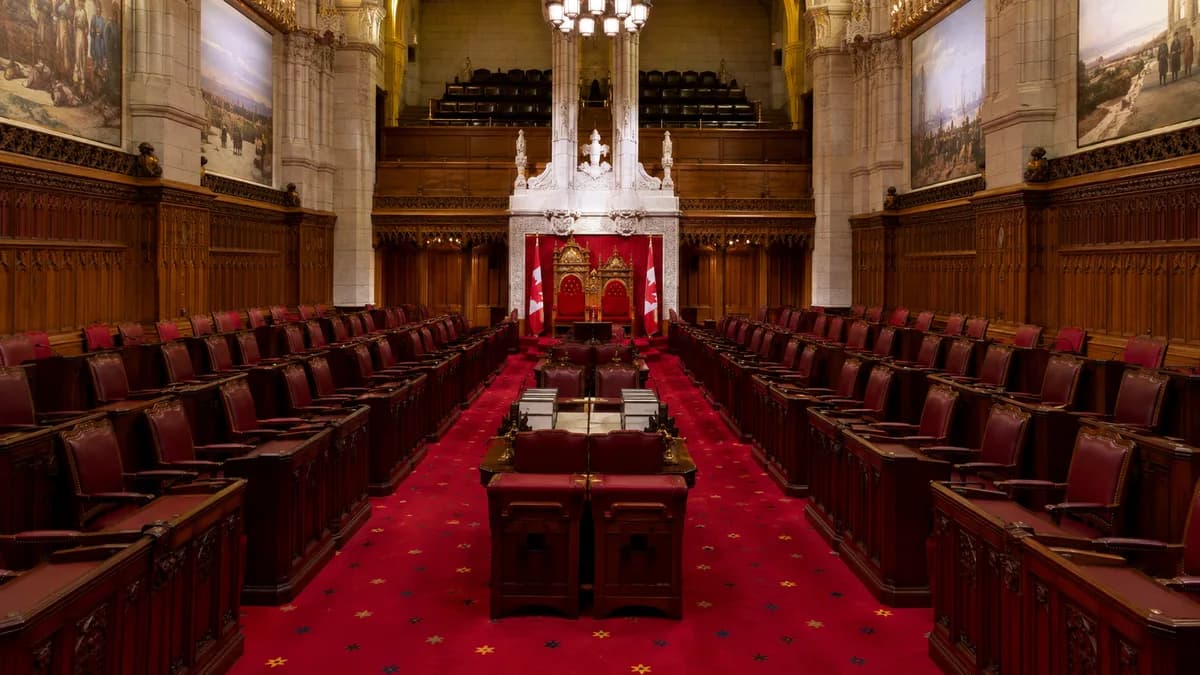
The difference comes down to one sentence: Members of the House of Commons are elected by Canadians, while senators are appointed. Together with the Sovereign, both chambers make up Parliament, and a bill must be passed by both before it becomes law. The House of Commons makes the laws and is where the government is formed; the Senate reviews and revises those laws with a bit of distance.
This distinction shows up often on the citizenship test. Once you understand how each group gets its seats and what each one does, the question becomes easy. Let us look at both chambers in detail, then at how they work together.
The House of Commons
The House of Commons is made up of Members of Parliament (MPs) elected by the people. Each MP represents a riding, also called an electoral district, which is a specific geographic area of the country. In federal elections, the voters in each riding choose one person to represent them in Ottawa.
Because its members are elected directly, the House of Commons reflects the will of voters. It is the main law-making chamber: this is where most bills are introduced, debated, and voted on first. It is also where the government is formed, since the party that wins the most seats usually forms the government, and its leader becomes prime minister.
An MP's term is not fixed forever; it lasts until the next election. If an MP loses their seat, someone else takes it. This direct link to voters is what makes the House of Commons the living heart of the Parliament of Canada.
The House of Commons also holds the government accountable day to day. MPs question ministers, debate government decisions, and can vote to show whether the government still has their support. Because seats are shared out based on population, more populous provinces send more MPs, so the House reflects where Canadians actually live. This is why people call it the elected, representative half of Parliament, the side that speaks most directly for ordinary voters.
The Senate
The Senate is made up of senators who are appointed, not elected. They are appointed by the Governor General on the advice of the prime minister. Their role is to review and revise the laws passed by the House of Commons. This work is often called sober second thought.
The idea behind appointment is to create a chamber that can step back. Because senators do not depend on a coming election, they can look at a bill more calmly and with more distance. They check the details, spot possible problems, and propose changes before a text becomes law.
The Senate also represents the regions of the country, so that less populated provinces and territories have a voice in Parliament. This checking and balancing role complements, but does not replace, the work of the House of Commons.
It helps to keep the appointment process straight. The prime minister recommends names, and the Governor General makes the formal appointment. Senators are not chosen by voters in a general election, which is the single fact the test most wants you to know. Their job is not to campaign but to study legislation closely, hear from experts, and speak up for groups and regions that a purely population-based chamber might overlook. When people describe the Senate as the chamber of sober second thought, this careful, less political review is exactly what they mean.
Senate vs House of Commons at a glance
The list below sums up the differences the test likes to check. Focus above all on how members get their seats and on the role of each chamber.
- House of Commons: members are elected by Canadians.
- Senate: senators are appointed, not elected.
- MPs: each one represents a riding (electoral district).
- Senators: appointed by the Governor General on the advice of the prime minister.
- House of Commons: main law-making chamber and where the government is formed.
- Senate: reviews and revises legislation (sober second thought).
- MP term: lasts until the next election.
- Both chambers must pass a bill for it to become law.
How a bill becomes law
A bill must pass through both chambers, then receive Royal Assent, before it becomes law. In practice, a bill is first introduced and debated, most often in the House of Commons. MPs discuss it, change it if needed, and then vote.
The bill then moves to the Senate. Senators study it in turn, may propose amendments, and vote. If the Senate changes the text, it goes back to the House of Commons so both chambers agree on the same version. Once both have passed the identical text, the Governor General grants Royal Assent on behalf of the Sovereign, and the bill officially becomes law.
Remember the flow: the House of Commons votes, the Senate reviews, Royal Assent finishes the job. This two-chamber journey is the heart of how Parliament works.
Within each chamber, a bill is examined more than once. It is read and debated in stages, sent to a smaller committee that studies it line by line and can hear from witnesses, and then voted on again before it moves forward. This repeated review is not just paperwork. It gives elected MPs and appointed senators several chances to catch weak wording, unfair effects, or gaps before a rule applies to the whole country. Only when both chambers are satisfied with the same final text does the bill continue to Royal Assent.
Why Canada has two chambers
Canada has two chambers to add a checking step and to balance the popular will with a more careful review. The House of Commons brings the legitimacy of elections: it reflects the choice of voters. The Senate brings distance and attention to detail.
This two-chamber system is called bicameralism. It is meant to stop a single chamber from deciding alone and too quickly. By having each bill read again by a second group, the risk of mistakes goes down, and the regions get a voice. To place these institutions within the bigger picture of the country, see the guide Canada Explained.
The design also reflects Canada's history. When the country was formed, its founders wanted a Parliament modelled on long-standing traditions, with one elected chamber to represent the population and a second, appointed chamber to review its work and protect regional interests. That balance between the popular vote and a steadier second look is still the reason two chambers exist today. Neither chamber can make a law on its own, which forces cooperation and a shared final decision.
What the citizenship test expects
For the test, remember three points: MPs are elected, senators are appointed, and both chambers must pass a bill. Questions often focus on the elected versus appointed difference, on the Senate's sober second thought role, and on the riding that each MP represents.
A simple memory trick keeps the two chambers apart. Link Commons with common people, because MPs are chosen by the public in an election. Link Senate with selected, because senators are appointed rather than voted in. If a test question describes members who are chosen by voters and who each represent a local area, the answer is the House of Commons. If it describes members who are appointed and who give a bill a second, careful review, the answer is the Senate. Reading each question slowly and matching it to these patterns is often all you need.
You can dig deeper with the official government resource, How Canadians Govern Themselves, from the Discover Canada guide. Then test yourself with our practice exams and chapter quizzes to lock in these ideas. Finally, use smart review to automatically revisit the questions you miss most.