
How the Prime Minister Is Chosen in Canada
How the Prime Minister is chosen in Canada: after a federal election, the leader of the party with the most seats in the House of Commons. A clear guide.
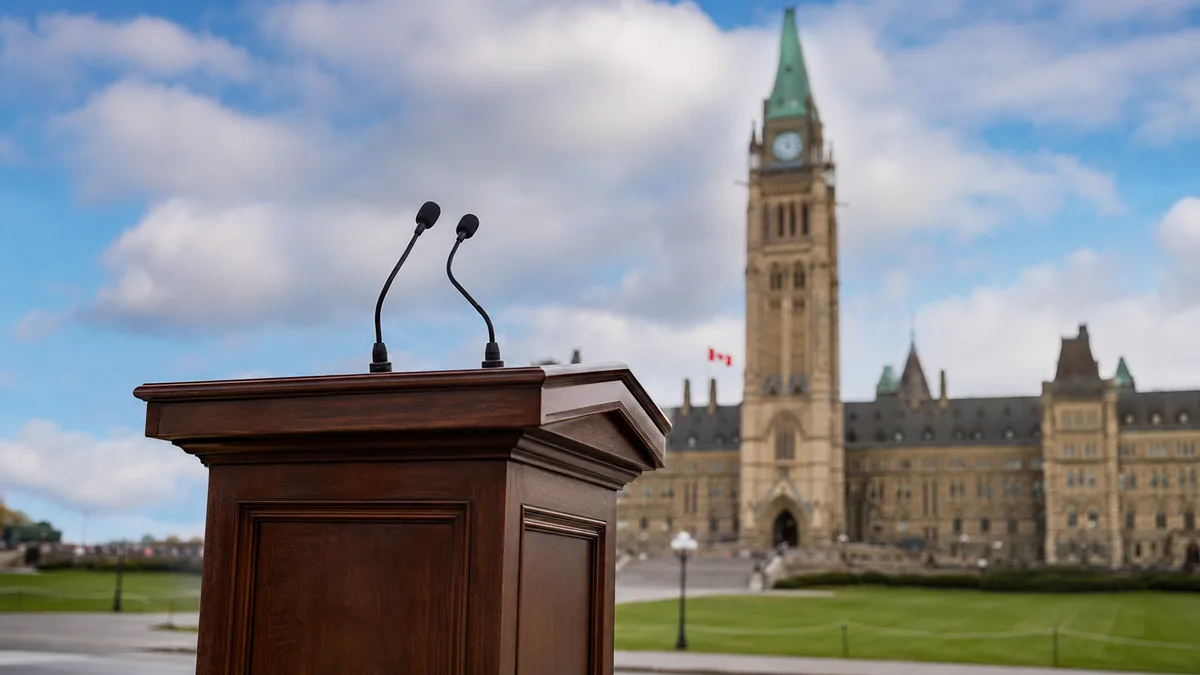
No one in Canada votes directly for the Prime Minister. In a federal election, voters choose a Member of Parliament in their local riding. The leader of the political party that wins the most seats in the House of Commons is then usually asked by the Governor General to become Prime Minister and form the government. The Prime Minister is the head of government: they run the country from day to day, choose the Cabinet ministers, and must keep the support of a majority of MPs to stay in office. Understanding this process matters, because it comes up often in citizenship test questions.
Who becomes Prime Minister after an election?
The Prime Minister is the leader of the party that wins the most seats in the House of Commons. Canadians never mark a ballot with a Prime Minister's name on it. On election day, each voter chooses a candidate to represent their local riding. The country is divided into hundreds of ridings, and each one sends one Member of Parliament (MP) to the House of Commons. This is a core idea in our overview of how Canada is governed.
Once all the results are in, the seats won by each party are added up. The party with the most seats normally forms the government, and its leader becomes Prime Minister. This means a voter in Vancouver and a voter in Halifax never voted for the same person to be Prime Minister: they voted for two different MPs, in two different ridings, who may belong to the same party.
Because of this system, the Prime Minister is also an ordinary MP. They must run and win in a single riding, just like every other member of the House of Commons. If they lost their own seat, they could not remain Prime Minister without getting elected somewhere. This reality is a reminder that, in Canada, power always flows from a local mandate given by voters.
The role of the Governor General
It is the Governor General who formally invites the leader of the winning party to form the government. The Governor General represents the King, who is Canada's head of state, and acts on his behalf. After an election, the Governor General asks the leader who can command the support of a majority of MPs to become Prime Minister. In practice, this choice follows directly from the vote: the Governor General respects the will expressed by the House of Commons.
This role is largely symbolic and constitutional, but it still matters. The Governor General swears in the Prime Minister and the ministers, gives Royal Assent to laws passed by Parliament, and, in rare cases, helps resolve uncertain situations, such as when no party has a clear majority. The Government of Canada describes these institutions in its overview of the Canadian parliamentary system.
Party leader first: the leadership race
Before an election even happens, each party chooses its own leader in a leadership contest. A person does not become Prime Minister overnight. They first rise through their party, then win an internal race in which only party members vote. The winner becomes leader, runs the election campaign, and, if their party wins, becomes Prime Minister.
- Party members, not all Canadians, elect the leader at a convention or in an internal vote.
- The elected leader then represents the party during the election campaign.
- If the party wins the most seats, its leader becomes Prime Minister.
- A party can change its leader between elections; the new leader may then become Prime Minister without a general election.
That last point often surprises newcomers: if the sitting Prime Minister resigns, their party chooses a replacement in a leadership contest, and that person can become Prime Minister without a general election, as long as the party still holds the most seats in the House of Commons.
Majority or minority government?
A government is a majority when one party holds more than half the seats, and a minority when it holds the most seats but not that half. The difference changes how a government works. With a majority, the governing party can pass its laws without depending on other parties. With a minority, it must persuade MPs from other parties to support it, vote after vote.
When no party wins a majority, several outcomes are possible. The party with the most seats most often forms a minority government. Sometimes two or more parties agree to form a coalition and govern together. In every case, the government survives only if it can gather enough support in the House of Commons to pass its important measures.
The confidence of the House of Commons
To stay in power, the Prime Minister must keep the confidence of the House of Commons. In other words, a majority of MPs must keep supporting them on key votes, such as the budget. This principle is the heart of Canada's parliamentary system: the government draws its authority from the elected House, not from a separate election of the leader.
If the government loses a confidence vote, it falls. Two outcomes are then possible: either another leader tries to form a government that can win the confidence of the House, or the Governor General calls a new election. This is why a minority government is more fragile: it can be defeated if it loses the support of other parties. You can test your understanding of this point with our free practice exams.
What does the Prime Minister do, and how is the Cabinet chosen?
The Prime Minister leads the government and chooses the Cabinet ministers. This role is different from the head of state, a distinction explained in our guide on the head of state versus the head of government. The Prime Minister sets the direction of the government, represents Canada at home and abroad, and answers to Parliament and to voters. After being appointed, they build their team.
- The Prime Minister chooses the Cabinet ministers, usually from among elected MPs.
- Each minister is responsible for a department, such as finance, health, or defence.
- The Prime Minister and Cabinet together form the core of the executive branch.
- The government must keep the confidence of the House of Commons to stay in power.
How this differs from countries where the leader is elected directly
In some countries, such as the United States, voters vote separately for the head of government; in Canada, they do not. An American votes for their president on a ballot separate from their members of Congress. A Canadian makes only one choice: their local MP. The office of Prime Minister flows indirectly from all of those local choices, added up across the country.
This difference explains several Canadian features. The Prime Minister has no guaranteed fixed term; they stay in office as long as they keep the confidence of the House. They can also be replaced by their party between elections. Finally, they sit in the House of Commons and take part in its debates, unlike a president who leads from a separate executive branch. Understanding this logic helps you answer many test questions correctly.
Reviewing this topic for the test
This subject touches several citizenship test themes: government, voting, and institutions. To absorb it for good, mix reading with practice. Our chapter quizzes cover government ideas one at a time, while smart review automatically brings back the questions you tend to forget. A little regular practice beats a single long cram session the night before.