
How Federal Elections Work in Canada
How federal elections work in Canada: voting by secret ballot, electing MPs, and majority vs minority governments. A clear guide for the citizenship test.
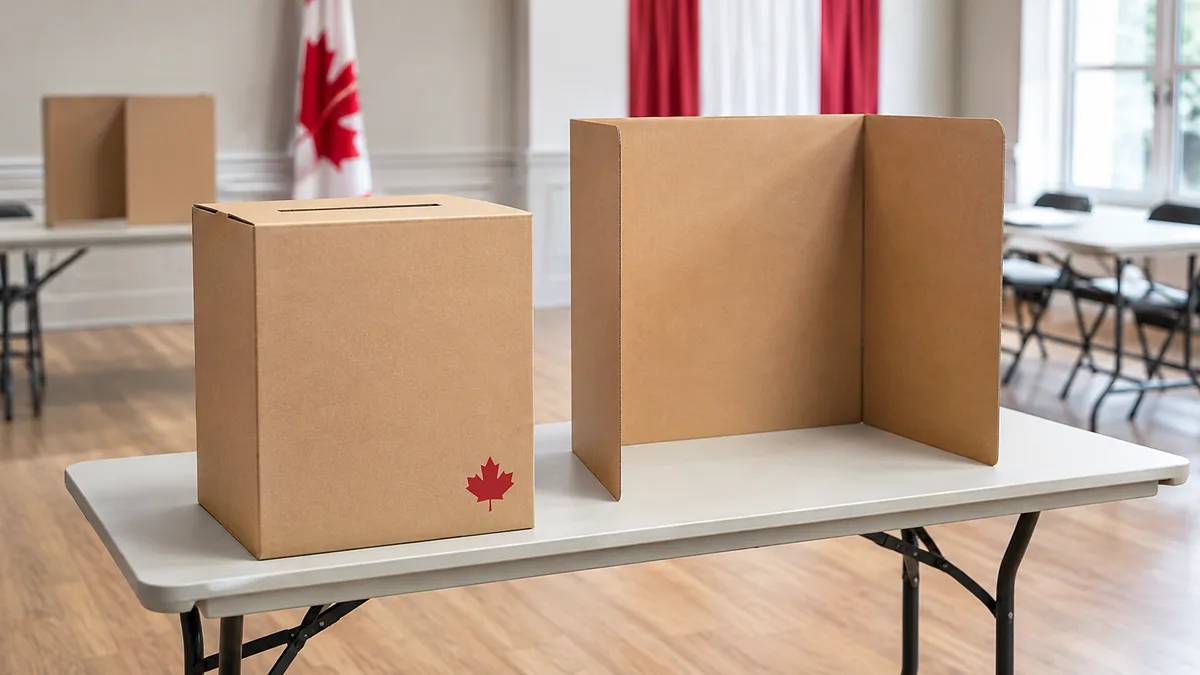
In a federal election, Canadian citizens vote in their riding to elect one Member of Parliament to the House of Commons, and the party that wins the most seats usually forms the government. Each person votes by secret ballot. Canada uses a first-past-the-post system: the candidate with the most votes in a riding wins the seat. To vote, you must be a Canadian citizen, at least 18 years old on election day, and on the voters list. Federal elections are run by Elections Canada and held at least every four years.
Ridings and Members of Parliament
Canada is divided into ridings, and each riding elects one Member of Parliament to the House of Commons. A riding, also called an electoral district or constituency, is a geographic area. The voters who live there choose the person who will represent them in Ottawa. This means you do not vote directly for a Prime Minister: you vote for a candidate in your own riding.
Each party usually runs one candidate per riding, and independent candidates can also run. The Member of Parliament you elect carries your voice to Parliament: they vote on bills, take part in debates, and represent the people who live in the riding. This direct link between the voter and their representative is central to how Canada works. To see where this role fits among the wider institutions, read our overview of how Canada is governed.
The House of Commons brings together all the Members of Parliament elected across the country. This is where the main legislative decisions are made: Members propose, debate, and vote on the laws that apply to all Canadians. The number of seats a party holds there after an election decides its ability to govern. In this way, your local vote, added to the votes of millions of others, shapes the makeup of Parliament and, in the end, the policies of the country.
How first-past-the-post works
In each riding, the candidate who gets the most votes wins the seat, even without an outright majority. This system is called first-past-the-post. A candidate only needs more votes than each other candidate individually, not more than half of all votes cast.
Here is a simple example. If one candidate wins 40 percent of the votes, a second wins 35 percent, and a third wins 25 percent, the first candidate wins the seat, even though 60 percent of voters chose someone else. This happens separately in every riding across the country. Adding up the seats won riding by riding then decides the makeup of the House of Commons.
How the government is formed
The party that elects the most Members of Parliament usually forms the government, and its leader becomes the Prime Minister. Once every riding has been counted, we look at which party holds the largest number of seats in the House of Commons. That party is asked to govern.
If that party holds more than half the seats, it is a majority government and can pass its laws more easily. If it holds the most seats but fewer than half, it is a minority government and must win support from other parties to pass its measures. The leader of the governing party becomes Prime Minister. For a closer look at this step, read our guide on how the Prime Minister is chosen.
The party with the second-largest number of seats usually becomes the Official Opposition. Its job is to question the government, examine its decisions, and offer other points of view. This back-and-forth between the government and the opposition is a normal and healthy part of Parliament. It means that even after an election is over, the people you elect keep debating and holding each other to account on your behalf, session after session.
How voting works
Voting is done by secret ballot: no one is allowed to know who you voted for. On election day, you go to your polling station with proof of identity and address. You are given a ballot that lists the candidates in your riding.
You step alone behind the voting screen, mark your choice next to a single candidate, then fold the ballot and place it in the ballot box. The secret ballot protects your freedom: it makes sure you can vote according to your conscience, without pressure or fear of reprisal. You can also vote at advance polls or by mail. The practical rules are explained on the Elections Canada website.
On election day, polling stations are open for set hours, and each voter is assigned to the station that serves their address. If you are already on the voters list, you receive a card in the mail that tells you where and when to vote. If you are not yet registered, you can still add your name to the list at the polling station, as long as you bring accepted proof of identity and address. Employers are required to give eligible employees time off to vote if their working hours would otherwise leave them without enough time.
After the polls close, the ballots are counted by hand at each polling station in front of witnesses. Counting begins right away, and the results are reported riding by riding. Because each riding reports its own winner, the country learns fairly quickly which candidates have won seats and which party has won the most. Anyone can follow the results as they come in, and the openness of the count is one of the ways Canada keeps its elections trustworthy.
Who can vote
To vote in a federal election, you must be a Canadian citizen, at least 18 years old on election day, and on the voters list. Here are the key requirements to remember:
- Be a Canadian citizen.
- Be at least 18 years old on election day.
- Be on the voters list (you can register in advance or on the day itself).
- Vote by secret ballot in your riding.
- Voting is both a right and a responsibility of citizenship.
Permanent residence is not enough: only citizens can vote in federal elections. This is one of the important differences between being a permanent resident and being a citizen.
Being on the voters list simply means Elections Canada has your name, address, and citizenship on record so it can direct you to the right polling station. You can register ahead of time, check or update your details, or sign up on election day itself when you show accepted identification. Registering early makes voting faster, but no eligible citizen is turned away just because they registered late. The goal of the system is to make sure every qualified voter has a clear and simple way to cast a ballot.
When elections are held
Federal elections are held at least every four years. An election can also be called earlier, especially when a minority government loses the confidence of the House of Commons. Elections Canada, an independent and non-partisan agency, runs each election.
Elections Canada keeps the voters list up to date, prepares the ballots, trains polling station staff, and counts the votes. Its independence makes sure that each election stays fair and impartial, no matter which party is in power.
Why voting matters
Voting is one of the main responsibilities of a Canadian citizen. The right to vote was won over time, and it lets everyone have a say in the laws and the direction of the country. When you vote, you choose the people who will represent you and make decisions on your behalf.
Taking part in elections is also a concrete way to contribute to Canada's democratic life. The rights and responsibilities that come with citizenship are set out on Canada.ca. Understanding how elections work helps you not only pass the test, but also take up your full role as a citizen.
Voting is one of several duties that citizens share, alongside obeying the law, serving on a jury when called, and helping others in the community. None of these duties matters more on paper than the right to choose your own representatives. Whether a government ends up being majority or minority, and whichever party forms it, that outcome rests on the choices made by individual voters in hundreds of ridings. When you vote, you take part in that decision rather than leaving it to others.
Practise for the test
Questions about voting and elections come up often on the citizenship test. To master them, review these ideas in our chapter quizzes, then put yourself to the test with a timed practice exam. If some questions keep tripping you up, smart review brings them back at the right time so the knowledge sticks.