
Head of State vs Head of Government in Canada
Head of state vs head of government in Canada: the Sovereign (King Charles III) and the Prime Minister. The difference explained for the citizenship test.
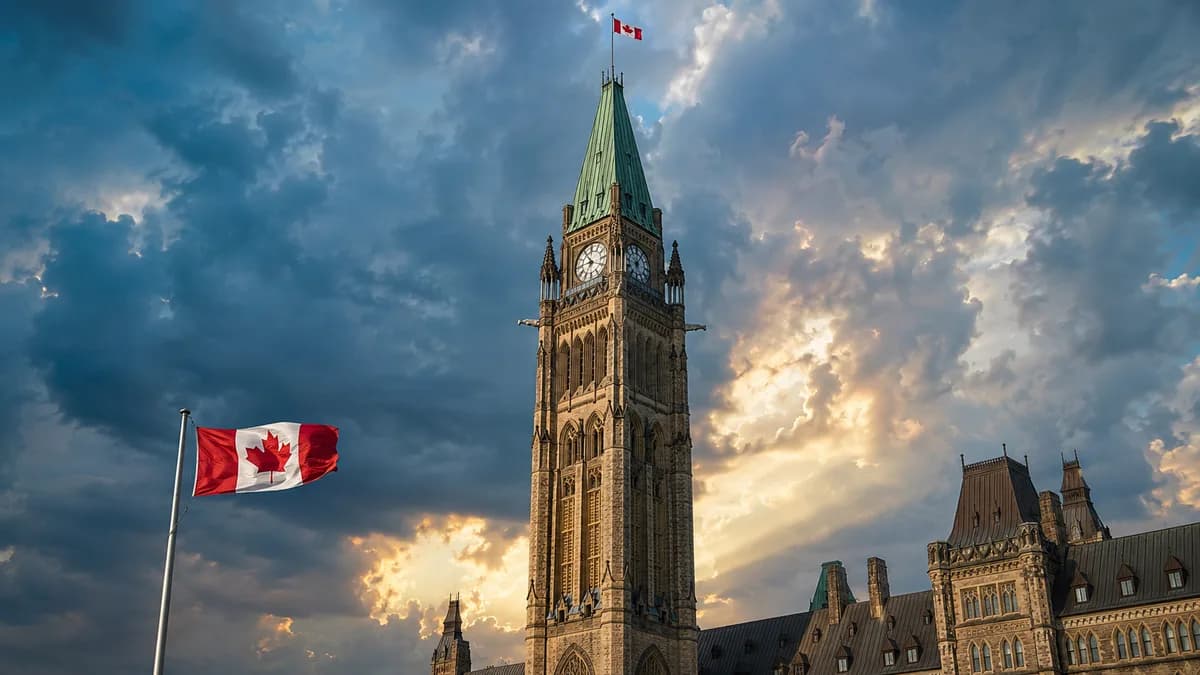
In Canada, the head of state is the Sovereign, King Charles III, while the head of government is the Prime Minister. The head of state represents the country and its continuity, a role that is largely ceremonial and constitutional. The head of government holds the political power to run the country day to day. Canada is a constitutional monarchy, so these two jobs are held by two different people, and the citizenship test expects you to tell them apart. To place these roles within the wider system, see our overview of how Canada is governed.
Who is the head of state?
Canada's head of state is the Sovereign, currently King Charles III. Canada is a constitutional monarchy, which means the King or Queen is the symbol of the state, but the role is strictly defined by the Constitution and by long-standing traditions. The Sovereign does not take part in day-to-day political decisions. Instead, the head of state stands for the stability and continuity of the state, above changes of government and election results. This role has existed since the country was founded and links today's Canada to its history.
One point matters for the test: the Sovereign does not live in Canada. The King lives in the United Kingdom, but he is also King of Canada, separately and in his own right. That is why he needs representatives on Canadian soil to carry out his official duties. You can read the government's description of this role here: The Crown in Canada.
The Governor General, the Sovereign's representative
Because the Sovereign does not live in Canada, the King is represented by the Governor General at the federal level. The Governor General carries out the official duties of the head of state on the King's behalf: giving Royal Assent to laws passed by Parliament, reading the Speech from the Throne, summoning and dissolving Parliament, and swearing in the Prime Minister and Cabinet ministers. In the provinces, this role is filled by lieutenant governors, who represent the Sovereign at the provincial level.
The Governor General is appointed by the Sovereign on the advice of the Prime Minister of Canada, usually for a term of about five years. Although these powers look significant on paper, the Governor General almost always exercises them on the advice of elected ministers. This detail sits at the heart of constitutional monarchy: the representative of the head of state acts, but follows the advice of a government that is accountable to Parliament.
Who is the head of government?
Canada's head of government is the Prime Minister. The Prime Minister leads the government, chooses the Cabinet ministers, proposes laws, sets the country's priorities and makes the day-to-day political decisions. In practice, the Prime Minister is the person who holds the real power to govern. How they reach that office is explained in our guide on how the Prime Minister is chosen.
Unlike the Sovereign, the Prime Minister is not a permanent symbol: they are accountable to voters and to Parliament. A person usually becomes head of government because their party wins the most seats in the House of Commons in an election. The Prime Minister can be replaced if their party loses an election or if they lose the confidence of the House. The head of government's power is therefore real, but temporary and subject to the will of voters.
Ceremonial power vs political power
The key difference between the two roles is the difference between ceremonial power and political power. The head of state performs official and symbolic duties; the head of government makes the concrete decisions that affect Canadians' lives. Here are the key points to remember for the test:
- The head of state is the Sovereign, King Charles III: a mainly symbolic, ceremonial and constitutional role.
- The Sovereign is represented in Canada by the Governor General federally and by lieutenant governors in the provinces.
- The head of government is the Prime Minister, who holds real political power and runs the country day to day.
- The Prime Minister is accountable to Parliament and to voters; the Sovereign stays above partisan politics.
- The head of state provides continuity of the state; the head of government changes with elections.
Why does Canada separate the two roles?
Canada separates the head of state from the head of government to balance stability and democracy. The Sovereign, as a permanent symbol, stands above party quarrels and represents all Canadians, no matter who wins an election. The Prime Minister, by contrast, draws legitimacy from voters and can be replaced. This separation avoids concentrating both the symbol of the state and political power in a single person.
This balance links Canada's history to its modern democracy. Canada keeps a Sovereign as head of state, inherited from its history, while giving real power to elected representatives and to the Constitution. That is what a constitutional monarchy means: the Crown remains, but it acts under the Constitution and on the advice of a government that is accountable to Parliament.
How the two roles work together
In practice, the head of state and the head of government work together under clear rules. After an election, the Governor General, on behalf of the Sovereign, invites the leader of the party that holds the confidence of the House of Commons to form a government and become Prime Minister. The Prime Minister then governs, but the laws Parliament passes only take effect once the Governor General grants Royal Assent.
This shows that the roles are complementary, not competing. The head of state gives formal authority and official legitimacy to the acts of government; the head of government makes the decisions and answers for them to voters. Understanding this cooperation helps with test questions about Parliament, the Crown and ministerial responsibility.
Common mistakes to avoid
Many applicants mix up the Governor General and the Prime Minister. Remember that the Governor General represents the head of state, while the Prime Minister is the head of government. Another common error is believing that the King governs Canada. He does not: he reigns as a symbol without exercising day to day political power. Do not confuse the Sovereign with an elected president either. Canada has no president, it has a King as head of state who reigns but does not govern.
Finally, keep the federal and provincial levels straight. Federally, the Sovereign is represented by the Governor General; in each province, by a Lieutenant Governor. The Prime Minister of Canada leads the federal government, while each province has its own premier for its areas of responsibility. Placing each title at the right level of government will stop you losing marks on test day.
What the citizenship test expects
For the citizenship test, remember three facts above all: the head of state is the Sovereign (King Charles III), he is represented in Canada by the Governor General, and the head of government is the Prime Minister. Questions from the official Discover Canada guide often turn on this distinction and on the meaning of the phrase constitutional monarchy. Practise with our chapter quizzes to lock in these institutions, then test yourself with a timed practice exam.
If you still mix up the two roles, revisit them at regular intervals with our smart review tool, which brings back the shakiest concepts at the right time. Once the difference is clear, questions about the government, Parliament and the Crown become much easier on test day.