
When Did Canada Become a Country? The Three Answers
Canada became a country on July 1, 1867, but full independence came in steps: 1931 and 1982. What each date changed, and which ones the citizenship test asks about.
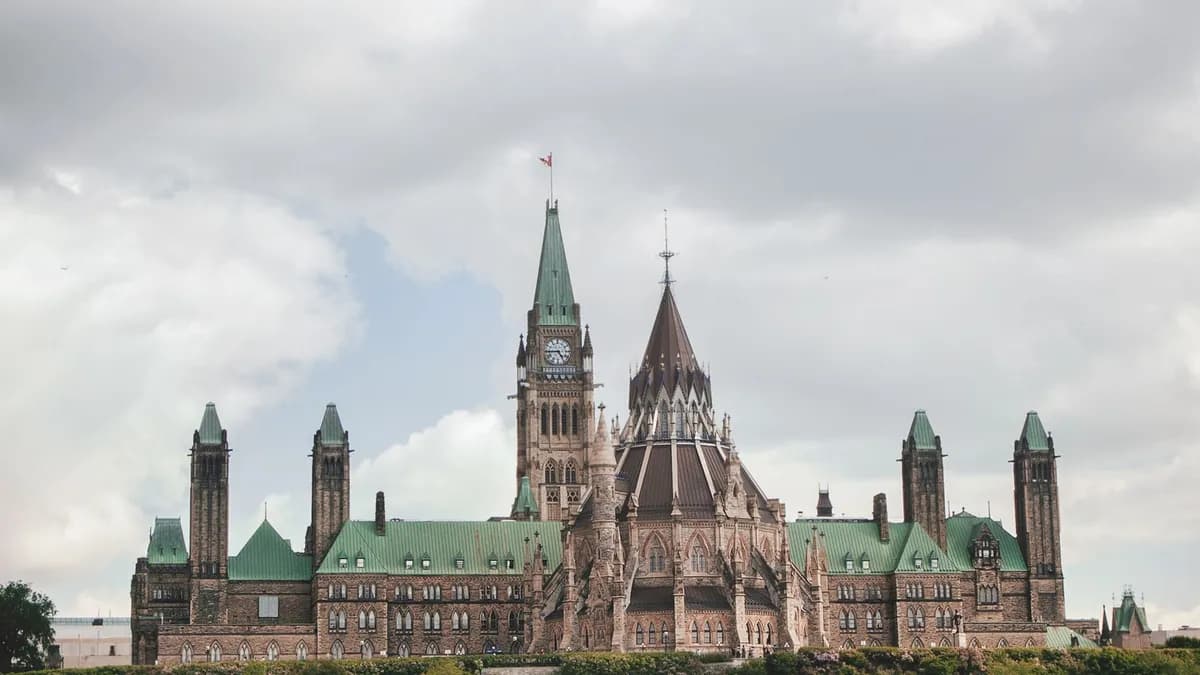
Canada became a country on July 1, 1867, when the British North America Act united four provinces into the Dominion of Canada. But if the question feels like it has more than one answer, that is because it truly has three. 1867 created the country, 1931 gave it legislative independence, and 1982 finally handed it its own constitution. The three dates tell one story: a country born in stages, without a revolution or a war of independence. Here is what each date changed, and what to remember for the citizenship test.
The short answer: July 1, 1867
On July 1, 1867, the British North America Act came into force and united four British colonies into a single country: Ontario, Quebec, Nova Scotia and New Brunswick. That event is Confederation, and it is Canada's official birthday. Sir John A. Macdonald, one of the main architects of the project, became the country's first Prime Minister.
The new country was named the Dominion of Canada. The word comes from a Bible verse, "He shall have dominion from sea to sea", proposed by Sir Leonard Tilley of New Brunswick, and Canada's motto "from sea to sea" comes from the same line. Every July 1, Canada Day celebrates this anniversary. Until 1982, the holiday was actually called Dominion Day.
The moment did not come out of nowhere: it was negotiated over three years by the Fathers of Confederation, from the Charlottetown Conference of 1864 to the final vote in London. If the citizenship test kept only one date from all of Canadian history, it would be this one.
Why unite at all? Each colony had its reasons: defending themselves together against the rising power of the United States just after its Civil War, building a railway from ocean to ocean to trade with each other, and breaking the political deadlock of the Province of Canada's parliament, where French and English speakers kept cancelling each other out. Confederation was not a divorce from London: it was a project approved by London, which is why Canada was born without a revolution.
Why 1867 is not the whole story
The Canada of 1867 was a country, with its own parliament, government and laws. But it remained a dominion of the British Empire: its foreign policy was decided in London. When the United Kingdom declared war on Germany in 1914, Canada was automatically at war too, without voting on anything. Canadian soldiers would nonetheless distinguish themselves from Vimy Ridge to the beaches of Normandy, and that contribution is precisely what accelerated the march toward full independence.
In other words: in 1867 Canada became a country that governed itself at home, but not yet a fully sovereign state abroad. That is exactly why there are two more dates.
1931: the Statute of Westminster
On December 11, 1931, the British Parliament passed the Statute of Westminster. The law recognized Canada and the other dominions as countries equal to the United Kingdom: their parliaments legislated freely, and London could no longer impose laws on Canada. In practice, Canada gained the right to run its own foreign policy and sign its own treaties.
The clearest proof came in 1939: unlike in 1914, Canada declared war on Germany by a vote of its own Parliament, one week after the United Kingdom. If your definition of a country is "an independent state on the world stage", then the answer to the question is 1931.
1982: the constitution comes home
One last thread remained: Canada's constitution was a British law, and only the Parliament in London could amend it. On April 17, 1982, the Constitution Act, 1982 was proclaimed in Ottawa by Queen Elizabeth II. That moment is called patriation: ever since, Canada amends its constitution itself, without asking anything of the United Kingdom.
The same law entrenched the Canadian Charter of Rights and Freedoms, which the test regularly asks about. A detail worth knowing: Quebec never signed that constitutional agreement, even though the constitution fully applies there. 1982 is also the year Dominion Day officially became Canada Day. For the full context of that period, see modern Canada.
So how old is Canada?
Counted from Confederation, Canada turns 159 on July 1, 2026. That is the expected answer everywhere, from Canada Day speeches to test questions. But the land's story is much longer, and these milestones help place everything:
- For thousands of years: Indigenous peoples, First Nations, Metis and Inuit, have lived on this land.
- 1535: Jacques Cartier hears the word kanata, Huron-Iroquois for "village". The name Canada appears on maps by the 1550s.
- 1608: Samuel de Champlain founds Quebec City, the heart of New France.
- 1763: France cedes Canada to the United Kingdom after the Seven Years War.
- 1841: Upper Canada and Lower Canada are merged into a single Province of Canada.
- 1867: Confederation creates the Dominion of Canada, with four provinces.
- 1931: the Statute of Westminster grants legislative independence.
- 1949: Newfoundland becomes the tenth and last province to join.
- 1965: the maple leaf flag is raised for the first time.
- 1982: patriation of the constitution and the Charter of Rights and Freedoms.
- 1999: creation of Nunavut, the newest territory.
To memorize these milestones in order, our timeline of Canadian history walks through the full sequence, chapter by chapter of the study guide.
Another way to see the same story: the country of 1867 had only four provinces. Manitoba, the Northwest Territories, British Columbia and Prince Edward Island joined during the 1870s, Saskatchewan and Alberta followed in 1905, and Newfoundland closed the list in 1949. The province-by-province detail, with the capitals you need to know, is in our provinces and capitals questions.
1867, 1931 or 1982: which answer should you give?
It depends on the question being asked. "When did Canada become a country?" or "how old is Canada?" call for 1867: that is the official birthday, the one Confederation set. "When did Canada become independent?" is best answered with 1931, the year it became the United Kingdom's equal on the world stage. "When did Canada get its own constitution?" points to 1982. On the citizenship test, the wording always steers you toward exactly one of these three dates: read the question to the end before answering.
What was Canada called before 1867?
The name Canada is four centuries older than the country. It all starts with kanata, the Huron-Iroquois word for "village", which Jacques Cartier recorded during his 1535 voyage: our article Who discovered Canada? goes even further back. European mapmakers quickly stretched it to cover the whole St. Lawrence region.
The territory then changed names with each regime: New France under French rule until 1763, British North America after the conquest, then the Province of Canada from 1841, born from the union of Upper Canada (today's Ontario) and Lower Canada (today's Quebec). In 1867 the country took the official name Dominion of Canada; everyday usage kept it simply Canada.
What the citizenship test actually asks
Every question on the test comes from the official study guide Discover Canada, and this slice of history is one of its most tested. The classic questions: in what year did Confederation take place? What were the four founding provinces? Who was the first Prime Minister? What does Canada Day celebrate? And for 1982: what does the Canadian Charter of Rights and Freedoms protect? Province entry dates come up as well, especially the last one: Newfoundland, in 1949.
The hard part is not understanding these dates, it is keeping them apart under pressure on test day. Practice with our citizenship test dates questions, learn the techniques to memorize the key dates, then check that everything holds with the history chapter quiz and a timed mock exam: 20 questions, 45 minutes, just like the real test.
Frequently asked questions
When did Canada become a country? On July 1, 1867, when the British North America Act united Ontario, Quebec, Nova Scotia and New Brunswick into the Dominion of Canada. That is the date Canada Day celebrates.
When did Canada become fully independent? In stages: the Statute of Westminster brought legislative independence in 1931, and the Constitution Act of 1982 patriated the constitution. Since 1982, Canada amends its constitution without the British Parliament.
How old is Canada? In 2026, Canada turns 159, counted from July 1, 1867. The land itself carries thousands of years of Indigenous presence and more than four centuries of history since Quebec City was founded in 1608.
What was Canada called before 1867? New France until 1763, then British North America, then the Province of Canada from 1841 to 1867. The name Canada comes from kanata, the Huron-Iroquois word for "village".