
The War of 1812 in Canada Explained
The War of 1812 explained simply: the American invasion repelled, Tecumseh, Laura Secord, and why this conflict matters for the citizenship test.
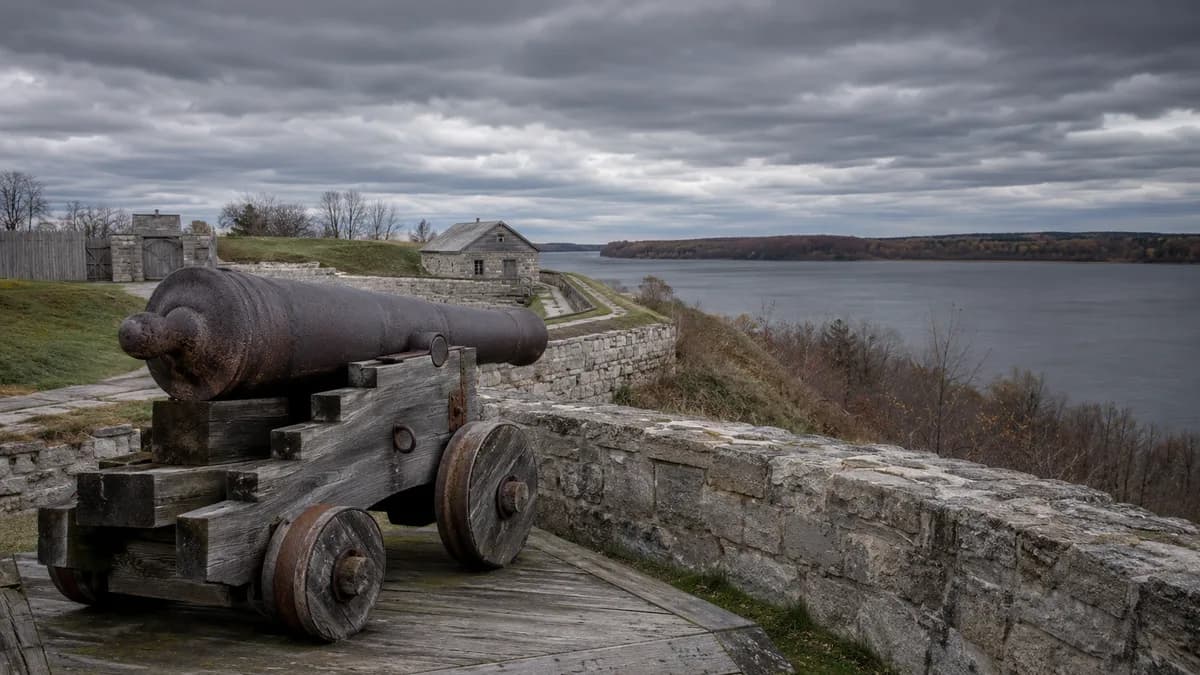
The War of 1812 was a conflict between the United States and Britain, fought from 1812 to 1814, with much of the fighting taking place in what is now Canada. American forces invaded, but British soldiers, Canadian volunteers and First Nations allies repelled them. For the test, hold on to the central point: the United States did not conquer Canada, and the war helped set the border we know today.
Why did the war break out?
The war grew out of tensions between the United States, a young republic, and Britain, which was then fighting the Napoleonic Wars in Europe. To weaken France, Britain blocked sea trade and stopped American ships. The British navy also forced sailors on those ships into service, a practice that angered many Americans.
Alongside these maritime grievances was a territorial ambition. Some American leaders wanted to expand northward into the British colonies of North America. In June 1812, the United States declared war on Britain. Because Britain was focused on fighting Napoleon in Europe, the defence of these colonies rested largely on the people who lived there and on their Indigenous allies.
An invasion repelled
American armies tried several times to invade the territory, but they failed. The defence brought together three groups: regular British soldiers, Canadian volunteers from the colonies, and First Nations allies who knew the land well. Together they protected the colonies and prevented the conquest of the country.
The fighting centred on the border, especially around the Great Lakes, the Niagara River and the St. Lawrence River. Neither side managed to hold the other's territory for long. This shared resistance, led by people from very different backgrounds, is often described as a founding moment for Canadian identity.
Sir Isaac Brock and the early victories
Major-General Sir Isaac Brock is one of the most memorable military figures of the war on the British side. An energetic officer, he acted quickly rather than waiting. In the summer of 1812, his troops, supported by Indigenous warriors, secured the surrender of the American garrison at Detroit, a victory that lifted the spirits of the defenders.
Brock died in battle at Queenston Heights, on the Niagara River, in October 1812. His death at the moment of a British victory made him a lasting hero. He is sometimes called the hero of Upper Canada, and his name stays tied to the successful defence of the colony.
Tecumseh and the First Nations alliance
Tecumseh, a Shawnee chief, played a decisive role as an ally of the British. He sought to defend First Nations lands against American expansion and saw the alliance with Britain as a way to do so. His partnership with Brock made victories like the capture of Detroit possible.
Tecumseh died in 1813 while fighting American forces. His contribution is a reminder that First Nations were not simply bystanders: they were defending their own territories and their future. The War of 1812 is therefore also a story of Indigenous alliances, an aspect the citizenship test highlights.
Laura Secord's warning
Laura Secord is remembered for warning British soldiers of an approaching American attack in 1813. According to the story, she walked a long distance through the woods to pass on the information after learning of the American plans. Her warning helped the defenders prepare.
Laura Secord became a symbol of civilian courage during the war. She shows that the defence of the country did not rest on soldiers alone, but also on ordinary people. Her name comes up often in test questions about this period.
The war on the Great Lakes
Control of the Great Lakes shaped much of the war because the lakes were the fastest way to move soldiers and supplies. Roads were poor, so whoever controlled the water could reach the front more easily. Both sides raced to build warships on Lake Ontario and Lake Erie, and the balance of power shifted as new ships were launched.
This naval dimension explains why places along the lakes and rivers saw repeated fighting. Ports and forts changed hands, and neither side could hold a lasting advantage. Understanding the role of the lakes makes it clearer why the raids on York and, in return, on Washington were possible: water gave armies the reach to strike at capitals.
The burning of York and Washington
Two famous fires sum up the violence of the war: American forces burned York, today Toronto, and British forces later burned the White House in Washington. In 1813, American troops captured York and set fire to public buildings in the capital of Upper Canada.
In response, British forces marched on Washington in 1814 and burned several government buildings, including the president's residence, the White House. These events stand out because they struck the capitals themselves. Here are the key facts to remember for the test:
- A conflict between the United States and Britain, from 1812 to 1814
- Fought largely in what is now Canada
- Defended by British soldiers, Canadian volunteers and First Nations allies
- Major-General Sir Isaac Brock: hero of the defence of Upper Canada
- Tecumseh: a Shawnee chief allied with the British
- Laura Secord: warned of an American attack
- Americans burned York (Toronto); the British burned the White House
- Outcome: the United States did not conquer Canada
How the war ended and the border
The war ended without a clear winner, but it helped establish the border between Canada and the United States. Neither side gained significant territory. The return to the pre-war situation confirmed that the northern British colonies would stay separate from the United States.
That is why the War of 1812 is often seen as a turning point: it helped Canada remain independent of the United States. The border drawn in the years that followed remains one of the longest peaceful borders in the world. To place this conflict within the wider story, see the Canadian history timeline.
What the war meant for First Nations
First Nations allies were central to the defence of the colonies, yet the war's outcome weakened their position. Leaders like Tecumseh had hoped that an alliance with Britain would protect Indigenous lands from American expansion. Their knowledge of the land and their skill in battle helped make early victories possible.
After Tecumseh's death in 1813, the broad alliance he had built lost much of its strength. When the war ended with a return to the pre-war situation, First Nations gained no lasting protection for their territories, and American settlement continued to push westward. Remembering this part of the story gives a fuller and more honest picture of the war than one that focuses only on soldiers and generals.
Why it matters for identity and for the test
The War of 1812 matters because it strengthened a sense of belonging among the people who lived there and because it comes up often in test questions. The shared defence of the territory by British soldiers, Canadians and First Nations is seen as a founding moment.
Questions often focus on the fact that the United States did not conquer Canada, or on figures like Brock, Tecumseh and Laura Secord. For the official source, see the study guide on the Government of Canada website: prepare for the citizenship test. To go further on our side, see the guide Canada Explained.
Test these ideas with our practice exams, review the history topics, then reinforce what you forget with smart review.