
Indigenous Peoples: First Nations, Metis and Inuit
First Nations, Metis, and Inuit: the three groups of Indigenous peoples recognized in Canada, explained for the citizenship test.
Canada's Constitution recognizes three distinct groups of Indigenous peoples: First Nations, Metis, and Inuit. They were the first inhabitants of the land, living here long before Europeans arrived. Each group has its own history, languages, cultures, and traditions. For the citizenship test, being able to name them and tell them apart is one of the essential facts to know.
The three groups recognized by the Constitution
The term "Indigenous peoples" (or "Aboriginal peoples") refers collectively to First Nations, Metis, and Inuit. Section 35 of the Constitution Act, 1982 uses the phrase "Aboriginal peoples of Canada" to recognize these three groups and to affirm their existing Aboriginal and treaty rights. The key point to remember is that these are three distinct peoples, not a single uniform group.
These peoples had lived on the land for thousands of years before French and British explorers arrived. They already had governments, trade networks, languages, and deep spiritual ties to the land. Understanding this reality helps frame all of Canadian history, because the meeting between Indigenous peoples and newcomers shaped the country that exists today.
What sets the three groups apart is mainly their history, territory, and languages. First Nations are found in almost every region of the country. The Metis emerged from the meeting of two worlds in the West. The Inuit are deeply tied to the Arctic. Keeping this distinction in mind is useful for the test, because a question may ask which of these peoples lives mainly in the North, or which descends from both Indigenous and European ancestors.
First Nations: the largest group
First Nations are the largest and most diverse Indigenous group, made up of many nations across the country. They include hundreds of communities, each with its own languages, customs, and forms of government. Well-known examples include the Cree, Haida, Mohawk (Kanien'kehá:ka), Anishinaabe, and Mi'kmaq peoples.
Historically, First Nations built trade relationships with Europeans, notably during the fur trade, and many formed military alliances. Their cultures remain very much alive today through languages, ceremonies, art, and the passing down of traditional knowledge. The word "Indian" still appears in older laws such as the Indian Act, but "First Nations" is the respectful term used today.
First Nations ways of life varied greatly from region to region. On the Pacific coast, peoples such as the Haida lived by fishing for salmon and carved tall totem poles. On the Prairies, other nations followed the buffalo herds. In the wooded East, some peoples grew corn, squash, and beans. This diversity is why we speak of "nations" in the plural rather than a single people. Many of these communities live on reserves today, but a large number of First Nations members also live in cities.
The Metis: a distinct people of the Prairies
The Metis are a distinct people of mixed First Nations and European ancestry, historically rooted in the Prairies of western Canada. They developed their own culture, traditions, and identity, different from both First Nations and European peoples. Many Metis speak Michif, a language that blends Cree and French.
Louis Riel is an important Metis leader and the founder of Manitoba. He led his people in defending their rights and lands in the 19th century and played a central role in bringing Manitoba into Confederation in 1870. His life and legacy hold a significant place in the history of both the Metis and Canada. The Metis flag, with its infinity symbol, represents the lasting union of two cultures.
Metis culture grew up around the fur trade and the great buffalo hunt. The Metis were known as guides, interpreters, and traders who could move between the Indigenous and European worlds. They developed their own customs, lively fiddle music, and clothing decorated with beadwork. Today, Metis communities are found mainly in Manitoba, Saskatchewan, Alberta, and Ontario, and the Metis Nation continues to affirm its distinct identity.
The Inuit: peoples of the Arctic
The Inuit live mainly in the Canadian Arctic, including Nunavut, and speak Inuktitut. The word "Inuit" means "the people" in their language, and the singular form is "Inuk." They have lived in the North for thousands of years and adapted to one of the harshest climates on Earth through deep knowledge of the land, ice, and animals.
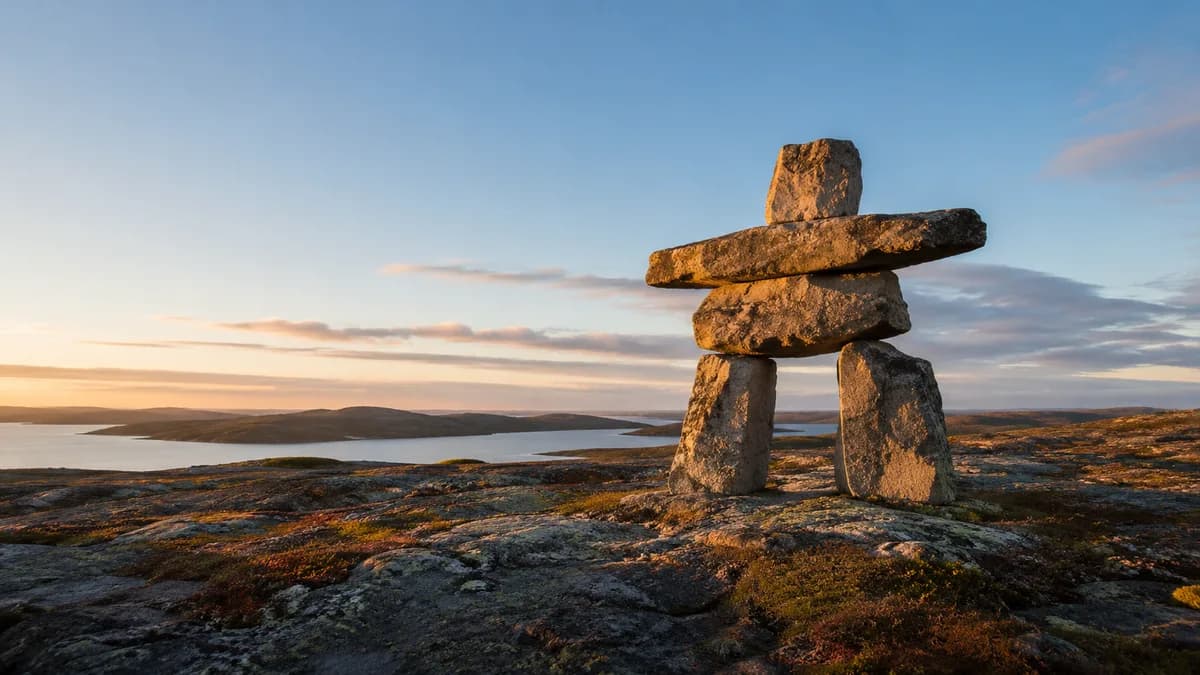
Nunavut, created in 1999, is a territory where the Inuit make up the majority of the population. The inukshuk, a structure of stacked stones, is a well-known Inuit symbol that once served as a landmark in the Arctic landscape. Inuit culture stays alive through language, traditional hunting, sculpture, and throat singing.
The Inuit live across four large regions that stretch from northern Labrador and Quebec through Nunavut to the Northwest Territories. Hunting and fishing remain central to their way of life, as does sharing food within the community. As the North changes quickly, the Inuit play an important role in protecting the Arctic environment and preserving their language, Inuktitut, which is still spoken by a large share of the population.
Treaties between the Crown and First Nations
Over time, treaties were signed between the Crown and many First Nations to set out how land was shared and to establish lasting responsibilities. These solemn agreements created rights and obligations that still exist today. People from nations that signed treaties are sometimes called "Treaty Indians" and hold specific rights that come from those agreements.
Understanding treaties helps explain the special relationship between Indigenous peoples and the Canadian government. These documents are not just relics of the past: they continue to guide negotiations, court decisions, and reconciliation efforts. To learn more, see the government's official page on treaties and agreements.
Between 1871 and 1921, a series of agreements known as the "Numbered Treaties" covered much of western and northern Canada. In exchange for giving up large territories, the Crown promised reserve lands, payments, and certain services. Indigenous and government views on what these promises actually meant sometimes differed, which is why many claims are still being worked out today. Where no treaty was signed, modern land claim agreements are negotiated instead.
Residential schools and reconciliation
The residential school system caused great harm to Indigenous peoples, and reconciliation is now an ongoing national effort. For more than a century, many Indigenous children were taken from their families and placed in residential schools where they were forbidden to speak their languages or practise their cultures. Many suffered serious harm, and the effects are still felt across generations.
The government of Canada acknowledged this wrong and offered an official apology in 2008. The Truth and Reconciliation Commission documented these events and published calls to action to rebuild trust and repair relationships. The National Day for Truth and Reconciliation, on September 30, invites Canadians each year to remember and reflect. Approaching this subject with respect and accuracy is essential.
Reconciliation is not a single gesture: it is ongoing work that involves governments, institutions, and the whole population. It means listening to survivors, supporting Indigenous languages, teaching this history in schools, and respecting treaty rights. The orange shirt, tied to the phrase "every child matters," has become a symbol of remembrance for the children who attended residential schools. For a future citizen, understanding this history is part of an honest knowledge of Canada.
Facts to remember for the test
- Indigenous peoples were the first inhabitants of Canada.
- The Constitution recognizes three groups: First Nations, Metis, and Inuit.
- First Nations are the largest group, with many nations and languages.
- The Metis have both First Nations and European ancestry; many speak Michif.
- Louis Riel is an important Metis leader and the founder of Manitoba.
- The Inuit live mainly in the Arctic, including Nunavut, and speak Inuktitut.
- Treaties were signed between the Crown and many First Nations.
- The residential school system caused great harm; reconciliation is an ongoing effort.
Why this matters for the test and how to study
The test often asks you to name the three groups of Indigenous peoples, to explain who the Metis are, or to identify Louis Riel. Place these peoples within the Canadian history timeline, then go further with the guide Canada Explained. For official information, see the government's page on Indigenous peoples and communities.
To lock in these ideas, review chapter by chapter in our learning section, test yourself with a timed practice exam, then strengthen your weak spots with smart review.