
The Three Branches of Government in Canada
The three branches of government in Canada: the executive, the legislative and the judicial. Their roles explained clearly for the citizenship test.
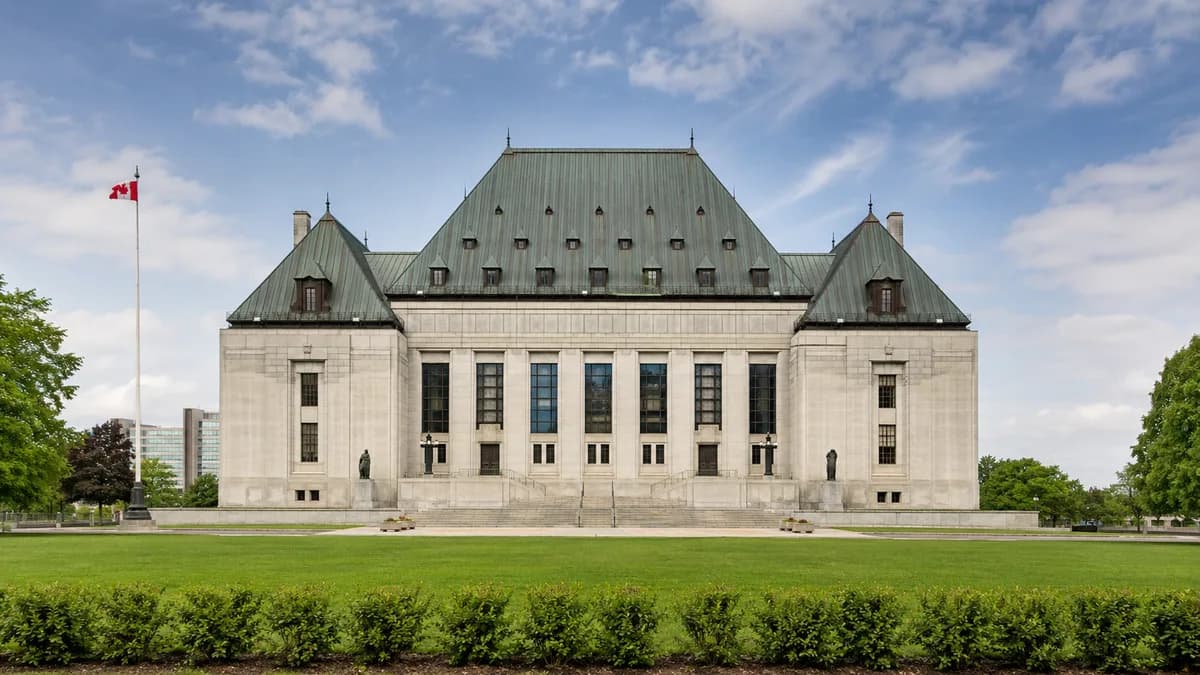
Canada's federal government has three branches: the executive, the legislative and the judicial. The executive carries out laws and runs the government, the legislative makes laws, and the judicial interprets and applies laws independently. This separation of roles, within a constitutional monarchy and a parliamentary system, prevents any single person or group from holding all the power. For the citizenship test, you need to be able to name the three branches and describe what each one does.
The three branches at a glance
Each branch has a distinct role, yet all three work together to govern the country. The idea behind this separation is simple: the group that makes a law should not also judge it, and the group that carries it out should not be able to rewrite it at will. By sharing power this way, the system protects citizens from abuse and makes sure decisions follow rules everyone can see. The Government of Canada sums up this design in its guide on How Canadians Govern Themselves.
The executive branch: carrying out laws and running the country
The executive branch carries out laws and runs the government day to day. It is made up of the Sovereign (the King or Queen of Canada), represented by the Governor General, the Prime Minister and the Cabinet. The Sovereign is the formal head of state, but the role is largely symbolic: the Sovereign acts on the advice of elected ministers. The Governor General performs the royal duties on the Sovereign's behalf, such as giving royal assent to bills and summoning or dissolving Parliament.
The Prime Minister is the head of government and the real centre of executive power. The Prime Minister chooses the ministers who form the Cabinet, sets the government's direction and leads the federal administration. Each minister is responsible for one or more departments, such as Health, Finance or Immigration. The Cabinet makes the decisions that keep the government running and proposes most new laws. To understand how that leader reaches office, see our guide on how the Prime Minister is chosen.
A key idea ties the executive to the legislative branch: responsible government. The Prime Minister and Cabinet are not elected to those posts directly by voters. Instead, they must keep the support, or confidence, of the House of Commons. As long as a majority of members backs the government on important votes, it stays in office. If the government loses a confidence vote, it must resign or ask for an election. This link means the people who run the country are always answerable to the elected representatives of Canadians.
The legislative branch: Parliament makes the laws
The legislative branch makes the laws, and in Canada it is called Parliament. Federal Parliament brings together three parts: the Sovereign (represented by the Governor General), the Senate and the House of Commons. A bill must gain the agreement of all three parts before it becomes a law that applies across the country.
The House of Commons is the elected part of Parliament. Canadians vote to elect Members of Parliament, one for each riding, and the party that wins the most seats usually forms the government. The House debates bills most closely and controls public spending. The Senate is made up of senators appointed by the Governor General on the advice of the Prime Minister. The Senate reviews, revises and sometimes delays bills, and is often called the chamber of "sober second thought." This system sits within the wider picture described in our overview of how Canada is governed.
The two chambers are not equal in every way. Bills that raise or spend public money must start in the House of Commons, because it holds the elected members who answer to voters. The Senate can study and amend most bills, and its second look often catches problems or improves the wording, but it rarely blocks a bill that the elected House strongly supports. This balance lets Parliament combine two strengths: the direct voice of voters through the Commons and careful, less partisan review through the Senate.
How a bill becomes a law
A bill must pass through several stages in both chambers before it receives royal assent and becomes law. The path is structured so that every bill is debated, studied and voted on more than once. Here are the main stages:
- First reading: the bill is introduced and printed, with no debate.
- Second reading: members (or senators) debate the general principle of the bill, then vote.
- Committee stage: a committee studies the bill clause by clause and can suggest changes.
- Third reading: the chamber debates the final version and votes one last time.
- The other chamber: the bill goes through the same process in the second chamber (Commons then Senate, or the reverse).
- Royal assent: once passed by both chambers, the bill receives royal assent from the Governor General and becomes law.
This path shows why legislative power is shared: neither the House of Commons nor the Senate can create a law on its own, and royal assent is a reminder of the Crown's place in the system.
The judicial branch: the courts and the Supreme Court
The judicial branch interprets and applies the laws, and it is independent of the government. It is made up of all the courts, from provincial courts up to the Supreme Court of Canada, the highest court in the country. Judges settle disputes, decide criminal cases and rule on the exact meaning of a law when there is disagreement.
The Supreme Court of Canada is the final court of appeal: its nine judges have the last word on the most important questions of law, including the interpretation of the Constitution and the Canadian Charter of Rights and Freedoms. Crucially, the judicial branch is independent. Judges do not take orders from the Prime Minister or Members of Parliament, which lets them apply the law fairly, even against the government of the day. This independence protects every person before the law.
The court system has several levels. Most cases begin in provincial and territorial courts, which handle everyday criminal and civil matters. Above them sit the superior courts of each province and territory, and then the courts of appeal. Cases can move up from one level to the next, and a small number of the most important reach the Supreme Court of Canada. At every level, the same principle holds: judges decide based on the law and the facts, not on political pressure. Under the rule of law, everyone, including the government itself, must follow the law and answer to the courts.
How the three branches keep each other in balance
The three branches watch over one another so that power stays balanced. Parliament makes the laws, but the executive must keep the confidence of the House of Commons to govern: if it loses that confidence, it can fall and trigger an election. The courts, in turn, can strike down a law or decision that goes against the Constitution. No single branch fully controls the others.
Canada is a constitutional monarchy: the Crown is present in all three branches (as head of state, in Parliament and as the source of justice), but always within the limits set by the Constitution and exercised by representatives who follow the advice of elected officials. It is this combination, a constitutional monarchy and a parliamentary system, that keeps power in balance.
Remembering the three branches for the test
For the citizenship test, link each branch to one simple verb: make, carry out, interpret. Here is a quick recap:
- Executive: the Crown (the Governor General), the Prime Minister and the Cabinet carry out laws and run the government.
- Legislative: Parliament (the Sovereign, Senate and House of Commons) makes the laws.
- Judicial: the courts, including the Supreme Court, interpret and apply the laws, fully independent.
This structure comes up often on the test. Practise with our free mock exams, review the material in our chapter quizzes, and lock it in with smart review, which brings back the weakest topics at the right time.