
Citizenship Test in Saskatchewan: Study Guide
Prepare for the Canadian citizenship test in Saskatchewan. Learn the capital Regina, 1905 province history, prairie geography, and key test facts.
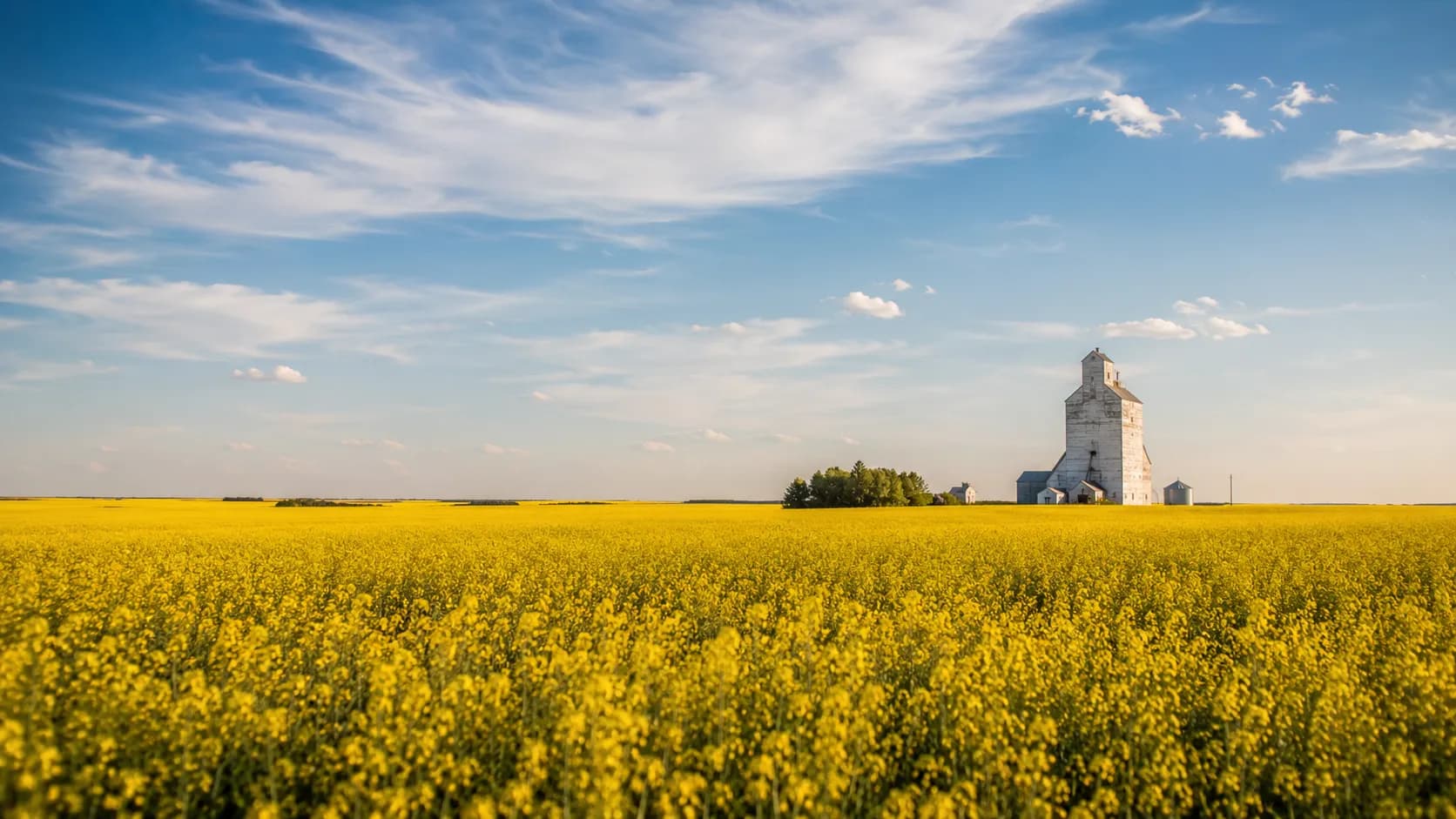
Saskatchewan's capital is Regina, it lies in the Prairie region, and it became a province in 1905. If you are studying for the Canadian citizenship test in Saskatchewan, start with these anchors. The exam pulls its questions from the official guide *Discover Canada*, so a clear grasp of your own province makes the geography and history questions much easier to answer with confidence. Below you will find the province's history in brief, its cities, its economy, the Saskatchewan names that appear in the study guide, practice questions, and the mix-ups to avoid.
Capital and largest city
Regina is the capital of Saskatchewan and the seat of the provincial government. The largest city, however, is Saskatoon, which sits along the South Saskatchewan River. The test frequently asks learners to match a province with its capital, so remember that the capital is Regina even though Saskatoon is bigger. Keeping the two straight avoids a common mix-up.
Saskatchewan sits in the heart of the Prairies, grouped with Manitoba and Alberta. It is landlocked, meaning it has no ocean coastline, and it forms part of Western Canada. The province is famous for its wide, flat horizons and enormous open sky.
Regina grew up around Wascana Lake, an artificial lake at the centre of Wascana Centre, one of the largest urban parks in North America. The provincial Legislative Building stands on its shore. Saskatoon, nicknamed the Bridge City for its many river crossings, is home to the University of Saskatchewan and serves as the headquarters of the province's mining industry and a hub for agricultural research.
A short history of Saskatchewan
The name Saskatchewan comes from a Cree word for the swift-flowing river that crosses the province. Long before provincehood, the plains and northern forests were home to the Cree, Saulteaux, Dene, Dakota, and Nakota nations, whose lives were tied to the bison herds. Fur traders from the Hudson's Bay Company and the North West Company built posts along the rivers in the eighteenth century.
In 1870 the vast western lands known as Rupert's Land passed to Canada, and the region became part of the North-West Territories. Treaties signed with First Nations in the 1870s opened the prairie to settlement, and the North West Mounted Police, created in 1873, marched west the following year to bring law to the plains. In 1885 the Métis, led by Louis Riel, rose up at Batoche in what is now Saskatchewan. The rebellion was defeated and Riel was executed, an event Discover Canada treats in detail.
Railways then brought a flood of homesteaders from Britain, the United States, Ukraine, Germany, and Scandinavia. Saskatchewan became a province on September 1, 1905. The drought and Depression of the 1930s hit the province hard, and in 1944 voters elected Tommy Douglas and the CCF, the first social democratic government in North America. Its public hospital insurance, followed by full medicare in the early 1960s, became the model for Canada's national health care system.
How Saskatchewan became a province
Saskatchewan became a province in 1905, carved out of the North-West Territories in the same year as its neighbour Alberta. Before that, the region was governed as territory and settled steadily as railways pushed west and newcomers arrived to farm the land. The 1905 date is a reliable test fact, and it is easy to remember alongside Alberta because they share the same year.
The area has a much deeper human history. Long before provincehood, the land was home to many First Nations, and it later became a centre of Metis life and culture. Saskatchewan today has one of Canada's largest Indigenous populations, and that heritage is an important part of the province's story.
The order of the western provinces is worth memorizing as a set, because the test likes to compare them. Manitoba joined in 1870, British Columbia in 1871, and then Saskatchewan and Alberta together in 1905. Discover Canada lists every province and territory with its entry year, so a quick look at that table pays off.
Geography and the living skies
Saskatchewan is best known for its flat prairie landscape and its famous living skies, the phrase printed on its licence plates. In the south, vast grain fields stretch to the horizon under dramatic weather and long summer daylight. Farther north, the prairie gives way to forests, rivers, and thousands of lakes.
Because it is landlocked, Saskatchewan's climate is continental: hot summers and cold winters, with wide temperature swings. The open terrain and clear air make sunsets and starry nights especially striking, which is where the "living skies" nickname comes from.
The province is bordered by Alberta to the west, Manitoba to the east, the Northwest Territories to the north, and the American states of Montana and North Dakota to the south. Its two great rivers, the North and South Saskatchewan, join and flow east toward Lake Winnipeg. Protected areas include Prince Albert National Park in the central forests and Grasslands National Park near the American border, one of the last stretches of native prairie in Canada. The Cypress Hills in the southwest rise well above the surrounding plains and were an early base for the Mounted Police.
Cities beyond Regina and Saskatoon
Prince Albert, on the North Saskatchewan River, calls itself the gateway to the north and was the political home of John Diefenbaker. Moose Jaw, west of Regina, is known for its historic downtown, its tunnels, and the nearby air force base. Swift Current serves the ranching southwest, Yorkton anchors a region with deep Ukrainian roots in the east, and North Battleford sits near the site of a historic Mounted Police fort.
One city deserves a special note for the test: Lloydminster straddles the Saskatchewan and Alberta border, with a single municipal government on both sides. It is a handy reminder that the two provinces were created together in 1905 and still share a long, straight boundary.
The economy in more detail
The provincial economy rests on three major resources. Saskatchewan is one of Canada's leading producers of wheat and grain, earning its reputation as a national breadbasket. It is also a world-leading producer of potash, a mineral used in fertilizer, and it produces significant oil. Together these drive much of the province's wealth and employment.
Beyond the big three, the picture is broader than many newcomers expect. Canola, lentils, peas, and other oilseeds and pulses now share the fields with wheat, and Saskatchewan is a major exporter of all of them. The north holds rich uranium deposits, which the study guide mentions alongside potash. Cattle ranching dominates the dry southwest, forestry matters in the north, and Saskatoon has built a research economy around agriculture, biotechnology, and mining.
Saskatchewan also has a strong co-operative tradition. Farmers built grain co-operatives, credit unions, and community-owned services in the early twentieth century, and that spirit of shared ownership shaped the province's politics, including the creation of public health care.
The RCMP academy in Regina
Regina is home to the national training academy of the Royal Canadian Mounted Police, known as Depot. Every RCMP cadet in Canada trains there. The RCMP is a national symbol, and its Regina connection is a useful detail to know when studying Canadian institutions for the test.
The link between the force and the province goes back to the 1870s. The North West Mounted Police made its headquarters at Regina after the railway arrived, and it became the Royal Canadian Mounted Police in 1920. The red serge uniform, the Musical Ride, and the Sunset-Retreat Ceremony at Depot remain some of the most recognizable images of Canada. Note that the RCMP's national headquarters is in Ottawa; Regina is where cadets are trained.
Notable people and events in Discover Canada
Several names and events tied to Saskatchewan appear in the study guide or are widely known Canadian history:
- Louis Riel and the 1885 North-West Rebellion at Batoche, a key episode in the guide's history chapter.
- The North West Mounted Police, founded in 1873, which became the RCMP; its academy is at Depot in Regina.
- John Diefenbaker, prime minister from 1957 to 1963, who represented Prince Albert and introduced the Canadian Bill of Rights in 1960.
- Tommy Douglas, premier of Saskatchewan, who pioneered public health care, the origin of medicare in Canada.
- The numbered treaties of the 1870s between the Crown and First Nations, which the guide discusses in its section on Indigenous peoples.
- Ukrainian and other European settlers who homesteaded the prairies, part of the guide's story of immigration.
Culture, Indigenous heritage, and immigration
Saskatchewan's culture reflects its history in layers. First Nations and Métis communities are present across the province, from reserves and northern villages to the cities. Wanuskewin Heritage Park near Saskatoon preserves thousands of years of Northern Plains Indigenous history, and Batoche National Historic Site tells the Métis story of 1885.
The homesteading era left Ukrainian churches with onion domes, Mennonite and Hutterite farm communities, and francophone villages such as Gravelbourg. Sports are a shared passion: the Saskatchewan Roughriders of the Canadian Football League are followed across the province, and curling and hockey fill the winters. Immigration today brings newcomers from the Philippines, India, China, Nigeria, and many other countries, and both Regina and Saskatoon have grown noticeably more diverse.
What the test asks about Saskatchewan
For Saskatchewan, expect questions on the capital (Regina), the region (Prairies), and the year it became a province (1905). You may also encounter its role as a grain-growing province and its landlocked, prairie geography. The citizenship test has 20 questions, requires 15 correct answers to pass, and gives you 45 minutes online. Reinforce these facts with focused chapter quizzes and timed practice exams that match the real structure, free and with no account needed.
Practice questions about Saskatchewan
Test yourself with these sample questions. Each has one correct answer and a one-line reason.
- What is the capital of Saskatchewan? A) Saskatoon B) Regina C) Winnipeg. Answer: B. Regina is the capital; Saskatoon is the largest city and Winnipeg is the capital of Manitoba.
- In what year did Saskatchewan become a province? A) 1870 B) 1905 C) 1949. Answer: B. Saskatchewan and Alberta both became provinces in 1905.
- True or false: Saskatchewan has an ocean coastline. Answer: False. It is landlocked, bordered by Alberta, Manitoba, the Northwest Territories, and the United States.
- Which resource is Saskatchewan a world-leading producer of? A) Gold B) Potash C) Nickel. Answer: B. Potash, used in fertilizer, is a signature Saskatchewan export.
- Where do RCMP cadets train? A) Ottawa B) Regina C) Winnipeg. Answer: B. The RCMP academy, Depot, is in Regina.
- Which premier of Saskatchewan pioneered public health care in Canada? A) John Diefenbaker B) Louis Riel C) Tommy Douglas. Answer: C. Tommy Douglas introduced public health insurance that became the model for medicare.
Common mistakes and mix-ups
Regina versus Saskatoon. Saskatoon is bigger and often better known, but Regina is the capital. If a question asks for the capital, the answer is always Regina.
1905 is shared with Alberta, not with Manitoba. Manitoba became a province in 1870, well before its western neighbours. Saskatchewan and Alberta were created together in 1905 from the North-West Territories.
Louis Riel in two provinces. Riel led the Red River Resistance in Manitoba in 1869 and 1870, and the 1885 rebellion at Batoche in what is now Saskatchewan. Keep the two events and the two places distinct.
RCMP headquarters versus RCMP training. The force is headquartered in Ottawa. Regina is where cadets train at Depot. Questions about the academy point to Regina.
Prairie provinces are three, not four. The Prairies are Manitoba, Saskatchewan, and Alberta. British Columbia is the West Coast, a separate region in the study guide.
Key facts to remember
- Capital: Regina; largest city: Saskatoon.
- Region: the Prairies (landlocked, Western Canada).
- Became a province: 1905, the same year as Alberta.
- Economy: wheat and grain, potash (world-leading), oil, plus uranium and canola.
- Home to the RCMP national training academy, Depot, in Regina.
- Tommy Douglas, premier of Saskatchewan, pioneered public health care in Canada.
- Large First Nations and Metis population; nickname 'Land of Living Skies'.
With the facts in place, short and regular study beats last-minute cramming. A quick review session several times a week keeps Regina, 1905, and the prairie details fresh so they come to mind instantly on test day. Consistency is what turns study into a confident pass.