
Citizenship Test in Alberta: Study Guide (Edmonton)
Study for the Canadian citizenship test in Alberta. Learn the capital Edmonton, 1905 province history, Rockies geography, and the facts the test asks.
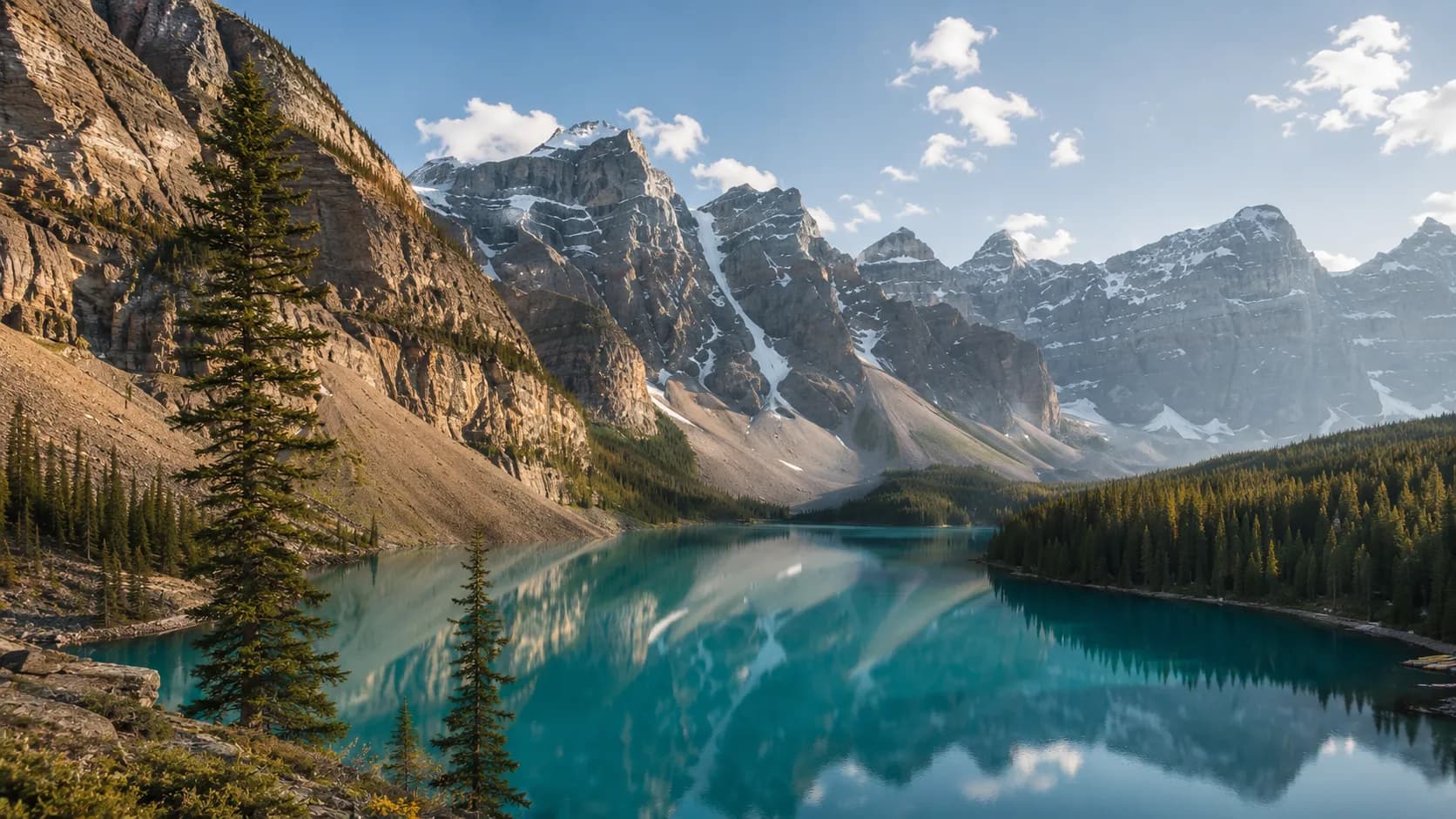
Alberta's capital is Edmonton, it sits in the Prairie region, and it became a province in 1905. If you are preparing for the Canadian citizenship test in Alberta, these anchors come first. The exam draws every question from the official guide *Discover Canada*, and knowing your own province well makes the geography and history sections faster and less stressful on test day. This guide adds the province's history in brief, its cities, its energy and ranching economy, the Alberta names that appear in the study guide, practice questions, and the mix-ups that trip people up.
Capital and largest city
Edmonton is the capital of Alberta and the home of the provincial legislature. The largest city, though, is Calgary, in the province's south. The test asks learners to match provinces with capitals, so it is worth remembering that the capital is Edmonton even though Calgary is often better known internationally. Keeping the two apart avoids a frequent slip.
Alberta is a Prairie province in Western Canada, bordered by British Columbia to the west and Saskatchewan to the east. While its eastern plains are classic prairie, its western edge rises into the Rocky Mountains, giving Alberta a strikingly varied landscape.
Edmonton, on the North Saskatchewan River, began as a Hudson's Bay Company fur trading post and grew into the Gateway to the North, the supply centre for the oil sands and the northern territories. It is known for its river valley parks, its summer festivals, and the Edmonton Oilers. Calgary, at the meeting of the Bow and Elbow rivers, is the headquarters city of Canada's energy industry, home of the Stampede, and the host of the 1988 Winter Olympics, the first Winter Games held in Canada.
A short history of Alberta
For thousands of years the plains belonged to the Blackfoot Confederacy, the Cree, the Dene, and other nations who followed the bison. Head-Smashed-In Buffalo Jump, in southern Alberta, preserves one of the oldest and best-known bison hunting sites in the world. Fur traders built Fort Edmonton and other posts along the North Saskatchewan River in the late 1700s, and Métis communities grew around them.
In the 1870s Canada signed Treaties 6 and 7 with the First Nations of the region, and the North West Mounted Police established Fort Macleod and Fort Calgary to end the whisky trade and keep order. The Canadian Pacific Railway reached Calgary in 1883, ranchers moved onto the southern grasslands, and in 1885 the federal government created Banff National Park, Canada's first. The province itself was created on September 1, 1905, and named after Princess Louise Caroline Alberta, a daughter of Queen Victoria.
Homesteaders from Britain, the United States, Ukraine, Germany, and Scandinavia filled the prairie in the early 1900s. The major oil discovery at Leduc, south of Edmonton, in 1947 transformed Alberta into an energy province, and development of the oil sands near Fort McMurray in later decades made it one of the world's largest oil producers. The 1988 Calgary Olympics put the province on the world stage.
How Alberta became a province
Alberta became a province in 1905, created from the North-West Territories in the same year as Saskatchewan. The two neighbours share this founding date, which makes it easy to study them together. Before 1905 the region was territory, settled steadily as railways expanded and newcomers arrived to farm and ranch.
The land holds a far older history. Indigenous peoples, including the Blackfoot and Cree, lived here for thousands of years before provincehood, and their presence remains central to Alberta's identity. The 1905 date is the key fact the test expects, paired with the capital and region.
Set Alberta in the sequence of the West: Manitoba in 1870, British Columbia in 1871, then Saskatchewan and Alberta in 1905. Discover Canada lists all provinces and territories with their entry years, and the western dates are a favourite source of test questions.
Geography from prairie to Rockies
Alberta's geography is remarkably diverse. The eastern and central plains are flat prairie and ranching country, while the western border is dominated by the Rocky Mountains. This mountain region includes Banff and Jasper national parks, among the most famous protected landscapes in Canada and a magnet for visitors from around the world.
The province is also known for the Badlands near Drumheller, where erosion has carved dramatic canyons and exposed rich fossil beds. Alberta is one of the world's great sources of dinosaur fossils, and the Royal Tyrrell Museum in Drumheller draws scientists and tourists alike. From mountain peaks to fossil-filled canyons, few provinces pack in this much variety.
Alberta has five national parks: Banff, Jasper, Waterton Lakes in the southwest corner, Elk Island east of Edmonton, and Wood Buffalo in the far north, which straddles the border with the Northwest Territories. Lake Louise and the Columbia Icefield are among the best-known sights in the Rockies. The province also experiences chinooks, warm winter winds that sweep down from the mountains and can raise Calgary's temperature dramatically in a few hours.
Cities beyond Edmonton and Calgary
Red Deer sits halfway between the two big cities along the busy Highway 2 corridor. Lethbridge, in the irrigated south, is a farming and university city near the Blackfoot reserves. Medicine Hat, in the southeast, grew on natural gas and clay industries. Fort McMurray, in the northeast, is the centre of the oil sands. Grande Prairie serves the agricultural and energy region of the northwest Peace Country.
Two mountain towns matter for tourism: Banff, inside the national park, and Jasper, farther north along the Icefields Parkway. Lloydminster, shared with Saskatchewan, straddles the eastern border. St. Albert, next to Edmonton, began as a francophone mission and still reflects the province's French-speaking heritage.
The economy in more detail
Alberta's economy is dominated by oil and gas, including the vast oil sands in the province's north, which are among the largest oil reserves in the world. Energy drives much of the province's wealth and shapes its economy. Alongside oil, Alberta has a strong tradition of cattle ranching, and beef is central to both its economy and its culture.
The energy sector includes conventional oil, natural gas, the oil sands, pipelines, refineries, and the head offices concentrated in downtown Calgary. Agriculture goes well beyond cattle: Alberta grows wheat, canola, and barley, and its irrigated south produces sugar beets and vegetables. Forestry is important in the north and the foothills, and tourism in the Rockies supports thousands of jobs. Alberta is also known for having no provincial sales tax, a fact newcomers notice quickly.
Because energy prices rise and fall, Alberta's economy has gone through booms and busts. That cycle shapes provincial politics and budgets, and it is why Edmonton and Calgary have worked to grow technology, health research, and other industries alongside oil.
Culture and the Calgary Stampede
Alberta's ranching heritage comes alive each year at the Calgary Stampede, a world-famous rodeo and festival that celebrates cowboy culture. The Stampede draws huge crowds and is one of Alberta's best-known cultural events. It reflects the province's frontier roots and its continuing pride in ranching life.
Beyond the Stampede, Alberta's culture is shaped by its First Nations and Métis communities, by the Ukrainian settlers whose churches and giant pysanka at Vegreville mark the east-central prairie, by francophone communities in St. Albert and the Peace Country, and by decades of immigration. Calgary and Edmonton are now among the most diverse cities in Canada, with large communities from the Philippines, India, China, and many other countries. Hockey rivalry between the Oilers and the Flames, known as the Battle of Alberta, is a shared passion.
Notable people and events in Discover Canada
Several Alberta-related people and events appear in the study guide or are widely known Canadian history:
- Banff, established in 1885 as Canada's first national park, mentioned in the guide's section on the Prairie provinces.
- The oil sands and Alberta's role as Canada's largest producer of oil and gas, a key fact in the guide's economy chapter.
- The Famous Five, led by Emily Murphy of Edmonton, whose 1929 Persons Case confirmed that women could sit in the Senate.
- The North West Mounted Police, which built Fort Macleod and Fort Calgary in the 1870s before becoming the RCMP.
- Treaties 6 and 7, signed with First Nations in the 1870s, part of the guide's discussion of Indigenous peoples.
- The 1988 Calgary Winter Olympics, the first Winter Games hosted by Canada.
What the test asks about Alberta
For Alberta, expect questions on the capital (Edmonton), the region (Prairies), and the year it became a province (1905). Its oil-and-gas economy and its Rocky Mountain geography, including Banff, can also appear. The citizenship test has 20 questions, needs 15 correct to pass, and allows 45 minutes online. Solidify these facts with targeted chapter quizzes and full-length practice exams built to mirror the real test, free and without an account.
Practice questions about Alberta
Check your recall with these sample questions. Each has one correct answer and a short reason.
- What is the capital of Alberta? A) Calgary B) Edmonton C) Banff. Answer: B. Edmonton is the capital; Calgary is the largest city and Banff is a national park town.
- In what year did Alberta become a province? A) 1871 B) 1905 C) 1949. Answer: B. Alberta and Saskatchewan both became provinces in 1905.
- Which province borders Alberta to the west? A) Saskatchewan B) Manitoba C) British Columbia. Answer: C. British Columbia lies to the west and Saskatchewan to the east.
- True or false: Banff was Canada's first national park. Answer: True. Banff was created in 1885, twenty years before Alberta became a province.
- What is Alberta's main economic resource? A) Fishing B) Oil and gas C) Potash. Answer: B. Alberta is Canada's largest producer of oil and gas, including the oil sands.
- Which Alberta city hosted the 1988 Winter Olympics? A) Edmonton B) Calgary C) Jasper. Answer: B. Calgary hosted the 1988 Winter Games.
Common mistakes and mix-ups
Edmonton versus Calgary. Calgary is larger and hosts the Stampede and the energy head offices, but Edmonton is the capital. When the question asks for the capital, answer Edmonton.
1905 belongs to both Alberta and Saskatchewan. Manitoba joined in 1870 and British Columbia in 1871. If a question offers 1905 for either Alberta or Saskatchewan, it is correct for both.
Banff came before the province. Banff National Park dates from 1885, while Alberta was created in 1905. Do not let the older date confuse you about when the province was founded.
The Rockies are shared with British Columbia. The mountains form the border, so both provinces can claim them. Banff and Jasper are in Alberta; Yoho and Kootenay parks are across the line in British Columbia.
The oil sands are in the north, not Calgary. The oil sands lie around Fort McMurray. Calgary is where the companies have their offices. Alberta is a Prairie province, not part of the West Coast region.
Key facts to remember
- Capital: Edmonton; largest city: Calgary.
- Region: the Prairies (Western Canada).
- Became a province: 1905, the same year as Saskatchewan.
- Borders: British Columbia to the west, Saskatchewan to the east.
- Economy: oil and gas (oil sands) and cattle ranching.
- Banff: Canada's first national park, created in 1885.
- Landmarks: Rocky Mountains, Banff and Jasper, Drumheller Badlands, Calgary Stampede, 1988 Winter Olympics.
Once these facts feel solid, short and spaced practice beats cramming. A quick review round a few times each week keeps Edmonton, 1905, and Alberta's landmarks fresh so they surface instantly during the test. Steady, consistent study is the surest route to a confident pass.