
Citizenship Test: Manitoba Facts to Know
Manitoba facts for the Canadian citizenship test: capital Winnipeg, the 1870 Manitoba Act, Louis Riel and the Métis, the fur trade, and the Prairie provinces.
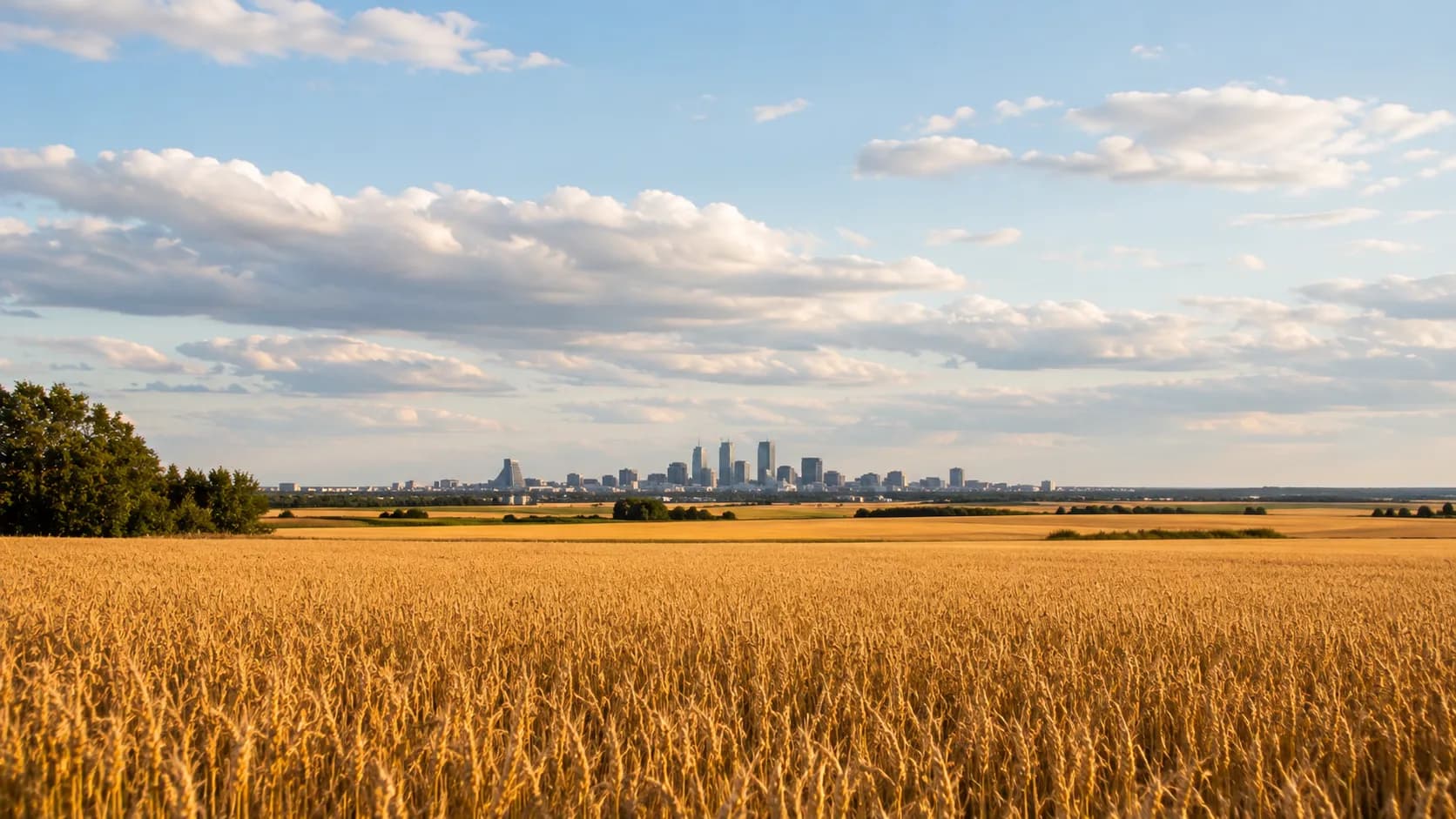
Manitoba's capital is Winnipeg, it is one of the three Prairie provinces, and it joined Canada in 1870 through the Manitoba Act. These are the anchor facts for the citizenship test, and Manitoba carries one more that appears often: its entry into Confederation is tied directly to Louis Riel and the Métis of the Red River. Below you will find those facts in context, a short history from the fur trade to today, the geography and economy, the province's remarkably diverse population, practice questions, and the mix-ups that most often cost a point.
Capital and Region
Winnipeg is both the capital and by far the largest city in Manitoba. Unlike some provinces where the capital and the biggest city differ, here they are the same place, which makes this an easy point to remember.
Winnipeg grew up at the Forks, where the Red River and the Assiniboine River meet. That spot had been a gathering and trading place for Indigenous peoples for thousands of years before fur traders built posts there. The city's name comes from Cree words meaning muddy water, a reference to the lake to the north. The provincial legislature building, topped by the gilded Golden Boy statue, sits a short walk from the rivers.
Manitoba is one of the three Prairie provinces, together with Saskatchewan and Alberta. It sits in the middle of the country and is often called the Gateway to the West, because for early settlers it was the doorway between eastern Canada and the western plains. Discover Canada uses the Prairie label for these three provinces, so keep them grouped in your mind.
A Short History: From the Fur Trade to Today
Long before any province existed, the land was home to the Cree, the Ojibwe, or Anishinaabe, the Dene in the north, and the Dakota in the south. These nations hunted bison, fished the great lakes, and travelled a network of rivers that later became the highways of the fur trade.
In 1670 the English Crown granted the Hudson's Bay Company a trading monopoly over the vast drainage basin of Hudson Bay, a territory named Rupert's Land. Posts such as York Factory on the bay shipped furs to Europe for two centuries. Discover Canada presents the Hudson's Bay Company as a founding institution of Canadian commerce, and Manitoba was at the heart of its territory.
From the fur trade came a new people. French and Scottish traders married Cree and other Indigenous women, and their descendants, the Métis, developed a distinct culture, the Michif language, and a way of life built around the bison hunt and the river-lot farms of the Red River. In 1812 Lord Selkirk brought Scottish settlers to found the Red River Colony, which added farmers to the mix.
When Canada bought Rupert's Land in 1869 without consulting the people who lived there, the Métis under Louis Riel set up a provisional government. The result, in 1870, was the Manitoba Act. Fifteen years later, in 1885, Riel led a second uprising farther west, the North-West Rebellion in present-day Saskatchewan. It was defeated, and Riel was tried and executed for high treason.
The railway arrived in the 1880s and turned Winnipeg into a boom town. Between the 1890s and the First World War, immigrants from Ukraine, Iceland, Poland, and elsewhere in Europe, along with Mennonites, filled the farmland. In 1919 the Winnipeg General Strike, one of the largest labour actions in Canadian history, briefly shut the city down. Later decades brought hydroelectric development in the north and, from the late 20th century on, a large Filipino community that is now one of the province's defining groups.
How Manitoba Joined Canada
Manitoba joined Confederation in 1870, the fifth province to do so and the first added after the original four. It entered through the Manitoba Act, a law that created the province out of part of the vast Northwest lands Canada had acquired. The new province was so small at first that people nicknamed it the postage stamp province; its borders were extended later.
That law did not appear on its own. The Métis leader Louis Riel led the Red River Resistance to defend the rights, land, and French-speaking Catholic culture of his people. The negotiations that followed produced the Manitoba Act, which guaranteed Métis land rights and the use of both French and English. That is why Riel is remembered as the founder of Manitoba. His story is one of the most testable pieces of Manitoba history.
Louis Riel and the Métis in Discover Canada
Discover Canada devotes real space to Riel, and the wording matters. The guide notes that he was seen by some as a rebel and a traitor, and by many others as a hero, a defender of Métis rights, and the father of Manitoba. Both views appear in the text, so a question could ask you either how he is remembered today or what happened to him in 1885.
Keep the two episodes apart. The Red River Resistance of 1869 to 1870 took place in Manitoba and ended in negotiation and the creation of the province. The North-West Rebellion of 1885 took place in Saskatchewan, was crushed by federal troops carried west on the new railway, and ended with Riel's execution. Gabriel Dumont was the Métis military leader in 1885. If a question mentions 1885 and Riel together, the answer involves the rebellion and his trial, not the founding of Manitoba.
The Métis themselves are one of the three groups of Aboriginal peoples recognized in Canada's Constitution, alongside First Nations and Inuit. Discover Canada describes them as a distinct people of mixed Indigenous and European ancestry, most of whom live in the Prairie provinces. Manitoba is the historic homeland of the Métis Nation, which is why the province and the people are so closely linked on the test.
Geography and Landscape
Manitoba stretches from prairie farmland in the south to rocky, forested, and eventually subarctic land in the north. Lake Winnipeg, one of the largest lakes in Canada, dominates the centre of the province, with Lake Manitoba and Lake Winnipegosis beside it. Rich soil makes the south strong farming country, part of Canada's agricultural heartland.
Far to the north sits Churchill, on Hudson Bay, famous as a place to see polar bears and beluga whales. Manitoba is the only Prairie province with a saltwater coast, and that Hudson Bay shoreline is a surprisingly common quiz detail. This contrast, grain fields in the south and polar bears in the north, captures the wide range of Manitoba's geography.
Water shapes daily life. The Red River flows north from the United States through Winnipeg into Lake Winnipeg, and its spring floods have been serious enough that a large diversion channel, the Red River Floodway, was built around the city. Countless lakes fill the Canadian Shield country in the north and east, drawing anglers and cottagers every summer.
Cities Beyond Winnipeg
Brandon, in the southwest, is the province's second-largest city and the service centre for a rich farming region, which is why it is nicknamed the Wheat City. Thompson, in the north, grew up around nickel mining, and Churchill on Hudson Bay is a small but famous port town reached by rail and air, known for polar bears and northern lights.
Closer to Winnipeg, Steinbach reflects Mennonite heritage, Portage la Prairie sits on the old fur-trade route west, and Gimli on Lake Winnipeg keeps alive the traditions of Icelandic settlers. Inside Winnipeg itself, St. Boniface is the historic French quarter, birthplace and burial place of Louis Riel and home to the largest francophone community in Western Canada.
Economy: Farms, Mines, and Hydro Power
Agriculture remains central to Manitoba's economy, from wheat and canola to livestock, supported by the fertile southern plains. Winnipeg adds manufacturing, transportation, and finance, keeping its old role as a hub where east meets west.
Discover Canada summarizes the economy as agriculture, mining, and hydroelectric power generation, and that three-word list is worth memorizing. Northern rivers such as the Nelson drive large hydroelectric stations that supply the province and export power. Mining brings nickel, copper, and zinc out of the Shield, while Winnipeg builds buses and aerospace components and hosts the Royal Canadian Mint plant that produces Canada's circulation coins.
People and Communities
Manitoba has a notably diverse population. It is home to large Indigenous communities, including First Nations and a strong Métis presence rooted in its founding history. Among the provinces, Manitoba has one of the highest proportions of Indigenous residents, and Cree and Ojibwe are widely spoken alongside English and French.
It also has significant Ukrainian and Filipino communities that have shaped the province's food, festivals, and neighbourhoods. Discover Canada singles out Manitoba as an important centre of Ukrainian culture, and the Filipino community has become one of the largest in Canada relative to population, with Tagalog now a familiar sound in Winnipeg.
Winnipeg is the cultural hub, known for its arts, its historic role in the fur trade at the Forks, and community celebrations that reflect this mix of peoples. Folklorama, a multicultural festival held every summer, and the Festival du Voyageur, a winter celebration of French-Canadian and Métis heritage in St. Boniface, are the two best-known events. That diversity is a good example when the study guide discusses Canada's multicultural makeup.
What the Test Asks About Manitoba
Common questions cover the capital (Winnipeg), Manitoba as a Prairie province, the year it joined (1870), and above all Louis Riel and the Métis. If you can connect Riel, the Red River, and the Manitoba Act, you have the province's most important test material. The Hudson's Bay Company and the Métis as an Aboriginal group can also surface in the history chapters.
To lock these in, try a timed practice exam with mixed provincial and history questions, then clear up weak spots with smart review before you book the real thing. Every question is drawn from Discover Canada, so read the Manitoba and Riel passages in the guide at least once.
Practice Questions
Answer these six questions, then check yourself. Each mirrors the format of the real test, with one correct option and a short reason.
- 1. What is the capital of Manitoba? (a) Brandon (b) Regina (c) Winnipeg (d) Saskatoon. Answer: (c) Winnipeg. It is also the largest city; Regina and Saskatoon are in Saskatchewan.
- 2. In what year did Manitoba join Confederation? (a) 1867 (b) 1870 (c) 1871 (d) 1905. Answer: (b) 1870, through the Manitoba Act. Alberta and Saskatchewan joined in 1905.
- 3. Who is considered the founder of Manitoba? (a) Sir John A. Macdonald (b) Louis Riel (c) Lord Selkirk (d) Gabriel Dumont. Answer: (b) Louis Riel, Métis leader of the Red River Resistance.
- 4. True or false: Manitoba is one of the three Prairie provinces. Answer: true, together with Saskatchewan and Alberta.
- 5. Which company held a fur-trade monopoly over Rupert's Land, including present-day Manitoba? (a) Canadian Pacific Railway (b) Hudson's Bay Company (c) East India Company (d) North West Mounted Police. Answer: (b) the Hudson's Bay Company, chartered in 1670.
- 6. What happened to Louis Riel in 1885? (a) He became premier (b) He founded Winnipeg (c) He was executed after the North-West Rebellion (d) He moved to Quebec. Answer: (c). The 1885 rebellion in Saskatchewan was defeated and Riel was executed.
Five or six correct means Manitoba is under control. Fewer than that, and the Riel timeline is usually the section to reread.
Common Mix-Ups to Avoid
- 1870 versus 1885: Manitoba was created in 1870 after the Red River Resistance; the North-West Rebellion and Riel's execution came in 1885, in Saskatchewan.
- Founder of Manitoba versus first prime minister: Riel founded Manitoba; Sir John A. Macdonald was Canada's first prime minister and the man who sent troops against Riel.
- Hudson Bay versus Hudson's Bay Company: the bay is the body of water where Churchill sits; the company is the fur-trading business that once controlled the region.
- Lake Winnipeg versus Winnipeg: the lake lies north of the city, and the city is not on its shore.
- Prairie province versus Central Canada: Manitoba is a Prairie province; Central Canada means Ontario and Quebec.
- Churchill is in Manitoba, not in Nunavut or the Northwest Territories, even though it sits on the Arctic-facing Hudson Bay.
- Métis versus First Nations versus Inuit: three distinct Aboriginal groups; the Métis are the people of mixed heritage central to Manitoba's founding.
Most of these are date or label swaps. Slowing down on any question that pairs a year with a name will save you the most points.
Key Facts Recap
- Capital and largest city: Winnipeg, at the Forks of the Red and Assiniboine rivers
- Region: Prairies (with Saskatchewan and Alberta)
- Joined Confederation: 1870, via the Manitoba Act, the fifth province
- Louis Riel: Métis leader and founder of Manitoba (Red River Resistance); executed in 1885 after the North-West Rebellion
- Fur-trade heritage: Hudson's Bay Company and Rupert's Land
- Diverse population: large Indigenous, Ukrainian, and Filipino communities; St. Boniface francophone quarter
- Economy: agriculture, mining, hydroelectric power
- Geography: Lake Winnipeg, prairie farmland, Hudson Bay coast, polar bears at Churchill
- Nickname: Gateway to the West
The exam is 20 questions, you need 15 correct to pass, and you have 45 minutes online, so a firm grasp of Manitoba's founding story pays off. When you feel ready, run a full chapter quiz to test your recall.