
Canada's Economy for the Citizenship Test: Trade, Resources and CUSMA
Canada's three economic sectors, trade with the United States, CUSMA and natural resources, explained for the Canadian citizenship test.
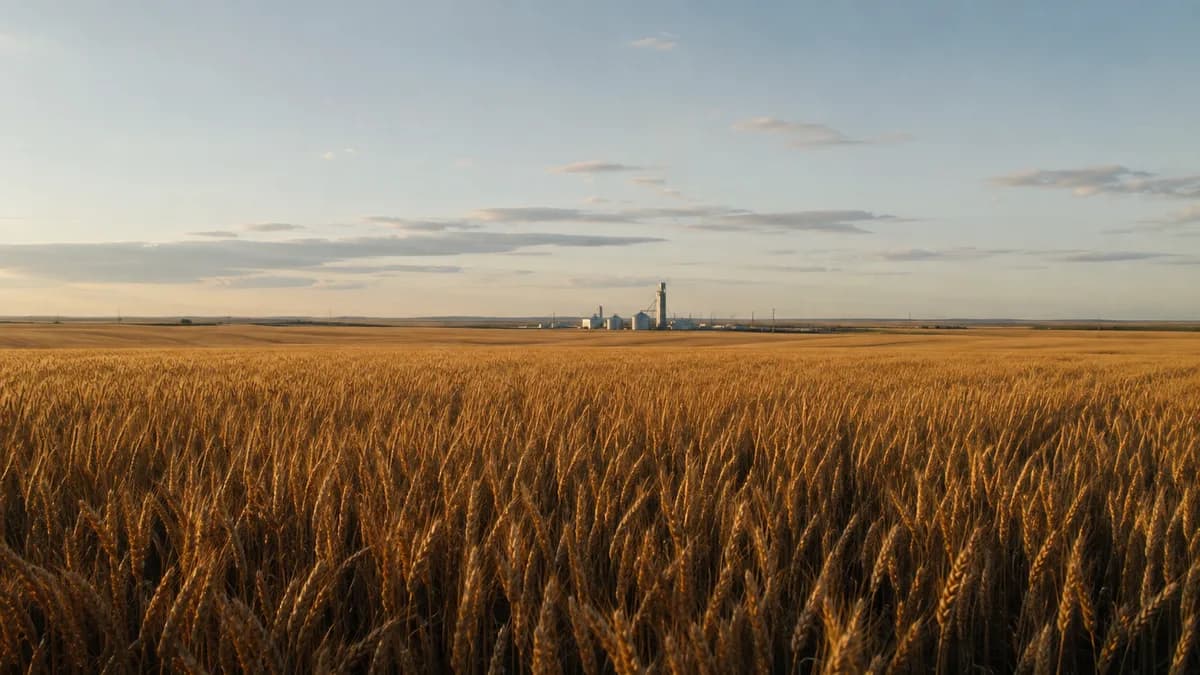
Canada's economy rests on three main types of industries, services, manufacturing, and natural resources, and Canada is a trading nation whose largest partner by far is the United States. Those two sentences carry almost everything the citizenship test checks in the economy chapter of the official guide Discover Canada. The rest is a matter of matching a resource to a region and remembering a few free trade dates.
The economy chapter is one of the shortest in the guide, and it usually accounts for only one or two questions out of the twenty on the test. Since you need fifteen correct answers to pass, those points are worth having. If you are working through every topic, start with the overview in Canada Explained, then come back here for the economic side.
This article walks through the logic of the chapter: what the country produces, who it trades with, which regions live off which resources, and which pieces of history the guide ties to the economy. Every fact appears the way the test is likely to ask it. When you want to check yourself, the drill set 15 economy questions with answers takes over from here.
The three main sectors of Canada's economy
The official guide sorts the economy into three main types of industries: service industries, manufacturing industries, and natural resources industries. Learn the list in that order, the one used by the Discover Canada guide itself, because most questions simply ask you to recite it or to place an example in the right category.
- Service industries: more than 75 percent of working Canadians earn their living here. The list includes transportation, education, health care, construction, banking, communications, retail, tourism, and government services.
- Manufacturing industries: they make goods sold at home and shipped abroad, such as paper, high tech equipment, aerospace technology, automobiles, machinery, food, and clothing.
- Natural resources industries: forestry, fishing, agriculture, mining, and energy. They employ fewer people than services, but they weigh heavily in exports and support entire regions.
The dominance of services often surprises candidates, because people picture Canada as forests, mines, and oil fields. In practice, the vast majority of jobs sit in hospitals, schools, stores, banks, construction sites, and transportation. That contrast is exactly the kind of thing the test likes to probe: when a question asks which sector employs the most Canadians, the answer is always service industries.
Manufacturing is concentrated in southern Ontario and Quebec, which the guide describes as the industrial heartland of the country. Ontario is home to the automobile industry, with its assembly plants and parts suppliers. Quebec is known for aerospace, pulp and paper, and food processing. These plants depend on foreign markets just as much as on Canadian shoppers.
The most common trap involves sorting examples. A mine or a sawmill belongs to natural resources, but the mill that turns that wood into paper belongs to manufacturing. Construction and banking are service industries, even though one puts up buildings and the other handles money. Ask yourself one question: does the activity pull a resource from the ground, turn raw material into a finished product, or provide a service to a person?
Canada as a trading nation
The United States is Canada's most important trading partner, and the guide states that Canada has always been a trading nation, with commerce remaining the engine of economic growth. This is the single most tested fact in the chapter, and it comes in both directions: name the partner, or explain why trade matters so much.
The reason fits in one line that the guide states almost word for word: Canadians could not maintain their standard of living without trading with other nations. The domestic market is too small to absorb everything the country produces. Alberta oil, Prairie wheat, West Coast timber, Ontario automobiles, and Atlantic fish all find their buyers abroad, mainly south of the border.
That reliance on trade explains why infrastructure matters so much here. The St. Lawrence Seaway links the Great Lakes to the Atlantic and lets ships sail deep into the continent. The Port of Vancouver serves as the gateway to Asia and the Pacific, Halifax plays that role on the East Coast, and transcontinental railways connect the two. Canada is also a member of the G7, the group of major advanced economies, a detail that turns up regularly in test questions.
An open economy needs stable rules: contracts that hold, impartial courts, equality before the law. The guide ties Canadian prosperity to the rule of law, a principle that makes more sense once you have seen how the Canadian justice system actually works. The two chapters answer each other, so reviewing them together saves time.
From NAFTA to CUSMA: three free trade dates
Three dates frame Canada's recent trade history: 1988 for the free trade agreement with the United States, 1994 for NAFTA which added Mexico, and 2020 for CUSMA which replaced NAFTA. Read the question carefully: if it mentions only the United States, the answer is the 1988 agreement; if it mentions three countries, it is NAFTA or CUSMA depending on the period.
In 1988, Canada and the United States signed a free trade agreement that lowered trade barriers between the two countries. The issue dominated the federal election campaign that year, which shows how directly commerce with the southern neighbour touches everyday life in Canada.
In 1994, the North American Free Trade Agreement, NAFTA, came into force and extended the deal to Mexico. The official guide presents it as the creation of the largest free trade area in the world. That is the phrasing the test reuses most often.
On July 1, 2020, the Canada, United States, Mexico Agreement, known as CUSMA, replaced NAFTA. Americans call it USMCA and Mexicans call it T-MEC, but it is the same treaty, updated to cover digital trade, labour, and the auto sector. If a question offers both NAFTA and CUSMA, the agreement in force today is CUSMA.
The five natural resources industries
Canada's natural resources fall into five industries: forestry, fishing, agriculture, mining, and energy. The list is short, and it shows up in test questions in exactly this form.
- Forestry: forests cover an enormous share of the country and feed the production of lumber, pulp, and paper, especially in British Columbia, Quebec, and Ontario.
- Fishing: cod, lobster, crab, and herring on the Atlantic coast, salmon and shellfish on the Pacific coast, plus freshwater fishing in the Great Lakes and inland waters.
- Agriculture: wheat and canola across the Prairies, cattle ranching in Alberta, dairy in Ontario and Quebec, potatoes on Prince Edward Island, fruit from the Okanagan and Niagara valleys.
- Mining: potash and uranium in Saskatchewan, nickel in Ontario and Manitoba, diamonds in the Northwest Territories, gold in Yukon, iron ore in Labrador.
- Energy: oil and natural gas, including the oil sands of northern Alberta, along with hydroelectricity, where Quebec is the country's leading producer.
Energy deserves extra attention because it covers two very different realities. On one side, oil and gas, concentrated in the West, make Alberta the leading producing province and place Canada among the countries with the largest proven reserves in the world thanks to the oil sands. On the other, hydroelectricity supplies a major share of Canadian electricity: Quebec, Newfoundland and Labrador, Manitoba, and British Columbia generate power from their rivers and export part of it to the United States.
Canadian agriculture also reads like a map. The Prairies supply the grain and oilseeds that ship around the world, with Saskatchewan nicknamed the breadbasket of the world. Southern Ontario and Quebec concentrate dairy, pork, corn, and fruit, and Quebec alone produces the large majority of the world's maple syrup. These pairings are worth memorizing, because the test often presents them as a province and product match.
Regional economic specialties, province by province
Every province and territory has one or two economic specialties that the guide names explicitly, and the test likes to check those associations. Here is the full list, condensed for review.
- Newfoundland and Labrador: historic cod fishery, offshore oil and gas, iron ore and hydroelectric power in Labrador.
- Prince Edward Island: agriculture, especially potatoes, along with fishing and tourism.
- Nova Scotia: fishing, forestry, mining, agriculture, and the major port of Halifax on the East Coast.
- New Brunswick: forestry and pulp and paper, agriculture, fishing, food processing, and mining.
- Quebec: the country's leading producer of hydroelectricity, plus pulp and paper, aluminum, aerospace, and maple syrup.
- Ontario: the manufacturing and automotive heartland, financial services in Toronto, farming in the south, mining in the north.
- Manitoba: agriculture, hydroelectric power, food processing, and mining.
- Saskatchewan: wheat and grain, some of the world's richest potash and uranium deposits, plus oil and gas.
- Alberta: the leading producer of oil and gas, the oil sands of the north, cattle ranching, and grain.
- British Columbia: forestry, mining, salmon fishing, tourism, film, and the Port of Vancouver facing Asia.
- Yukon: mining, the legacy of the Klondike Gold Rush, and tourism.
- Northwest Territories: diamonds, gold, oil, and gas.
- Nunavut: mining, Inuit art recognized around the world, fishing, and tourism.
A good method is to review these specialties by region rather than province by province. The Atlantic Provinces live off the sea, the forest, and more recently offshore oil. Central Canada manufactures and provides services. The Prairies produce energy and food. The West Coast exports timber, fish, and goods bound for Asia. The North supplies minerals. If that grouping is not familiar yet, read the five regions of Canada before going further.
The North deserves a note of its own. The three territories cover more than a third of the country's area and hold only a small fraction of its population, but what lies underground changes the equation. Diamond mines in the Northwest Territories turned Canada into a world producer, and Inuit art from Nunavut is both an economic and a cultural activity, often mentioned in the guide.
The economic history the guide ties to the test
The fur trade was Canada's first major industry, and it explains the exploration of the territory, the beaver's place among national symbols, and the long history of the country's trading links. Economic history questions come up regularly, often tucked into the history chapter rather than the economy one.
The Hudson's Bay Company, founded in 1670, received exclusive trading rights over the vast Hudson Bay watershed, a territory known as Rupert's Land. Its rival, the North West Company of Montreal, pushed voyageurs and coureurs des bois ever farther west. Beaver pelts supplied the hat fashion of Europe, and the whole trade depended on knowledge of the land and on the work of Indigenous peoples and the Metis.
In the nineteenth century, squared timber and fishing took over as the great exports, while canals and then railways opened the interior of the continent. The completion of the Canadian Pacific Railway in 1885 fulfilled the promise made to British Columbia when it joined Confederation in 1871, and it made the settlement of the Prairies possible.
Then came the wheat boom. Between the 1890s and 1914, hundreds of thousands of immigrants settled in the West to farm, drawn by recruitment campaigns across Europe. Prairie wheat became the country's flagship export and gave the region its population of very diverse origins.
The Second World War reshaped the economy one more time: Canadian factories turned out ships, aircraft, and vehicles in large numbers, and the country emerged from the conflict as an industrial power with one of the highest standards of living in the world. That chapter overlaps with the military story, covered in our article on Canadian military history.
The economic symbols on the test
Canada's currency is the Canadian dollar, and the Bank of Canada, created in 1934, issues the country's banknotes. Those two answers cover most money questions.
The coins carry nicknames worth knowing. The one dollar coin is called the loonie, after the common loon on its reverse. The two dollar coin is nicknamed the toonie and shows a polar bear. The one cent coin was withdrawn from circulation in 2013, and cash payments are now rounded to the nearest five cents.
Several coins tell the story of the economy. The beaver appears on the five cent coin, a direct nod to the fur trade and an official emblem of Canada. The caribou sits on the twenty five cent coin. The Bluenose, the famous Nova Scotia racing schooner, appears on the ten cent coin and links the currency to Atlantic maritime history. The maple leaf, meanwhile, shows up everywhere, from the flag to the banknotes.
What the test asks about the economy
Economy questions on the test are factual, and the answer fits in one sentence: a list, a country, a date, or a province. Here are seven typical wordings with their answers, to treat as a mini test. Cover the answer, say yours out loud, then check.
What are the three main types of industries in Canada? Service industries, manufacturing industries, and natural resources industries.
Which type of industry employs the most Canadians? Service industries, which employ more than 75 percent of working Canadians.
What is Canada's most important trading partner? The United States. The answer does not change, however the question is worded.
Which agreement replaced NAFTA, and when? CUSMA, the Canada, United States, Mexico Agreement, in force since July 1, 2020.
Name Canada's natural resources industries. Forestry, fishing, agriculture, mining, and energy.
Which province produces the most oil and gas? Alberta, whose northern region holds the oil sands.
What is Canada's currency, and who issues the banknotes? The Canadian dollar, and the Bank of Canada issues the notes.
If those seven come without hesitation, you are ready for the economic part. To go further, the full drill set is in our article of economy questions with answers.
How to review this chapter in one sitting
The economy chapter can be reviewed in a thirty minute sitting, as long as you work from short lists instead of reading straight through. Three industries, five resources, three dates, one trading partner: that is the whole body of material.
Start by reciting the three types of industries and the five natural resources until they come out effortlessly. Add the three free trade dates, then the province and resource pairs, region by region. Finish with the currency symbols, which take only a few minutes because they are visual.
Then move to practice: the chapter quizzes isolate the economic topic, the timed practice exams put it back under real conditions, and smart review brings your missed questions back a few days later. To connect this chapter to the other test topics, return to the general guide Canada Explained.