
D-Day and Juno Beach Explained: Canada in the Second World War
On June 6, 1944, Canadians landed at Juno Beach. Dieppe, Normandy, the Netherlands: what the citizenship test asks about Canada in 1939-1945.
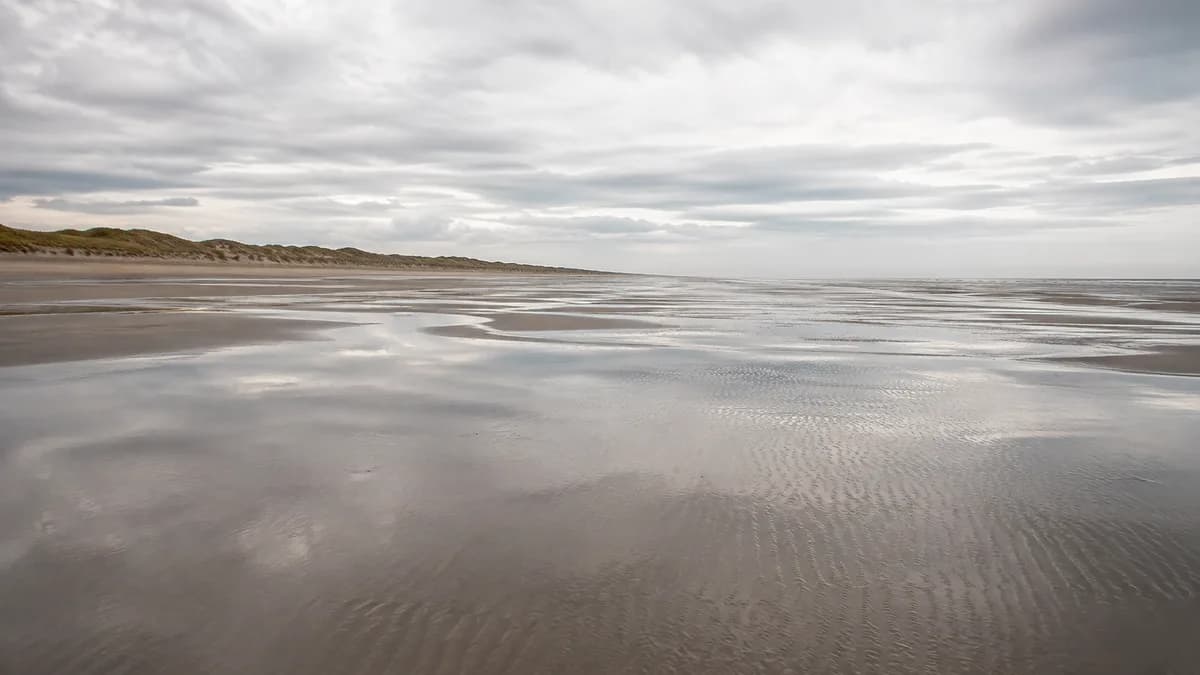
D-Day was June 6, 1944, and Canadian soldiers landed at Juno Beach in Normandy. Those two answers come up constantly on the Canadian citizenship test, often in the same run of questions. The Second World War section of the official study guide takes only a few paragraphs, yet it holds one of the best known military episodes in the country's history, and the people who write the test know it.
Behind those two short answers sits a six-year story. Canada entered the war in September 1939 with its own declaration, trained tens of thousands of aircrew on home soil, escorted the Atlantic convoys, paid a terrible price at Dieppe, then landed in Normandy and liberated the Netherlands. To see where this chapter fits among the other test topics, our guide Canada Explained gives the full overview.
This article follows the chronology from 1939 to 1945 and flags the facts that show up most often on the test. If you want the wider arc, from Vimy Ridge to the Korean War, read our survey of Canadian military history for the citizenship test as well. The tone here stays factual: these are verifiable events, and they involved real lives.
Canada enters the war in September 1939
Canada entered the Second World War on September 10, 1939, one week after the United Kingdom, through a separate declaration of war. Parliament met in Ottawa, debated, then approved the measure. King George VI signed the proclamation on Canada's behalf. That one-week gap was not administrative slowness: it showed the world that the country decided for itself.
In 1914, Canada had found itself at war automatically because Britain was at war. The Statute of Westminster of 1931 changed that by recognizing Canada's full autonomy in foreign policy. September 1939 was therefore the first time the country declared war in its own name. The test likes this distinction, and questions often target the year 1939 as much as the idea of a Canadian decision taken separately from London's.
Newfoundland was not yet Canadian at the time; it would not join Confederation until 1949. That is why the official guide refers to "more than a million Canadians and Newfoundlanders" in uniform, out of a population of roughly 11.5 million. Roughly one person in eleven served. Few families in the country stayed untouched by the conflict, and that proportion explains why the war still occupies so much space in national memory.
The war effort at home and the air training plan
Canada supplied far more than soldiers: factories, wheat, ships and, above all, the British Commonwealth Air Training Plan, which trained more than 130,000 aircrew on Canadian soil. It was the country's least dramatic contribution and arguably one of its most decisive.
The agreement creating the plan was signed in Ottawa in December 1939. More than a hundred schools for pilots, navigators, bomb aimers and wireless operators opened from British Columbia to Nova Scotia. Canada offered exactly what Europe lacked: space, open skies and a reassuring distance from enemy bombers. About half the graduates were Canadian, while the rest came from Britain, Australia, New Zealand and elsewhere. American president Franklin Roosevelt summed it up by calling Canada "the aerodrome of democracy".
The rest of the economy moved the same way. The country turned into a war workshop, and the workforce changed shape with it.
- Factories turned out military vehicles by the hundreds of thousands, along with aircraft, shells and warships.
- Women entered plants and offices in large numbers, and tens of thousands of them wore the uniform in all three services.
- Prairie farms fed Britain while the convoys crossed the Atlantic.
- Victory Bonds and rationing financed and disciplined the war effort on the home front.
This period also has a darker side, which the official guide does not hide. Conscription for overseas service, long delayed by Mackenzie King's government, was finally imposed late in 1944 and divided the country deeply, especially Quebec. Starting in 1942, more than 20,000 Japanese Canadians were removed from the Pacific coast and stripped of their property; the federal government issued a formal apology in 1988. These episodes point toward the debates on identity and rights covered in our article on modern Canada.
The Battle of the Atlantic and the Royal Canadian Navy
The Battle of the Atlantic was the longest campaign of the war, running from 1939 to 1945, and the Royal Canadian Navy played a central role escorting convoys between North America and Britain. Without those convoys, the British Isles would have run short of fuel, food and ammunition.
In 1939 the Canadian navy had barely a handful of warships and a few thousand personnel. By 1945 it fielded hundreds of vessels and close to 100,000 people, making it one of the largest navies in the world. Corvettes built in Canadian yards, small, uncomfortable and remarkably tough, escorted convoys out of Halifax and St. John's. The merchant navy made the same crossing aboard slow, heavily loaded cargo ships, exposed to German submarines.
The cost was heavy. According to Veterans Affairs Canada, more than 4,000 Canadians from the navy, the merchant navy and the air force died in this campaign, and dozens of Canadian ships were sunk. Battle of the Atlantic Sunday, held on the first Sunday in May, honours them each year. For the test, hold on to the essentials: the Battle of the Atlantic lasted almost the whole war, and Canada played a major part in it.
Dieppe, August 1942: a rehearsal paid for dearly
On August 19, 1942, nearly 5,000 Canadian soldiers of the 2nd Canadian Infantry Division attacked the French port of Dieppe, and the raid turned into a disaster within hours. It is the other Second World War date the test may ask you about.
The goal was to test an assault against a German-held port, gather intelligence and show Soviet allies that the West was moving. Almost everything went wrong. Surprise was lost before the landing even began, the shingle on the beach jammed the tanks, coastal defences looked down on the attackers from the cliffs, and communications between the beach and the ships broke down. By midday the order to withdraw had been given.
Of the roughly 5,000 Canadians committed, more than 900 died and close to 2,000 were taken prisoner. No other single day of the war cost the Canadian army so much. The lessons drawn from Dieppe did serve two years later: heavy naval and air bombardment beforehand, specialized armour able to clear beach obstacles, better intelligence, and above all the conclusion that landing on an open beach beat attacking a fortified port head-on.
Planning the landings: Operation Overlord
The Normandy landings, code-named Overlord, were planned for almost two years and involved the largest invasion fleet in history. Canadians had been preparing a long time: several of their units had been waiting in England since 1940.
The plan set out five beach sectors along roughly 80 kilometres of the Normandy coast, divided among the Allied nations.
- Utah and Omaha, to the west, assigned to American forces.
- Gold, assigned to British forces.
- Juno, assigned to the 3rd Canadian Infantry Division and the 2nd Canadian Armoured Brigade.
- Sword, to the east, assigned to British forces along with French and other Allied commandos.
A vast deception operation convinced the German command that the main attack would come at the Pas-de-Calais, which pinned entire divisions far from Normandy. Artificial harbours were to be towed across from England to supply the troops once ashore. The landings were set for June 5, but heavy seas pushed General Eisenhower to postpone by twenty-four hours. The final decision rested on a brief break in the weather forecast by his meteorologists.
Meanwhile, Canadians had been hardened elsewhere. They landed in Sicily in July 1943 and fought their way up Italy; the street fighting at Ortona in December 1943 was especially brutal. Close to 6,000 Canadians died in the Italian campaign, which carried on during and after Normandy.
June 6, 1944: the 3rd Canadian Division at Juno Beach
On June 6, 1944, about 14,000 soldiers of the 3rd Canadian Infantry Division landed at Juno Beach, a stretch of roughly eight kilometres of coast around Courseulles-sur-Mer, Bernières-sur-Mer and Saint-Aubin-sur-Mer. It was the only D-Day beach assigned to Canadians, and it is the answer the test wants.
The day had started in darkness. Nearly 450 paratroopers of the 1st Canadian Parachute Battalion jumped behind German lines with the British 6th Airborne Division to seize bridges and cut roads. Offshore, about 110 ships of the Royal Canadian Navy took part in the bombardment and the lift, carrying some 10,000 sailors. Royal Canadian Air Force squadrons covered the sky. The first landing craft touched sand shortly before 8 a.m., a little late, because the sea was running high.
The first minutes were the deadliest. German defences at Courseulles had not all been knocked out by the bombardment, and the infantry had to cross open sand before reaching the sea wall and the houses. The Royal Winnipeg Rifles, the Regina Rifle Regiment, the Queen's Own Rifles of Canada and the North Shore (New Brunswick) Regiment were among the assault units, backed by tanks of the 1st Hussars and the Fort Garry Horse. At Bernières-sur-Mer, the house still standing above the beach has been known ever since as Canada House.
By the evening of June 6, Canadians had pushed farther inland than any other Allied force that day, reaching the outskirts of the road between Caen and Bayeux. Losses for the day passed one thousand, including roughly 350 killed. Juno Beach had met its objectives, but the Battle of Normandy was only beginning.
Beyond the beach: Caen, Falaise and the Battle of Normandy
The Battle of Normandy lasted nearly three months after D-Day and cost Canada more than 5,000 dead. The breakout was anything but quick: the Normandy bocage, with its thick hedgerows and fortified villages, strongly favoured the defenders.
Caen, a nominal first-day objective, did not fall until July, after weeks of fighting and bombing that flattened much of the city. In the first days after the landings, units of the 12th SS Division murdered dozens of Canadian prisoners, twenty of them at the Abbaye d'Ardenne, a war crime tried after the conflict. These events belong to the history of the campaign even though the test does not ask about them.
In August, General Harry Crerar's First Canadian Army, with Lieutenant-General Guy Simonds's II Canadian Corps, launched Operations Totalize and then Tractable to drive south toward Falaise. The aim was to close the pocket trapping the German armies in Normandy. The link-up came around August 21, 1944, with the 1st Polish Armoured Division clinging to the ridge at Mont-Ormel and American forces coming up from the south. The Battle of Normandy was won, and the road to Paris was open.
The Canadian war cemeteries at Bény-sur-Mer and Bretteville-sur-Laize, in Normandy, hold the graves of these soldiers. Many were in their early twenties and came from towns with no connection whatsoever to France.
The Scheldt, the winter, then the liberation of the Netherlands
After Normandy, Canadians cleared the Channel ports, opened the Scheldt estuary in the autumn of 1944, then liberated most of the Netherlands in the spring of 1945. That last campaign created the lasting bond between Canada and the Dutch.
The Battle of the Scheldt, from October to November 1944, aimed to make the great port of Antwerp usable, which was essential for supplying the Allied armies. Canadians fought across flooded polders, often standing in water, under constant fire. More than 6,000 of them were killed or wounded there. It was one of the hardest and least known campaigns of the Canadian war.
The winter of 1944-1945 was terrible for the Dutch population, cut off from supplies: it is still called the Hunger Winter, and thousands of civilians died of malnutrition. In the spring of 1945, the First Canadian Army pushed German forces toward the north and west of the country, town by town, while Allied aircraft dropped food over the areas still occupied. German forces in the Netherlands surrendered on May 5, 1945, after negotiations at Wageningen led by Canadian general Charles Foulkes.
According to Veterans Affairs Canada, more than 7,600 Canadians died during the campaign in the Netherlands. They lie in cemeteries such as Groesbeek, Holten and Bergen op Zoom, where Dutch families still tend the graves and schoolchildren lay flowers every year.
The tulips of Ottawa and Princess Margriet
The tulips that bloom in Ottawa every spring come from a Dutch gift offered in thanks for the liberation and for sheltering the Dutch royal family during the war. It is one of the most tangible links between Canadian military history and everyday life in the country.
In 1940, Princess Juliana of the Netherlands took refuge in Ottawa with her daughters after the German invasion. Her third daughter, Princess Margriet, was born at the Ottawa Civic Hospital on January 19, 1943. So the child would inherit no nationality other than Dutch, the Canadian government temporarily declared the maternity room extraterritorial. The Dutch flag flew from the Peace Tower when the birth was announced.
In 1945, the Netherlands sent 100,000 tulip bulbs to Ottawa as a gesture of gratitude, and the annual gift has continued ever since. The Canadian Tulip Festival, held in the capital each May, grew out of it. The test will probably not ask for the princess's name, but it may well ask which European country Canadians helped liberate: the answer is the Netherlands.
The end of the war and the Canadian toll
The war in Europe ended on May 8, 1945, known as Victory in Europe Day, and the world war ended with the surrender of Japan in September 1945. Canada came out of it transformed: more industrial, more urban and far more present on the international stage.
The human toll is the figure to know. The official guide notes that more than a million Canadians and Newfoundlanders served and that 44,000 lost their lives, with tens of thousands more wounded. Those losses spread across every theatre: the Atlantic, Italy, Normandy, the Netherlands and Germany, and the Pacific as well. In December 1941, nearly 2,000 Canadians sent to defend Hong Kong were overwhelmed by the Japanese attack; roughly 550 never came home, many after years in prison camps.
The country that came home in 1945 was not the country of 1939. Canada was among the founding members of the United Nations that same year, then of NATO in 1949. Veterans returned to training programs and home-ownership support, the birth rate surged, and the big cities spread outward. That shift opens the next chapter of the test.
The Juno Beach Centre and Remembrance Day
The Juno Beach Centre, at Courseulles-sur-Mer in Normandy, opened on June 6, 2003, and serves as Canada's Second World War museum in France. It was created by veterans who felt Canada's role was fading out of the story of the landings.
The Juno Beach Centre tells the story of both the war and the country those soldiers came from. Canadian student guides work there each season and lead visitors through the remains of the German defences, steps away from the sand where the landing craft came in. It is the only Canadian museum of its kind in Europe, and the June 6 ceremonies are held there every year.
In Canada, remembrance centres on Remembrance Day, November 11. At 11 a.m., two minutes of silence are observed from coast to coast. The red poppy is worn on the lapel in the days beforehand, echoing the poem "In Flanders Fields" by Canadian military doctor John McCrae. The national ceremony takes place at the National War Memorial in Ottawa, in front of the Tomb of the Unknown Soldier. The test may ask you the date, the time, the meaning of the poppy or the location of the national ceremony.
What the test asks about the Second World War
Test questions about 1939-1945 almost always target short facts: a date, a beach name, a liberated country, a division. Practise answering in a few words, without elaborating.
- When did D-Day take place? June 6, 1944.
- Which beach did Canadians land on? Juno Beach, in Normandy.
- When did Canada enter the Second World War? September 10, 1939, one week after the United Kingdom, by separate declaration.
- Which Canadian division landed at Juno Beach? The 3rd Canadian Infantry Division.
- Which Canadian raid took place in August 1942? The Dieppe raid, on August 19, 1942.
- Which European country did Canadians help liberate in 1945? The Netherlands.
- How many Canadians served during the war? More than one million, out of a population of about 11.5 million.
- When did the war in Europe end? May 8, 1945.
Watch out for two classic traps. The first is mixing up the two world wars: Vimy Ridge is 1917 and the First World War, while Juno Beach is 1944 and the Second. The second is answering "Normandy" when the question asks for the beach: the word wanted is Juno. You will find the government's exact wording in the guide Discover Canada, and the full historical background on the Veterans Affairs Canada website.
How to revise this period before the test
The most efficient method is to anchor four dates and hang the facts on them: 1939, 1942, 1944 and 1945. Once those markers are set, the test questions become simple matching exercises.
Place those dates inside the timeline of Canadian history, work through the set of date questions on the citizenship test, then check yourself with our timed practice exams. The chapter quizzes let you drill history separately from the rest, and smart review brings back the questions you get wrong. If the history appeals to you, the article on the Underground Railroad and Black history in Canada covers another regularly tested chapter.
Hold on to the core: June 6, 1944, Juno Beach, the 3rd Canadian Infantry Division, the Netherlands liberated, November 11 for remembrance. Everything else enriches your answers without being required. To connect this chapter to the other test topics, geography, government, symbols and rights, go back to the guide Canada Explained, which serves as the starting point for the whole revision.