
30 Rights and Responsibilities Citizenship Test Questions
30 practice questions with answers on the Charter, fundamental freedoms, the oath and citizen duties, the rights section of the Canadian citizenship test.
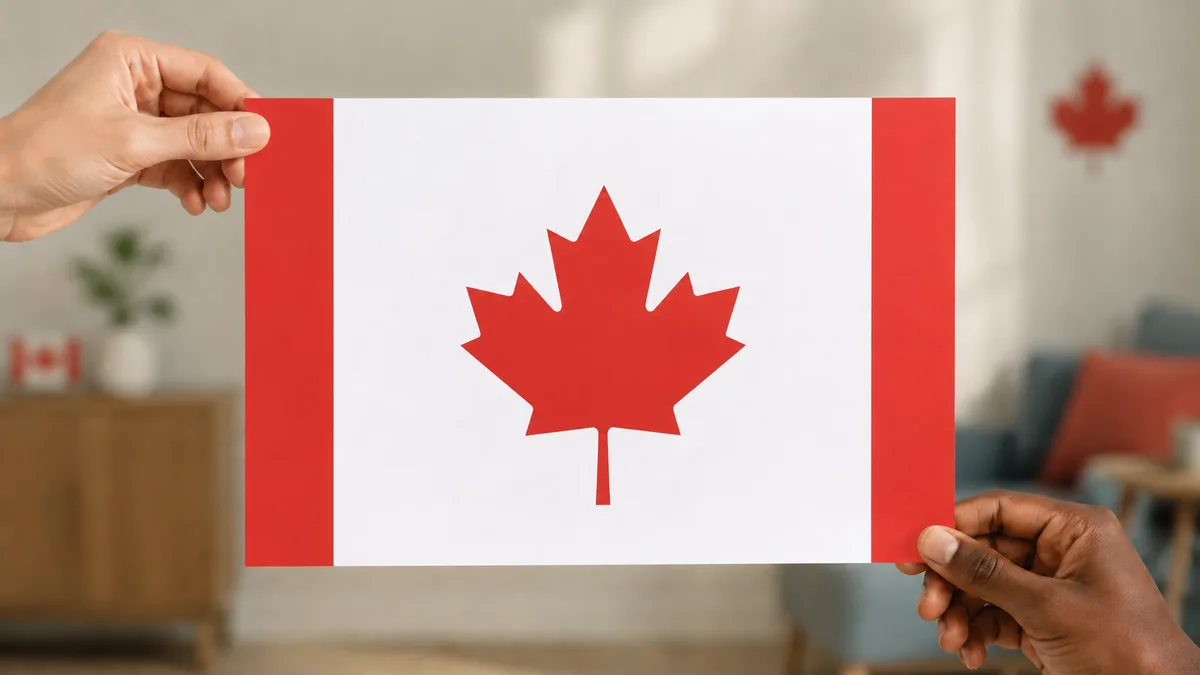
Here are 30 exam-style practice questions on the rights and responsibilities of Canadian citizens, each with the correct answer and a one-sentence explanation. Every fact comes from the official Discover Canada study guide, the only source of questions on the real test.
The rights and responsibilities chapter is one of the shortest in the guide, yet a few of the 20 real test questions are usually drawn from it: these are easy points to lock in, because almost everything in the chapter comes as a stable list. To see how this theme fits into the whole exam, check our breakdown of citizenship test questions by topic. And to verify every fact at the source, the Discover Canada study guide is published for free on canada.ca.
This set covers the seven sub-topics the test can touch:
- The Canadian Charter of Rights and Freedoms (1982) and its origins
- The four fundamental freedoms
- Mobility rights, legal rights, equality and official languages
- Aboriginal and treaty rights
- The responsibilities of citizenship
- The Oath of Citizenship
- The equality of women and men
The Charter of Rights and Freedoms (1982)
The Charter is the central document of this chapter: memorize its year, its opening words and its role. If you would rather understand the context before testing yourself, read our article The Charter of Rights and Freedoms Explained, then come back to the questions.
1. In what year was the Canadian Charter of Rights and Freedoms entrenched in the Constitution? Answer: in 1982. The Constitution of Canada was amended in 1982 to entrench the Canadian Charter of Rights and Freedoms.
2. With what words does the Charter begin? Answer: "Whereas Canada is founded upon principles that recognize the supremacy of God and the rule of law." That opening line underlines the importance placed on both religious traditions and the rule of law.
3. Which document signed in England in 1215 is at the root of Canada's tradition of freedom? Answer: the Magna Carta, also known as the Great Charter of Freedoms. The freedoms Canadians enjoy trace back to this founding text of 1215.
4. What is the Charter's role compared with the rights that already existed? Answer: it summarizes fundamental freedoms while setting out additional rights. Before 1982, Canadians' rights were already protected by statutes, the common law and the civil law tradition.
The four fundamental freedoms
The four fundamental freedoms are the single most important list to memorize word for word in this whole chapter. The test can ask for the full list, or describe a situation and ask which freedom applies.
5. What are the four fundamental freedoms set out in the Charter? Answer: freedom of conscience and religion; freedom of thought, belief, opinion and expression, including freedom of speech and of the press; freedom of peaceful assembly; and freedom of association. Learn this list by heart, in order, because it comes back under many wordings.
6. Which fundamental freedom protects journalists and the press? Answer: freedom of thought, belief, opinion and expression, which includes freedom of speech and of the press.
7. Which fundamental freedom lets you practise the religion of your choice? Answer: freedom of conscience and religion, which protects everyone's beliefs.
8. Which freedom allows Canadians to gather peacefully, for example to protest? Answer: freedom of peaceful assembly, alongside freedom of association for forming groups.
Mobility, legal, equality and language rights
Beyond the fundamental freedoms, the Charter sets out other rights the test likes to check: mobility, habeas corpus, equality, official languages and multiculturalism. These questions become quick wins once you attach a keyword to each right.
9. What do mobility rights allow? Answer: to live and work anywhere in Canada, to enter and leave the country freely, and to apply for a passport. The keyword to attach is "moving around."
10. What is habeas corpus? Answer: the right to challenge unlawful detention by the state. This principle, inherited from English law, is one of Canada's core legal safeguards.
11. What are Canada's two official languages? Answer: English and French. Official language rights and minority language educational rights are written into the Charter.
12. Where do English and French have equal status? Answer: in the Parliament of Canada and throughout the government. That equal-status wording is the exact phrase to remember for the exam.
13. What does the right to equality guarantee? Answer: every person is equal under the law. No one can be treated differently by the law because of who they are.
14. What does multiculturalism represent for Canada? Answer: a fundamental characteristic of the Canadian heritage and identity. Canadians work hard to respect pluralism and live in harmony.
Aboriginal and treaty rights
The Charter explicitly protects the rights of Aboriginal peoples, and the test checks that you know this connection. Three questions cover the essentials of this sub-topic.
15. What does the Charter say about the rights of Aboriginal peoples? Answer: the rights guaranteed in the Charter will not adversely affect any treaty or other rights or freedoms of Aboriginal peoples. The Charter adds to those rights, it does not replace them.
16. What are the three groups of Aboriginal peoples in Canada? Answer: First Nations, the Inuit and the Métis. Knowing these three groups also helps with the updated wording of the Oath of Citizenship.
17. Which 1763 document first guaranteed the territorial rights of Aboriginal peoples? Answer: the Royal Proclamation of 1763, issued by King George III. It established the basis for negotiating treaties with the newcomers.
The responsibilities of citizenship
Citizenship comes with responsibilities as well as rights, and the guide gives a precise list that the test reuses as is. This is the second block to memorize word for word, right after the four freedoms.
18. Name four responsibilities of citizenship. Answer: obeying the law, serving on a jury, voting in elections and helping others in the community. The guide's full list adds: taking responsibility for oneself and one's family, and protecting and enjoying our heritage and environment.
19. What does the rule of law mean? Answer: no person or group is above the law. The principle applies to governments just as much as to citizens.
20. What must you do if you are called to serve on a jury? Answer: you are legally required to serve. Serving on a jury is a privilege that makes the justice system work, because it depends on impartial juries.
21. In which elections do citizens have a responsibility to vote? Answer: in federal, provincial or territorial and local elections. The right to vote comes with a responsibility to use it.
22. How can a citizen help others in the community? Answer: by volunteering without pay. Millions of volunteers give their time, and it is an excellent way to gain useful skills and take part in community life.
23. Which responsibility concerns heritage and the environment? Answer: avoiding waste and pollution while protecting Canada's natural, cultural and architectural heritage. Every citizen has a role to play for future generations.
24. Is military service compulsory in Canada? Answer: no, there is no compulsory military service. Serving in the Canadian Forces, the Reserves or the Coast Guard Auxiliary is nonetheless a noble way to contribute to the country.
The Oath of Citizenship
The oath is the text you will recite at the ceremony, and the test mostly checks whom it is addressed to and what it promises. Three questions cover the points that get tested.
25. To whom do new citizens pledge allegiance? Answer: to the Sovereign, His Majesty King Charles III, King of Canada. In Canada, we profess our loyalty to a person who represents all Canadians, not to a document, a flag or a country.
26. What do you promise when you take the Oath of Citizenship? Answer: to be faithful and bear true allegiance to the Sovereign, his heirs and successors, to faithfully observe the laws of Canada, including the Constitution, which recognizes the rights of First Nations, Inuit and Métis peoples, and to fulfil your duties as a Canadian citizen.
27. When do you take the Oath of Citizenship? Answer: at the citizenship ceremony. It is the final step of the journey, after passing the test.
The equality of women and men
The guide devotes an explicit passage to the equality of women and men, and the test often reuses it almost word for word. Here are the three formulations to know.
28. What does Canadian law say about the equality of women and men? Answer: in Canada, men and women are equal under the law. It is a core value that citizenship does not allow anyone to sidestep.
29. Which practices are crimes in Canada, even where they are tolerated elsewhere? Answer: spousal abuse, so-called honour killings, female genital mutilation, forced marriage and other gender-based violence. Canada's openness and generosity do not extend to these practices.
30. What happens to those guilty of these crimes? Answer: they are severely punished under Canada's criminal laws. The expected answer stresses the severity of the punishment.
Study tips to master this chapter
The most effective method for this chapter comes down to three moves: memorize the two big lists, keep rights and responsibilities apart, then test yourself under real conditions. The lists to know by heart are the four fundamental freedoms and the six responsibilities of citizenship; almost every question on this theme flows from them.
Watch out for the classic trap: mixing up a right and a responsibility. Voting is both at once, but serving on a jury is a responsibility, while applying for a passport is a right. When a question asks for "a responsibility," start by eliminating every option that describes a right.
To lock in these 30 answers, retake the chapter quiz on rights and responsibilities until you score above 90%, then add your mistakes to spaced review so they come back at the right moment. Follow up with a timed 20-question mock exam to check that this knowledge holds up when mixed with the other themes. Then complete your tour of the topics with our geography questions and our Canadian symbols questions.
This chapter is short, stable and predictable: exactly the kind of points a well-prepared candidate never lets slip away. Once you have these 30 questions down, go back to the guide to citizenship test questions by topic to plan the rest of your preparation, especially history and government, which carry more weight on the test.