
Canadian Citizenship Certificate: What It Is, Lost Certificates, and the e-Certificate
What a Canadian citizenship certificate proves, what it does not replace, how the e-certificate works, and how to replace one that is lost or stolen.
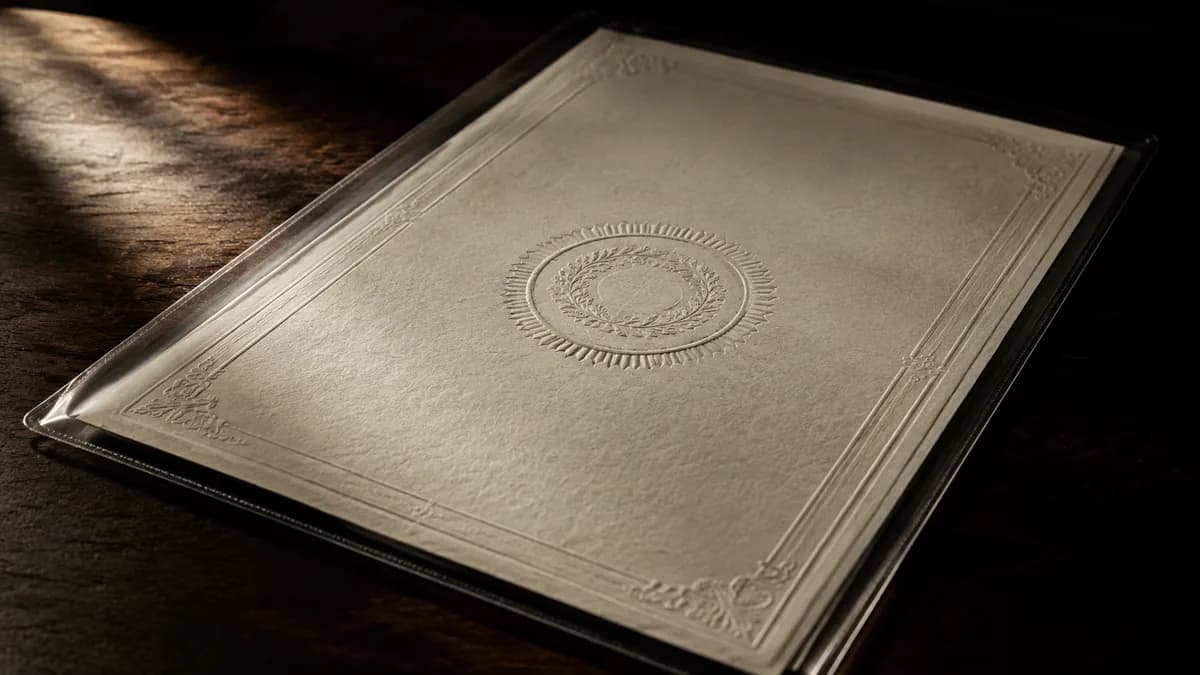
A Canadian citizenship certificate is the official document proving you are a Canadian citizen. It is not photo identification, it is not a travel document, and it never expires. If you lose it, your citizenship is untouched: the paper needs replacing, not your status.
This guide covers everything around that document: what it contains, the difference between the paper version and the electronic certificate, when you receive it, what it lets you do and what it does not, and the steps to follow if it is lost or stolen. It sits inside our complete checklist of things to do after the ceremony, which gathers the other papers you need to update in the weeks after the oath.
A word on sources. The fees, forms, and timelines quoted here match the information published by Immigration, Refugees and Citizenship Canada (IRCC) at the time of writing, in 2026. Those numbers move from year to year. Before paying anything, open the official Proof of citizenship page on canada.ca and check the current amount and wait time.
What the citizenship certificate is, and what it is not
The certificate is proof of citizenship, not proof of identity. IRCC issues it, and it carries your name, your date of birth, the date you became a citizen, and a unique certificate number. Since February 1, 2012, it has taken the form of a letter-size sheet with no photo. That missing photo is exactly why it cannot work as an ID card: it attests to a status, it does not prove that the person handing it over is the right one.
It does not replace a passport either. You cannot board an international flight with your certificate alone, and no airline will accept it as a travel document for the trip back to Canada. Another useful point: the certificate has no expiry date. Once issued, it stays valid for life, even if your address, your appearance, or your family situation changes.
- What it proves: that you are a Canadian citizen, and the exact date your citizenship took effect.
- What it does not prove: your identity, since it carries no photo.
- What it does not allow: travelling abroad or flying back into Canada without a valid Canadian passport.
- How long it lasts: indefinitely. It does not expire and there is nothing to renew.
- How many copies exist: one at a time. IRCC does not issue duplicates, only a new certificate after reviewing your file.
Paper certificate or e-certificate: what changed
IRCC also issues an electronic certificate of citizenship, a secure PDF that carries the same value as the paper version. The e-certificate holds the same information as the printed document, but it lands in your online account instead of your mailbox. The rollout happened in waves, starting with certain categories of applications, so two people who file a few months apart can end up with different formats.
What you receive therefore depends on the date and type of your application. The proof of citizenship page on canada.ca sets out where the rollout stands, and it is the only up-to-date reference on that point. In practice, if you get a PDF, treat it as the original: download it as soon as it appears, back it up in two separate places, and keep a printout handy for counters that still prefer paper.
One detail comes up constantly: IRCC states that the electronic certificate is an official document, accepted as proof of citizenship in the same way as the paper version. If someone you deal with does not know the format, the canada.ca page is the reference to show them. Do not rely on your IRCC account alone to store the file either. An account can become inaccessible, while a personal backup stays within reach.
When do you receive your certificate?
If your ceremony is in person, you walk out with your certificate the same day, handed to you right after the oath. The order never varies: oath, national anthem, then the documents. Someone passes you an envelope containing the certificate and, depending on the office, a welcome letter. Our article on the ceremony and the oath walks through the whole day, step by step.
For a virtual ceremony, the timing differs. IRCC often mails the certificate ahead of the date, in a sealed envelope you are told not to open until the oath is taken. In other cases the document arrives after the ceremony, by mail or in your online account. None of this changes the date of your citizenship: you become Canadian at the moment of the oath, not when the document reaches you.
As soon as you have it in hand, read it line by line. Spelling of your name, accents, date of birth, effective date: a typo caught immediately is far quicker to fix than one discovered three years later at a passport counter. If the certificate does not arrive within the announced timeframe, check the address on your file first, then write to IRCC through the web form.
Naturalization certificate vs certificate of citizenship: what is the difference?
In Canada, the naturalization certificate is a historical document: it was issued to immigrants who became British subjects before January 1, 1947, the date Canadian citizenship was created. Since then, the only document issued is the certificate of citizenship. A pre-1947 naturalization certificate remains valid proof of citizenship and does not need to be replaced, but no new ones exist. If a foreign form asks for your "naturalization certificate", your citizenship certificate is what to provide.
The confusion mostly comes from the United States, where the certificate of naturalization is still the document handed to new citizens, distinct from the certificate of citizenship reserved for people who are citizens by descent. Canada has a single certificate for everyone, whatever the route: birth abroad to a Canadian parent, or a grant after an application. Our article on citizenship grant vs naturalization covers this vocabulary in detail.
Certificate, citizenship card, and passport: telling them apart
Certificates issued before February 1, 2012 took the form of a small laminated card with a photo, and those cards remain valid today. You are under no obligation to swap yours for the current paper format: it still proves your citizenship, with exactly the same weight. A new application only makes sense if the card is lost or stolen, or if your personal information needs correcting.
Several documents play different roles, and mixing them up costs time and money.
- The certificate (or the old card): proof of citizenship, with no expiry date, required for a first passport application.
- The Canadian passport: a travel document valid for five or ten years, then renewed. It also works as proof of citizenship in many everyday situations.
- A provincial or territorial birth certificate: for people born in Canada, this is the document that serves as proof of citizenship. They do not need an IRCC certificate at all.
- A certificate of naturalization: issued before January 1, 1947, it remains valid proof and does not need to be replaced.
- The permanent resident card: it loses its purpose once you take the oath. See what happens to your PR card and why you should not simply toss it in the bin.
What your certificate is actually used for
The certificate mainly opens administrative doors: passports, a social insurance number, jobs reserved for citizens, and any file where nationality must be proven. Outside those specific moments it sits in a drawer, which is exactly what you want from it. Here are the uses that come up most often for new citizens.
- First Canadian passport application: you must supply proof of citizenship. The passport office asks for the original and returns it to you with the passport. The rules are on the Canadian passports page on canada.ca.
- Social insurance number: Service Canada accepts the certificate as a primary document. If you were a permanent resident, your existing SIN stays valid and there is nothing to do. A temporary SIN starting with 9, however, must be replaced.
- Federal public service jobs: many positions prefer or require Canadian citizenship, and an employer may ask for proof at hiring or during a security screening.
- Sponsorship and immigration files: proving you are a citizen is often the very first document requested in those applications.
- Dual citizenship: Canada allows it, and the certificate is what establishes your Canadian status with the authorities of another country.
- Voting: you do not need to show the certificate at the polling station, but you confirm your citizenship when you register to vote. Details in our guide to voting for the first time.
Citizens by descent: you have to ask for the certificate
If you were born abroad to a Canadian parent, you are probably a citizen from birth, but nobody will send you a certificate automatically. You have to ask for it. This is a proof of citizenship application, not a grant application: no test, no oath, no residency requirement. IRCC simply verifies that you meet the criteria set out in the law, then issues the document.
The form is CIT 0001, the application for a citizenship certificate. You download it for free from the Application forms and guides page on canada.ca, together with its instruction guide and document list. Expect to provide the foreign birth certificate naming both parents, the Canadian parent's proof of citizenship, and your own identity documents. The official guide governs: follow its list rather than a forum thread.
A note on the first-generation limit: from 2009 to December 14, 2025, a child born abroad to a parent who was themselves a citizen by descent generally did not acquire citizenship this way. Since Bill C-3, in force on December 15, 2025, people born before that date are citizens, and those born later are citizens if the parent can show 1,095 days of presence in Canada before the birth. Check your situation on canada.ca before drawing a conclusion for your family, and do not rely on a story posted a few years ago.
Lost, stolen, or destroyed: the first things to do
Start with the good news: losing the paper does not cost you your citizenship. You remain a Canadian citizen, your status sits in IRCC's records, and the certificate is only an attestation of that status. There is no legal emergency, just an administrative process to start, and the sooner the better if you will need the document for a passport or a job.
- Search properly before paying: bank file, passport folder, family archive box, previous apartment. A replacement costs a fee and months of waiting.
- If it was stolen, report it to local police and note the report number. IRCC does not require it, but that number matters if the document is used fraudulently.
- Watch your credit file if you suspect identity theft, and report the situation to the Canadian Anti-Fraud Centre.
- Never hand a copy of your certificate to a website or middleman with no legitimate reason to ask for it.
- If you find the old certificate after receiving the new one, send it back to IRCC. Only one document should be circulating in your name.
Replacing a certificate: form, fee, and timelines
Replacement runs through the same application as the first issue, form CIT 0001, along with a solemn declaration explaining what happened to the previous document. IRCC does not produce duplicates: the department reviews your file again, then issues a new certificate with a new number. Here is what to gather before you start.
- The form: CIT 0001, application for a citizenship certificate, free to download on canada.ca along with its guide.
- The solemn declaration: form CIT 0457 is used to declare that a certificate was lost, stolen, destroyed, or is otherwise unavailable. It is required when you cannot return the old document.
- The fee: $75 per person for a citizenship certificate application, paid online. Confirm the current amount on canada.ca before paying.
- How to file: online for most applicants, by mail in the specific cases described in the guide.
- The wait: use IRCC's check processing times tool. In recent years the posted time for proof of citizenship has repeatedly passed one year, reaching roughly 17 months in some periods.
That wait is the real reason to move early. If a passport, a job, or a trip depends on this document within the next twelve months, file now rather than at the last minute. IRCC allows urgent processing in specific situations: a job, studies, a death or serious illness in the family, or medical care abroad. You then have to attach written proof of the urgency, and IRCC makes the call.
An error on the certificate, or a change of name
An error caused by IRCC is reported through the department's web form, not through a new paid application. Misspelled name, missing accent, wrong date: explain the problem, attach a copy of the certificate and your supporting documents, then let IRCC tell you what to do next. The faster you report it, the simpler the fix, especially if the mistake traces back to a document filed with your original application.
A legal name change, after a marriage or a court order, follows a different logic. Your certificate carries the name you had when you became a citizen, and it stays valid even if you use a different name today. You can apply for a new certificate in the new name, with the legal documents and the usual fee, but nothing forces you to.
Before paying, ask the real question: what do you actually need? For a passport in a married name, the passport program applies its own rules and accepts certain combinations of documents. Check those rules on canada.ca before launching a certificate application that will take months and may not solve your problem at all.
Scams, fake copies, and prohibited uses
No middleman can speed up a certificate application, and the official fee stays the official fee. Sites reselling a free form at a steep price, emails announcing that your certificate will be released once you pay, and calls threatening to revoke your citizenship are all frauds. IRCC never asks for payment by gift card, e-transfer, or cryptocurrency.
- Pay only through the government's official online payment tool, and keep the receipt with your confirmation number.
- Never post a photo of your certificate on social media: certificate number plus date of birth is a gift to a fraudster.
- Do not alter the document. Do not laminate it, cut it, or write on it: an altered certificate can be refused.
- Never lend your certificate. The Citizenship Act makes it an offence to use someone else's certificate or to let another person use yours.
- Be wary of certified copies sold online: only IRCC issues a certificate, and a photocopy does not stand in for the original when official proof is required.
Where to keep your certificate, and what comes next
The best plan is also the simplest: store the original somewhere safe with your other important documents, and keep a scanned copy elsewhere. Scan or photograph your certificate today, note the certificate number in a notebook or password manager, and take the document out of your wallet. On the day it goes missing, that number and that copy save an enormous amount of time.
Then move on to the rest of the paperwork: passport, voter registration, updates to your employment and insurance files. Our list of things to do after the ceremony puts them in order, and the article on a new citizen's first vote explains the one step that opens a genuinely new right.
Finally, if the oath is still ahead of you and the test is waiting, preparation is the real work. You can study chapter by chapter, redo the questions you missed with spaced review, and take a timed mock exam to confirm your knowledge holds up under real conditions.