
The National Symbols of Canada
The national symbols of Canada for the citizenship test: maple leaf, beaver, flag, coat of arms, Crown, Parliament, the RCMP, and the official sports.
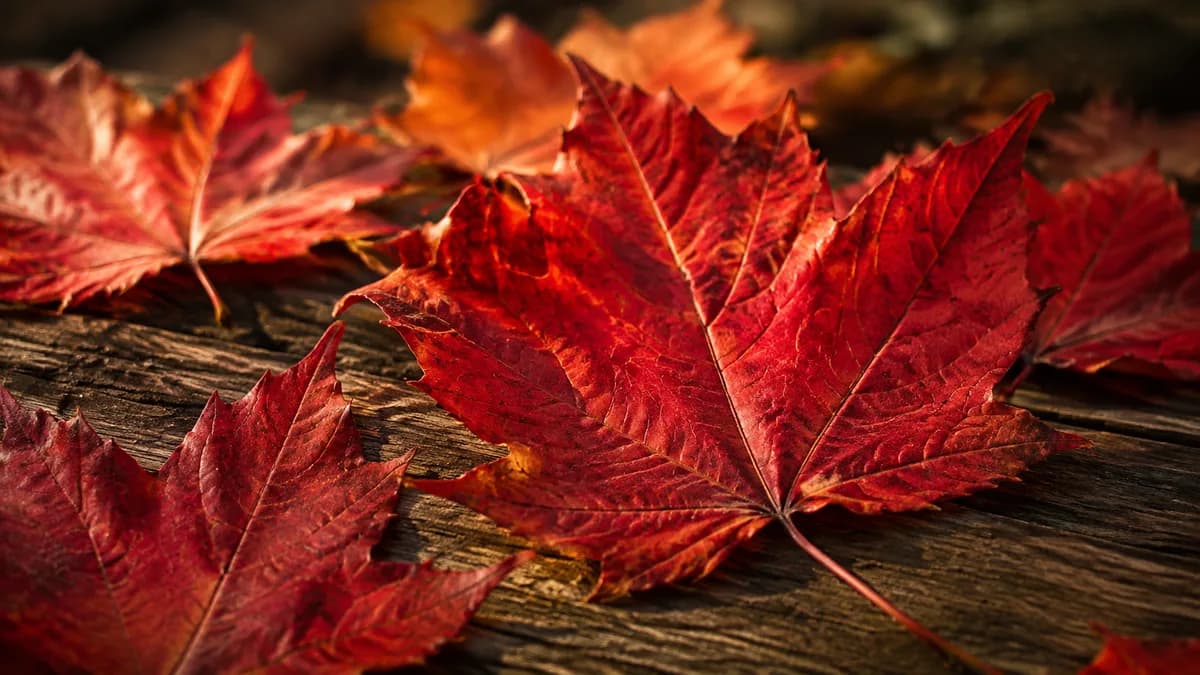
Canada's main national symbols are the maple leaf, the flag, the beaver, the coat of arms with its motto A Mari Usque Ad Mare, the Crown, the Parliament buildings and the Peace Tower, the national anthem O Canada, the Royal Canadian Mounted Police, and the fleur-de-lys. Red and white are the country's official colours, hockey is the official winter sport, and lacrosse is the official summer sport. For the citizenship test, you should be able to recognize and name these symbols, understand what they stand for, and remember a few simple facts about their history.
A good way to remember them is to group them into three families: symbols from nature, symbols of the state, and cultural symbols. This structure makes each symbol easier to recall and helps you answer recognition questions more quickly. The official reference is the government's page on the official symbols of Canada.
The symbols to know
Several symbols come up often in test questions, and it is best to know them all. Here they are grouped together to help you memorize them before the detailed explanations.
- The maple leaf, the country's best-known image
- The Canadian flag, with its red maple leaf on a white square
- The beaver, tied to the history of the fur trade
- The coat of arms and its Latin motto A Mari Usque Ad Mare
- The Crown, a symbol of government in a constitutional monarchy
- The Parliament buildings and the Peace Tower, in Ottawa
- The national anthem O Canada
- The Royal Canadian Mounted Police (RCMP)
- The fleur-de-lys, linked to French heritage and Quebec
- Hockey and lacrosse, the official winter and summer sports
Once this list is clear in your mind, it becomes easier to link each symbol to its family. Symbols from nature come from the land, symbols of the state point to government, and cultural symbols touch daily life and traditions. The sections that follow cover each group with details that are useful for the test.
Symbols from nature: the maple leaf and the beaver
The maple leaf is Canada's most recognized symbol, and the beaver is an emblem tied to the history of the fur trade. Both come from the land and its history, which makes them easy to place and remember.
The maple leaf has been a Canadian emblem for a long time. Today it sits at the centre of the flag and appears on coins and many badges. It recalls the country's maple forests and the bright red the leaves turn in autumn. Maple syrup, drawn from the tree's sap, is a product associated with Canada around the world.
The beaver is a hard-working animal whose fur played a central role in the early Canadian economy. The fur trade drew explorers and merchants across the land, and the beaver became a symbol of work and persistence. It appears on coins and remains closely tied to the country's identity.
Together, the maple leaf and the beaver show the close link between Canada and its natural environment. That is why they appear so often on official documents and in test questions.
The Canadian flag and the official colours
The Canadian flag shows a red maple leaf on a white square, framed by two red bands, and red and white are Canada's official colours. The flag is one of the most important symbols to know for the test.
The maple leaf flag became Canada's national flag in 1965. Its design is simple and easy to describe: an eleven-point red leaf in the centre on a white background, with a vertical red band on each side. This mix of red and white uses the country's official colours, which helps connect the flag to the other national symbols. To learn more about its origin, see the guide on the Canadian flag.
Symbols of the state: coat of arms, motto, and Crown
Canada's coat of arms carries the Latin motto A Mari Usque Ad Mare, which means from sea to sea, and the Crown represents government in a constitutional monarchy. These symbols show how the country is governed and where its authority comes from.
The motto A Mari Usque Ad Mare describes the size of Canada, which stretches from the Atlantic Ocean to the Pacific Ocean. It is often translated as from sea to sea. It appears on the coat of arms, which can be seen on official documents and public buildings.
Canada is a constitutional monarchy: the sovereign is the head of state, but elected representatives govern day to day. The Crown is the symbol of this government. It appears on badges, official documents, and uniforms. It reflects the link between Canada and a long parliamentary tradition.
In practice, the monarch does not run the government directly. A representative carries out ceremonial duties, while Parliament and the prime minister handle the daily work. The Crown still stands behind these institutions as a symbol of continuity.
The Crown also appears on currency and on the RCMP badge, which shows how present it is in official life. For the test, remember above all that it is the symbol of government and of the role of the monarchy in Canada.
The Parliament buildings and the Peace Tower
The Parliament buildings in Ottawa house the federal government, and the Peace Tower is their most recognizable feature. This place is both a national symbol and the seat of the country's law-making power.
Ottawa is Canada's capital, and it is where Parliament sits. The Parliament buildings, with their Gothic style and grey stone, are a well-known landmark. The Peace Tower rises at the centre and honours the memory of those who served the country. Recognizing these buildings helps you place the role of Ottawa and how the federal government works.
Cultural symbols: anthem, sports, and the RCMP
Canada's national anthem is O Canada, hockey and lacrosse are the official sports, and the Royal Canadian Mounted Police is an iconic institution. These symbols are part of the country's cultural life and image.
O Canada is the national anthem. It is sung at official ceremonies, sporting events, and the citizenship ceremony. Canada also has two official sports: hockey is the official winter sport, and lacrosse is the official summer sport. This is a simple but common question, so keep the winter and summer pair firmly in mind.
O Canada became Canada's official national anthem in 1980. It is heard at the opening of many public events and plays an important part in the citizenship ceremony, where new citizens sing it together.
Sports are a big part of everyday life in Canada, which is why the two official sports come up so often. Hockey is played and watched across the country through the winter, while lacrosse has deep roots that go back long before Confederation. Knowing which sport belongs to which season is usually all the test asks.
The Royal Canadian Mounted Police, or RCMP, is the country's national police force. Its officers in red tunics, often on horseback at ceremonies, are a highly recognizable image of Canada abroad. The RCMP is both a police institution and a cultural symbol.
The fleur-de-lys and French heritage
The fleur-de-lys is a symbol linked to Canada's French heritage and to Quebec. It recalls the early settlers from France and the lasting place of the French language and culture in the country.
The fleur-de-lys appears on the flag of Quebec and remains tied to French-speaking Canada. It shows that Canada grew from several roots, including its French heritage. For the test, it is enough to know that this symbol is linked to France, Quebec, and the French presence in Canada.
What to remember for the test
Symbols are mostly tested with recognition questions: knowing how to name each symbol and what it stands for is usually enough. Focus on the maple leaf, the flag, the beaver, the Crown, the motto A Mari Usque Ad Mare, the official sports, and the RCMP.
A simple study method is to say each symbol out loud with one fact attached to it. For example, maple leaf and the flag, beaver and the fur trade, Crown and government, motto and from sea to sea. Repeating these pairs a few times makes the answers automatic on test day.
To prepare well, first review the list of symbols, then test your knowledge. The chapter quiz on the symbols and history chapter lets you target this topic, smart review revisits your mistakes, and the timed practice exams reproduce real test conditions. For an overview, see the guide Canada Explained.