
Landed Immigrant, Permanent Resident, First-Generation Immigrant: Who Is What?
Landed immigrant, permanent resident, temporary resident, first and second generation: what each term means in Canada, and what it changes for your rights.
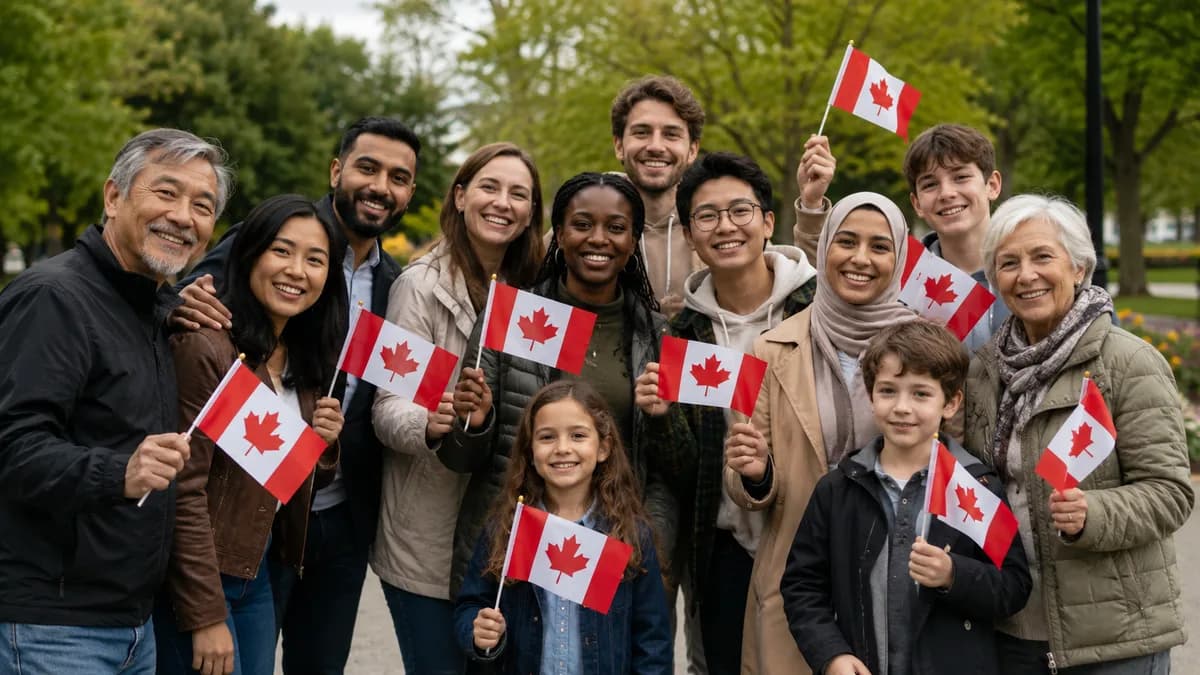
In Canada, "landed immigrant" is the old name for a permanent resident, replaced in 2002 but still in use; "first-generation immigrant" is a statistical category covering anyone born abroad, citizen or not; and "temporary resident" covers the workers, students and visitors who hold no permanent status. These words cross paths on forms, in censuses and in conversation, and they do not describe the same thing: one refers to a legal status, the other to a place of birth. Here is what each one means, what it changes for your rights, and how you move from one to the next all the way to citizenship.
Landed immigrant: the pre-2002 word
For decades, a person admitted to Canada with the right to live there permanently was a "landed immigrant", a reference to the moment they were "landed" at the port of entry, their record of landing stamped. The Immigration and Refugee Protection Act, in force since June 2002, replaced the term with "permanent resident", which better describes a lasting status, with rights and obligations that continue after arrival. The two expressions mean exactly the same thing. If a form, an employer or a bank asks whether you are a landed immigrant, answer as you would for permanent resident, and show your PR card or your Confirmation of Permanent Residence.
So there is no way to "become a landed immigrant" separate from permanent residence. Today's routes are Express Entry, the Provincial Nominee Programs, family sponsorship, regional or sector pilot programs and refugee resettlement; they are described in our guide on how to get permanent residence in Canada. The oldest documents, the IMM 1000 Record of Landing, remain valid as proof of status, which explains why the word survives in some procedures.
Permanent resident: the status that matters today
A permanent resident can live, study and work anywhere in Canada, has provincial health coverage and the protection of the Charter, but cannot vote, run for office, obtain a Canadian passport or hold certain jobs requiring a high security clearance. They must meet a residency obligation of 730 days of presence in Canada in every five-year period, and the status can be lost for non-compliance or serious criminality. Our article on going from permanent resident to citizen compares the two statuses point by point, and the one on the benefits of citizenship shows what you gain by taking the step.
Temporary resident: workers, students, visitors
A work or study permit holder, a visitor, a refugee claimant awaiting a decision are temporary residents. Their right to stay in Canada is limited in time and often tied to an employer or an institution. They do not have access to the same benefits, and they only half count in the physical presence calculation for citizenship: each day spent in Canada before permanent residence is worth half a day, up to 365 days. How to go from temporary to permanent is explained in our article on work permits in Canada.
First, second, third generation: a question of birth, not status
Here we change registers. Statistics Canada classifies the population by "generation status", and that classification has nothing to do with immigration status. The first generation includes everyone born outside Canada: a permanent resident who arrived last year, but also a citizen naturalized thirty years ago, and even a person born abroad to Canadian parents. The second generation includes people born in Canada with at least one parent born abroad. The third generation or more covers people born in Canada to two Canadian-born parents.
These categories serve censuses and studies, not rights. A first-generation immigrant who has become a citizen has exactly the same rights as a third-generation Canadian. The only place where generation crosses the law is the transmission of citizenship by descent to children born abroad, where how the parent became a citizen matters: our article on citizenship grant vs naturalization and the one on citizenship for a child born abroad cover that case.
Everyday language adds a useful nuance: the "1.5 generation" refers to people who arrived as children and grew up and went to school in Canada. It does not exist in official statistics, but it describes a common reality: a young person who arrived at eight, became a permanent resident and then a citizen as a teenager, is statistically first generation and culturally Canadian.
The one-minute table
- Landed immigrant: old term, same thing as permanent resident. Proof: PR card, Confirmation of Permanent Residence or IMM 1000 record.
- Permanent resident: permanent legal status, with a residency obligation of 730 days in five years; no vote and no passport.
- Temporary resident: work permit, study permit, visitor; time-limited status, days half-counted toward citizenship.
- Citizen: final status, all rights, passport, vote; obtained by birth, descent or grant.
- First generation: born outside Canada, whatever the status. Second generation: born in Canada to a parent born abroad.
From one status to the next: the most common path
The typical journey of a first-generation immigrant has four steps: a temporary status, often a study or work permit; permanent residence, through Express Entry or a provincial program; 1,095 days of physical presence over five years, counting temporary days as half; then the citizenship application, the test and the oath. Someone who arrived in 2023 on a work permit and became a permanent resident in 2025 can aim for citizenship in 2028. The detailed timeline is in our article on how long it takes to become a Canadian citizen, and the guide on how to become a Canadian citizen describes each step. To see where you stand, our residency calculator does the count in seconds, pre-permanent-residence credit included.
Key takeaways
- Landed immigrant = permanent resident, a pre-2002 word that never went away.
- First generation = born abroad, citizen or not; second generation = born in Canada to a parent born elsewhere.
- Only legal status (temporary, permanent, citizen) changes your rights; generation is a statistical category.
- The usual path: temporary, permanent, 1,095 days, citizenship.
If you are a permanent resident and citizenship is approaching, the test can be prepared right now with our practice exams, free and faithful to the official format.