
Dual Citizenship in Canada: What You Need to Know
Canada allows dual and multiple citizenship. You do not have to give up your original nationality, but check the rules of your country of origin first.
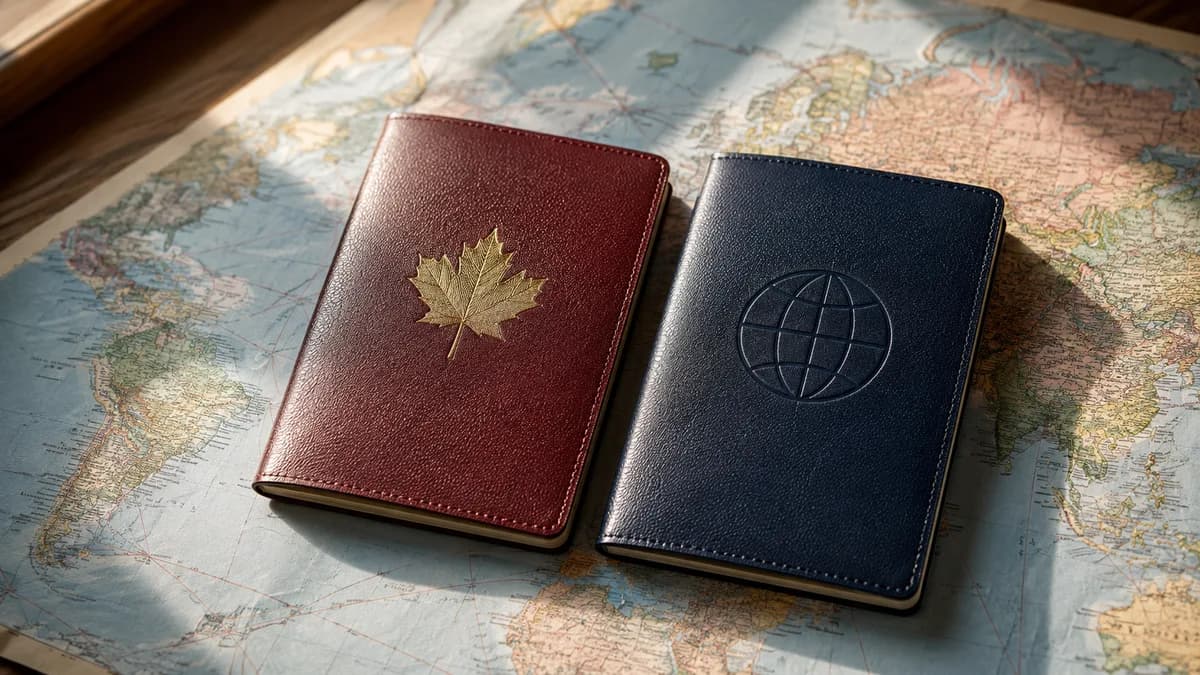
Canada allows dual citizenship, and even multiple citizenship, and has done so since 1977. Becoming Canadian does not require you to give up your original nationality on the Canadian side: Canada never asks you to renounce it. The real thing to check is not about Canada but about your country of origin, because its laws decide whether it allows dual nationality at all. This article explains what dual citizenship is, Canada's position, what happens when you naturalize, and the practical effects on your passports, taxes, and travel. For official Canadian details, see canada.ca.
Key takeaways
- On the Canadian side: dual and multiple citizenship have been allowed since 1977.
- No renunciation required by Canada for your original nationality.
- The real test: the laws of your country of origin, not Canada's.
- Some countries remove their nationality when you acquire another.
- For travel: a Canadian citizen must use a valid Canadian passport to board a flight to Canada.
- The habit: check with your country's authorities before you apply.
What is dual citizenship?
Dual citizenship means being recognized as a citizen by two countries at the same time (and multiple citizenship, by more than two). Each country treats you as one of its own, with the rights and duties that come with it: voting, holding a passport, sometimes paying taxes or serving. You are not half of each nationality; you are fully a citizen of both.
This dual belonging can arise in several ways: by being born on a country's territory, by descent when a parent passes their nationality on, by marriage in some countries, or by naturalization, meaning the voluntary acquisition of a new citizenship. Most people who hold dual status in Canada get there by naturalizing while keeping the nationality they already had. You can also end up with more than one nationality without ever seeking it, for example when a child is born to a parent from one country on the soil of another. In every case the principle is the same: each country alone sets the rules of its own citizenship.
Does Canada recognize dual citizenship? Yes, since 1977
From Canada's point of view, nothing forces you to choose. Since 1977, Canada has recognized that its citizens may hold one or more other nationalities. It sets no limit on how many you hold and does not ask you to prove you gave up your original passport. You can become a Canadian citizen while remaining, in the eyes of the law, a citizen of the country where you were born.
That reassures many applicants, but it only tells half the story. Citizenship is a relationship between you and each country involved, and each one applies its own rules. Canada says yes on its side; it cannot speak for other states. In other words, the Canadian position protects you from a forced choice in Canada, but it does not change what your country of origin decides to do with your nationality. That is why dual citizenship is always a two-level question: what Canada allows, and what the other country allows.
What happens when you become a Canadian citizen
When you naturalize, Canada adds a citizenship without taking any other away. At the ceremony, you take the oath of citizenship and receive your certificate. Nothing in that step asks you to renounce your first nationality, and staff do not collect your old passport. You leave as a Canadian citizen while staying whatever you already were.
Citizenship eligibility follows the same conditions for everyone: residence, knowledge of the country, language, and for many applicants the citizenship test. Keeping another nationality changes none of these requirements, nor how your application is handled. You sign no renunciation document and you never have to explain why you keep your first citizenship. You can check your situation in our guide on citizenship eligibility and practise with the chapter quizzes.
Passports and travel: the rule to know
A Canadian citizen must use a valid Canadian passport to board a flight to Canada. This holds even if you also carry a foreign passport: when you board a flight bound for Canada, present your Canadian passport. It is the document that proves your right to enter the country to the airline and to border services. For the current rules, see the official page on travelling as a dual citizen.
Away from that trip into Canada, dual citizenship mostly gives you flexibility. Depending on the countries, you may enter and leave with either passport, which can simplify visas or line-ups. The smart habit is to check, before each trip, which passport each country expects to see at its border. Keep both passports valid and unexpired as well: an out-of-date document can stop you at boarding even when your right to enter is not in doubt. A little planning around renewal dates saves a lot of last-minute trouble.
Taxes, consular help, and military service
Dual citizenship can create obligations in more than one country, especially around taxes and service. In Canada, tax is based on residency rather than nationality alone: what matters is where you live and where your ties are. But some countries tax their citizens wherever they live, or keep filing obligations in place even from abroad. Because the rules vary so much, and sometimes change, have your situation confirmed by a tax professional or the relevant authority rather than guessing.
Consular help is another point to understand. When you are in the country of your other nationality, that country often treats you first as its own citizen, which can limit Canada's ability to step in on your behalf. This does not make dual citizenship risky, but it is why knowing your rights in each country ahead of time pays off. Before a long stay, note the contact details of the nearest Canadian embassy and keep them with your travel documents, in case you need help on the ground.
Finally, a few countries impose military service or other duties on their citizens, including those living abroad. If your country of origin has such obligations, they may still apply after you become Canadian, and can sometimes be triggered simply by setting foot on its territory. Ask its authorities to find out what concerns you, especially if you plan to return regularly or live there part of the year.
Triple citizenship and beyond: is there a limit?
No. Canada allows triple citizenship, and more, exactly as it allows dual: the law does not count nationalities. A child born in Canada to parents of two different nationalities can hold three passports from birth, and a new citizen keeps every nationality they had before the ceremony. What grows with the number is the set of obligations: each country may require the use of its passport at its borders, taxes, military service or consular registration. Our article on how many passports you can have explains which document to show at which border, and the case of Canadian-Americans, the only ones allowed to fly to Canada on a U.S. passport, is covered in our article on U.S. visas for Canadians. Americans considering a move north have a dedicated guide: how to move from the US to Canada.
Situations to watch for
A few cases are worth checking before you apply, especially if your country of origin regulates nationality strictly:
- Your country strips nationality automatically from anyone who acquires another: find out before, not after.
- You have unmet obligations back home, such as service or taxes, that could cause trouble on a return trip.
- You travel often to the country of your other nationality, where you will be treated as its citizen first.
- Your children may inherit more than one nationality: check what each country recognizes for them.
Where to verify your country's position
The only reliable source on your other nationality is that country's own authorities. Because this rule does not depend on Canada, contact the embassy or consulate of your country of origin, or its ministry in charge of nationality, before you file your Canadian application. A short email or call is often enough to learn whether your country accepts dual nationality.
This habit avoids nasty surprises and has no effect on your Canadian eligibility, which stays the same for everyone. Write down the answer you receive, with the date and the name of the office you contacted: nationality rules change over time, and a clear record will help you later. While you gather this information, you can already move ahead on test preparation with a free mock exam and keep your knowledge fresh with smart review.
Dual citizenship is just one of the perks of Canadian status. For the full picture, read our guide on the benefits of Canadian citizenship, then prepare for the test with a free mock exam.