
Citizenship Application Form CIT 0002: How to Fill It Out
Form CIT 0002 is the adult grant of citizenship application. How to complete it accurately so your file is not returned or delayed by IRCC.
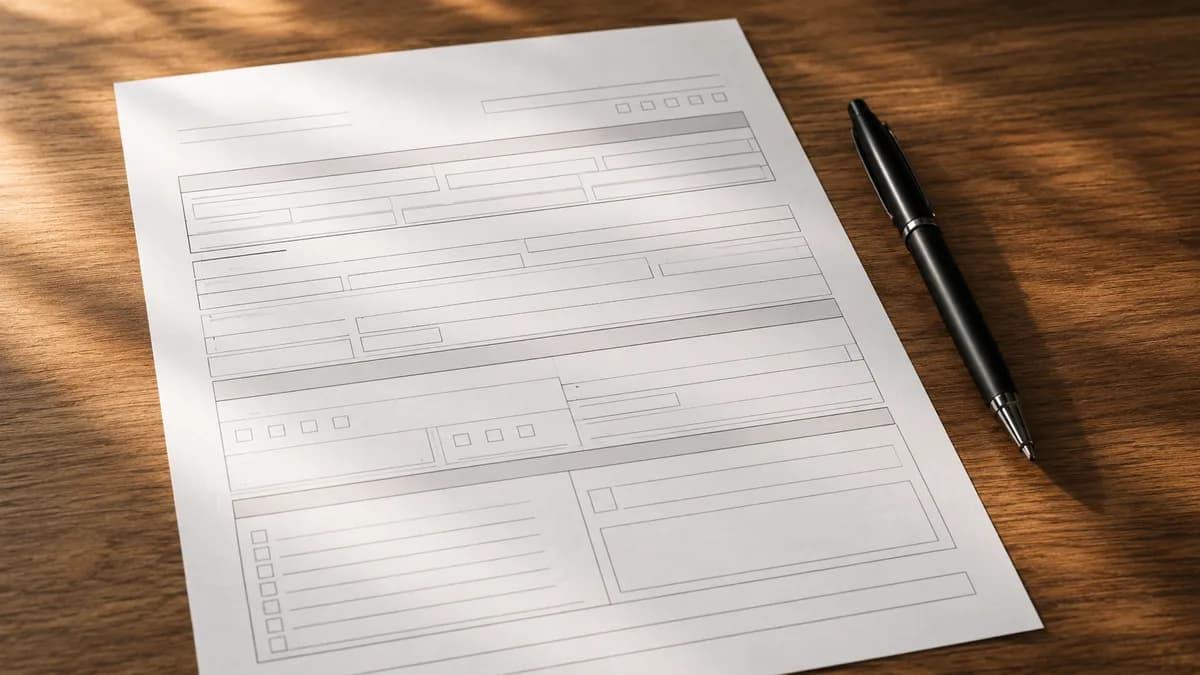
CIT 0002 is the application form an adult, meaning anyone 18 and older, uses to apply for a grant of Canadian citizenship. It gathers your personal details, permanent resident information, your address and travel history for the eligibility period, your language and tax information, and your signed declarations. Complete it fully and accurately, because a missing answer, a forgotten signature, or a date that does not match your passport is one of the top reasons a file is returned before it is ever assessed. Many people now apply online, but the questions cover the same core information either way. Download the current form and instruction guide from canada.ca before you start, because versions change. Confirm your eligibility first so you know you qualify before you fill anything out.
What form CIT 0002 is for
CIT 0002 is the core of an adult grant application. IRCC uses it to confirm that you meet the legal requirements to become a citizen: that you are a permanent resident in good standing, that you were physically present in Canada long enough during the eligibility period, that you filed taxes when the law required it, and that you meet the language and knowledge conditions for your age group. Every other item in your package, your photos, fee receipt, and supporting documents, exists to back up what you declare on this form. Because it carries so much weight, IRCC expects it to be consistent from start to finish and to match your other records. An adult who applies through the online account answers the same questions on screen, so the guidance below applies whether you use paper or the digital application. Treat this form as your official statement: every answer is your responsibility, and false or misleading information can carry serious consequences well beyond a simple delay.
Gather your documents before you begin
Collect your documents before you write a single answer. The form asks for precise dates, numbers, and addresses, and guessing is exactly what creates errors. Have your permanent resident card, all passports and travel documents covering the eligibility period, and any records that help you reconstruct your trips outside Canada. Keep a running calendar of your absences, with the exact day you left and the day you returned, because these totals decide whether you meet the physical presence requirement. Take the time to check each number against the official source rather than relying on memory: a mistyped address or a wrong client number is enough to create a contradiction in your file. Make sure your records cover the entire period requested, not just the last few years, because gaps in your history are hard to fill once you have started filling in the form.
What each section of the form asks
The form follows a logical order: your identity, your status, your time in Canada, then your declarations. You do not need to memorize section numbers, but it helps to know the blocks of information it requests so nothing catches you off guard.
- Personal details: legal name, any previous names, date and place of birth, and contact information.
- Permanent resident information: how and when you became a PR, with your client or document numbers.
- Address history: where you have lived during the eligibility period, with no gaps between dates.
- Travel history: every trip outside Canada in the period, with exact departure and return dates.
- Physical presence calculation: the day counts that show you meet the residence requirement.
- Language and tax information: how you meet the language requirement and your income tax filing history.
- Declarations and signature: your confirmation that everything is true, signed and dated.
How to fill each part correctly
Answer every question exactly as your official documents show, and never leave a field blank. Copy names, numbers, and dates letter for letter from your PR card and passports so nothing conflicts. When a question does not apply to you, write "not applicable" rather than leaving an empty box, because IRCC treats a blank as an incomplete answer. Use the same date format throughout, and double-check that your address history has no unexplained gaps.
For travel history, list short trips as well as long ones, including same-day crossings, since IRCC verifies your entries and exits against border records. Read the instruction guide that comes with the form for the current rules on each section, and if your situation is unusual, follow the guide rather than assumptions carried over from older applications. If a section asks about a period when you were not yet a permanent resident, still answer it according to the guide instead of skipping the question. Before you sign, read the whole form one last time, ideally out loud or with another person, to catch the inconsistencies your eye misses after several hours of work.
The mistakes that get files returned
Most returns come from avoidable details. Reread every section before you send, and check the following, because an incomplete file can be sent back to you without being processed, costing you weeks.
- Blank fields: every question needs an answer, even "not applicable".
- Signature and date missing or in the wrong place.
- Travel dates that do not match your passports.
- Old version of the form instead of the current one.
- Supporting documents forgotten or unreadable.
- Presence calculation that does not match the dates entered above.
How the form connects to your checklist and travel history
The form is not filled out in isolation: it has to agree with your document checklist and your travel record. The absence dates you enter must match the stamps and tickets you keep, and the totals must match the physical presence calculation. If your form says one thing and your passport shows another, an officer may ask for clarification or refuse the file.
Build your travel list first, confirm it against every passport, then transfer those dates to the form so the two always line up. The logic is simple: the form declares, the documents prove, and the presence calculation ties the two together. When all three tell the same story, an officer can process your file without writing to you for clarification. Our document checklist shows which items to attach so your declarations are properly supported.
Paper form or online application
Most adults now apply online, but paper is still accepted, and the questions are identical. The online account guides you through the same fields, flags some obvious omissions, and lets you upload documents directly. A paper CIT 0002 gives you a physical form to review at your own pace, which some applicants prefer. Whichever route you choose, the information IRCC asks for does not change, so preparing your answers with this guide works either way. The online version lowers the risk of missing a box and saves you postage cost and mail delays, while paper suits you better if you are not comfortable with digital forms or if your situation does not allow the online application. Check canada.ca for who can currently use the online application, since the rules on availability are updated over time.
Situations that need extra care
Some applicants have details that need more care than a standard form. If you have used more than one name, held citizenship in another country, spent long stretches abroad, or applied before, expect extra questions and be ready to explain clearly. Use the exact legal spelling of every name, and if a name has changed, be consistent about which version appears where. When your travel history is complex, a clean, dated list matters even more, because a single missed trip can throw off the presence calculation. If someone helps you prepare the form, whether a family member or a paid representative, you remain responsible for every answer, so review the whole thing yourself before signing. When you genuinely do not know how to answer a question, the instruction guide is the authority: read the relevant part rather than guessing, and if it is still unclear, the official contact channels on canada.ca can point you to the right rule for your case. Do not rush these sections just to submit sooner, because accuracy protects the months of processing that follow. Taking a little extra time on these points now is far faster than answering an officer's questions months later.
After you submit the form
Once IRCC receives a complete form, you get an acknowledgement of receipt with your Unique Client Identifier. Keep a full copy of everything you sent, because you will need it if an officer asks you questions later. Use the waiting time to prepare for the citizenship test, which most adult applicants aged 18 to 54 must pass. You can study by chapter, take a full practice exam, and revisit weak areas with spaced review. Track each step, from application to ceremony, with our tracking tool. Starting early gives you room to breathe: processing takes time, and you want to be ready the day your test invitation arrives.