Canadian Citizenship Over 55: No Test or Language Requirement
Canadian citizenship over 55: no knowledge test and no language requirement, but the other eligibility conditions still have to be met.
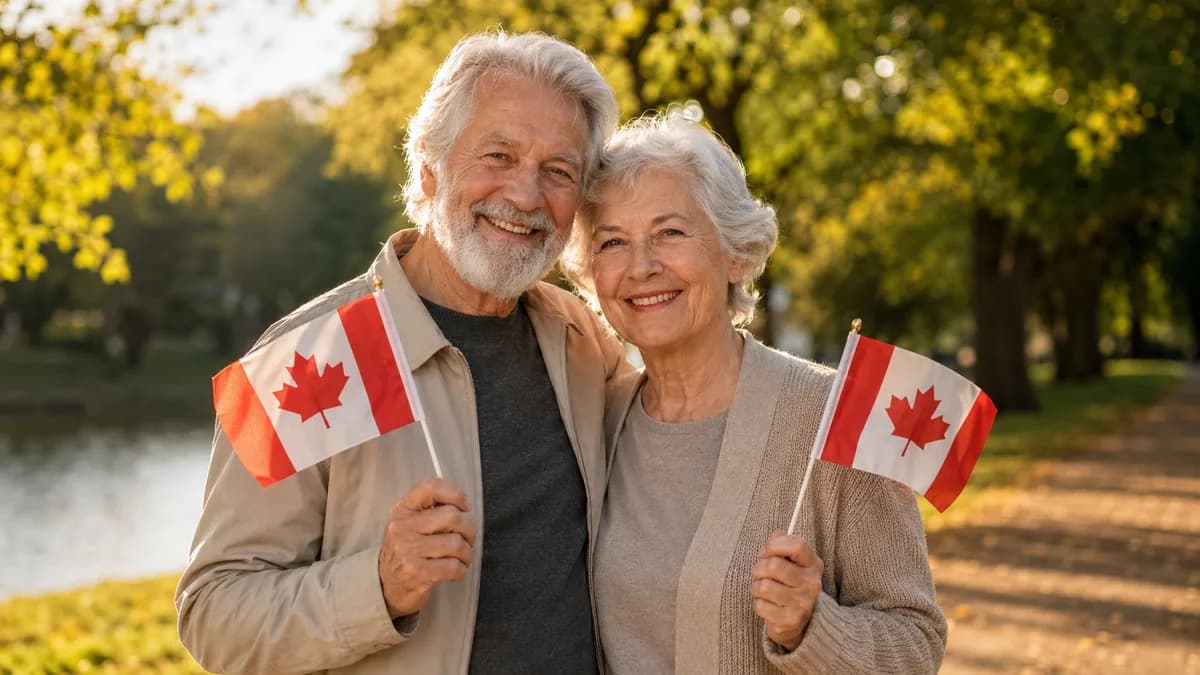
If you are 55 or older on the day you sign your citizenship application, you do not have to take the citizenship test and you do not have to meet the language requirement. Those are exactly the two steps that worry applicants the most, so this exemption removes a real source of stress. Everything else about your file stays the same: you must still be a permanent resident, meet the physical presence requirement, file your taxes when the law requires it, and take the Oath at a ceremony. These rules are part of the citizenship eligibility requirements. This is a general guide, and the official source stays canada.ca.
What the age-55 rule changes
Two obligations fall away once you reach 55: the knowledge test about Canada and the proof of language ability. Your age is measured on the date you sign the application, not the date IRCC receives it or the date of your ceremony. So if you sign on or after your 55th birthday, the exemption applies. There is also no upper age limit to become a Canadian citizen. You can apply in your sixties, seventies, eighties or beyond, as long as you meet the remaining conditions. The exemption lightens your preparation, but it does not shorten processing times and it does not remove any of the other criteria.
What is waived and what is still required
The exemption is narrow: it removes the test and the language proof, and nothing else. For applicants aged 18 to 54, you have to reach CLB/NCLC level 4 in English or French and pass a knowledge test of about 20 questions on the country's history, geography and institutions. At 55, both of these requirements disappear completely:
- No knowledge test about Canada to prepare for or sit.
- No language proof to provide, no test result, no transcript, no diploma.
Apart from those two points, your file follows exactly the same rules as any other adult applicant. The exemption does not make the review of your underlying eligibility any easier: it simply spares you two steps.
The conditions that still apply
Despite the exemption, you must still meet the general eligibility conditions for citizenship. The rest of the file follows the usual rules:
- Being a permanent resident whose status is valid, not lost, not in an appeal and not under review for fraud.
- Meeting the physical presence requirement: being physically present in Canada for at least 1,095 days during the 5 years before you apply.
- Having filed your income taxes for at least 3 of the 5 previous years, if you were required to do so under the Income Tax Act.
- Having no prohibitions, such as certain charges, convictions or time in prison that would block a grant of citizenship.
- Taking the Oath of Citizenship at the ceremony if you are 14 or older.
In other words, an applicant aged 55 and older follows the same path, minus the test step. There is nothing to study on the knowledge side, but it still helps to understand how the overall process works before you file. Physical presence is often the trickiest point: each day spent in Canada as a permanent resident counts as one full day, and some days before you got your status may count as half a day, up to a set limit. Take the time to reconstruct your travel with your passports in hand, so a counting mistake does not delay your file.
Why the process is simpler after 55
The exemption removes the two steps that demand the most preparation, which makes the process noticeably lighter. You do not have to study the official guide, Discover Canada, there is no test appointment to keep track of, and there is no language assessment to book. You focus only on physical presence, taxes and documents. That said, if your spouse or a family member is under 55, they will still have to take the test: they can practise for free with our mock exams and chapter quizzes so they arrive ready on the day.
How to apply, step by step
For an applicant aged 55 and older, the path comes down to a few clear steps. Here is the usual order:
- Confirm your eligibility: permanent resident status, physical presence, taxes and no prohibitions.
- Calculate your physical presence with the online calculator to confirm your 1,095 days.
- Gather your documents and complete the adult application form.
- Pay the fees and send your complete file to IRCC.
- Wait for the acknowledgement and follow the progress of your application.
- Receive the ceremony invitation, take the Oath and receive your certificate.
Documents to gather
Because the test and language proof fall away, your document list focuses on identity, status and time in Canada. You will usually need:
- Your permanent resident card or your confirmation of permanent residence.
- Your passports and travel documents covering the reference period, to support the presence calculation.
- Two pieces of identification, at least one with a photo.
- The printout of your physical presence calculation from the calculator.
- Citizenship photos that meet IRCC's specifications.
- The receipt for the processing and right-of-citizenship fees.
You will not have to include any language or knowledge test result, which noticeably shortens the preparation of your file. Even so, check that each copy is readable, that the dates line up and that nothing has expired, because a missing or out-of-date document is the most common reason a file is returned. A complete, current checklist always appears in the official instruction guide that comes with the adult application form.
The ceremony and oath still apply
No age exemption applies to the citizenship ceremony. Everyone aged 14 and older takes the Oath of Citizenship, in person or online depending on IRCC's arrangements. That is the step that officially makes you a Canadian citizen. On the day, you confirm your identity, hand in your permanent resident card, take the Oath and then receive your citizenship certificate. If a family member is under 18, see our guide on citizenship age requirements for the rules that concern them.
Tips and reassurance for older newcomers
The exemption exists precisely to lift the barriers that the test and language pose later in life, so approach the process with confidence. There is no age limit: your application is just as valid as a younger person's. If you need help, ask a family member to assist you with the forms and documents. For the ceremony, you can request accommodations related to mobility or health. And even though the test is not required of you, many newcomers enjoy learning about the country's history and institutions: our mock exams, chapter quizzes and review tool stay free and can help you feel at ease, both at the ceremony and in everyday life.